ROG Xbox AllyXBOX

The Witcher 3: Wild Hunt Remastered Review—An Old World, Newly Discovered

There are games that spend years hovering at the edge of your attention, their reputations so firmly established that actually playing them can begin to feel like an obligation. The Witcher 3: Wild Hunt has been one of those games for me. For all the praise heaped upon Geralt’s adventures, I had never quite found the right moment to take the plunge, perhaps put off by the sheer scale of the undertaking or simply because my tastes had yet to settle into the rhythms of a sprawling action RPG. Over the past few years, however, my appetite for the genre has grown considerably, making this remastered edition feel like an invitation arriving at precisely the right time. What I have found is not merely a landmark role-playing game preserved for posterity, but a world that feels remarkably alive, its stories and characters possessing a richness that makes the hours disappear almost without notice.

Release Date: September 29th 2026
Developer: CD PROJEKT RED
Publisher: CD PROJEKT RED
Price: £39.99/ $49.99 USD
Reviewed On: Xbox Series S / ROG Xbox Ally
* Copy Purchased For Review *

More Details

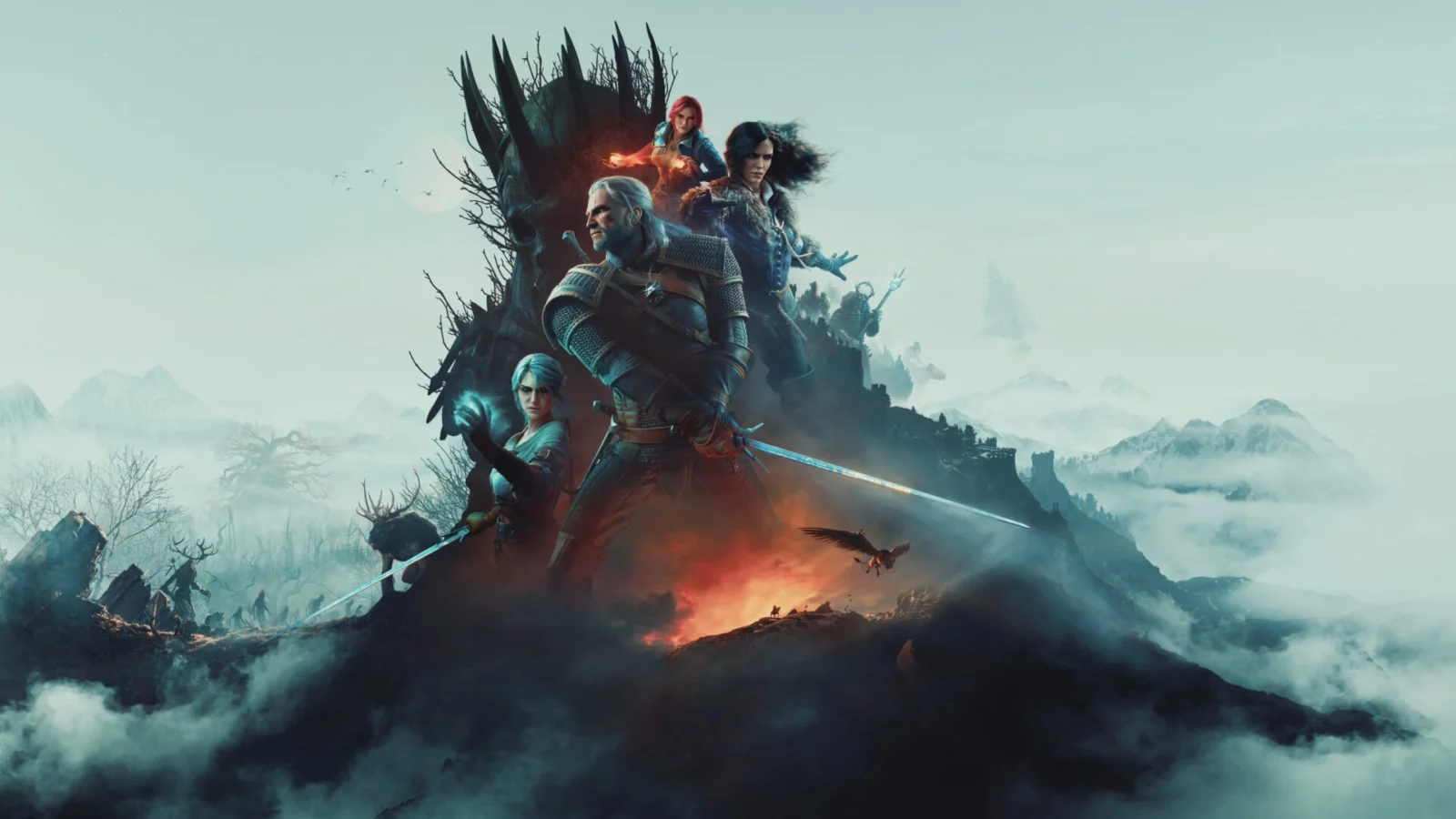
At the centre of it all is Geralt of Rivia, a witcher whose profession demands that he hunt the monsters haunting the Continent, though the creatures he encounters are rarely as straightforward as their bestiary entries might suggest. His latest journey begins with a search for Ciri, his adopted daughter, whose extraordinary powers have attracted the attention of the spectral Wild Hunt. What follows is a story threaded through a landscape ravaged by war, where rulers pursue their ambitions, ordinary people struggle to survive, and old superstitions often conceal uncomfortable truths. The main narrative provides a compelling reason to travel, but it is the smaller stories encountered along the way that give the world its remarkable depth. Here, a seemingly simple contract can become a tragedy; there, a conversation can reveal more about a character than an hour of exposition elsewhere. The writing understands that morality is rarely a matter of choosing between cleanly divided shades of good and evil, and that sometimes the most difficult decisions are those in which every available outcome leaves something broken.

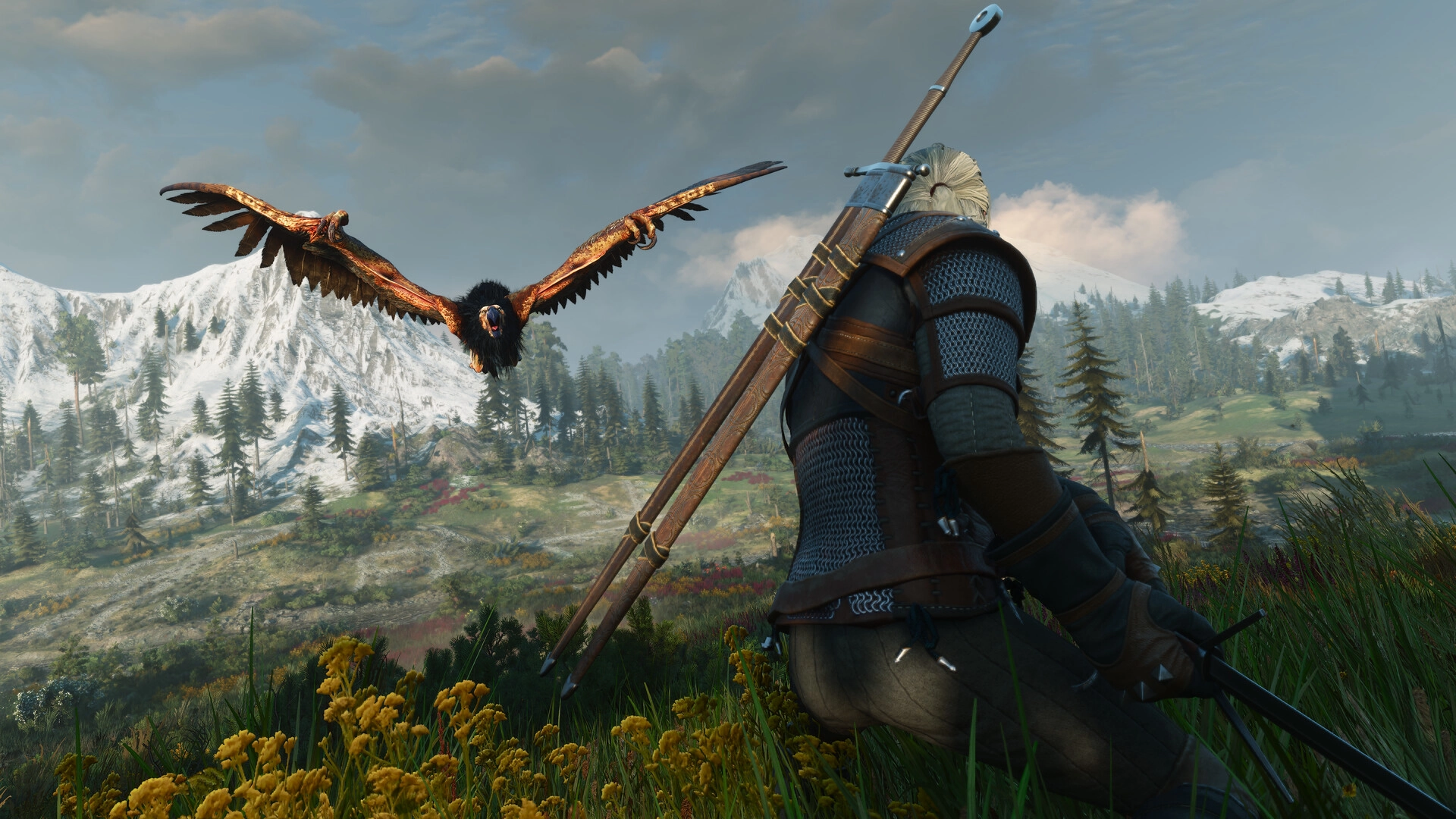
For all the complexity of its storytelling, The Witcher 3 is equally assured when it comes to the business of being a monster hunter. Combat asks you to think beyond the simple rhythm of attacking and retreating, encouraging you to combine swordplay with magical Signs, defensive manoeuvres and the occasional well-placed potion or bomb. Different enemies demand different approaches, and learning when to press an advantage, when to dodge and when to prepare before a fight gives encounters a satisfying sense of purpose. There is a pleasing physicality to Geralt’s movements, too, as steel meets flesh and magical abilities interrupt the flow of battle. It is not always an immaculate system, and there are moments when the camera or the movement can feel less precise than the surrounding design deserves, but there is enough depth here to make even an ordinary encounter feel like an opportunity to sharpen your skills. More importantly, combat reinforces the idea that Geralt is a professional whose experience matters, rather than simply another hero capable of swinging a sword at whatever happens to be standing in front of him.

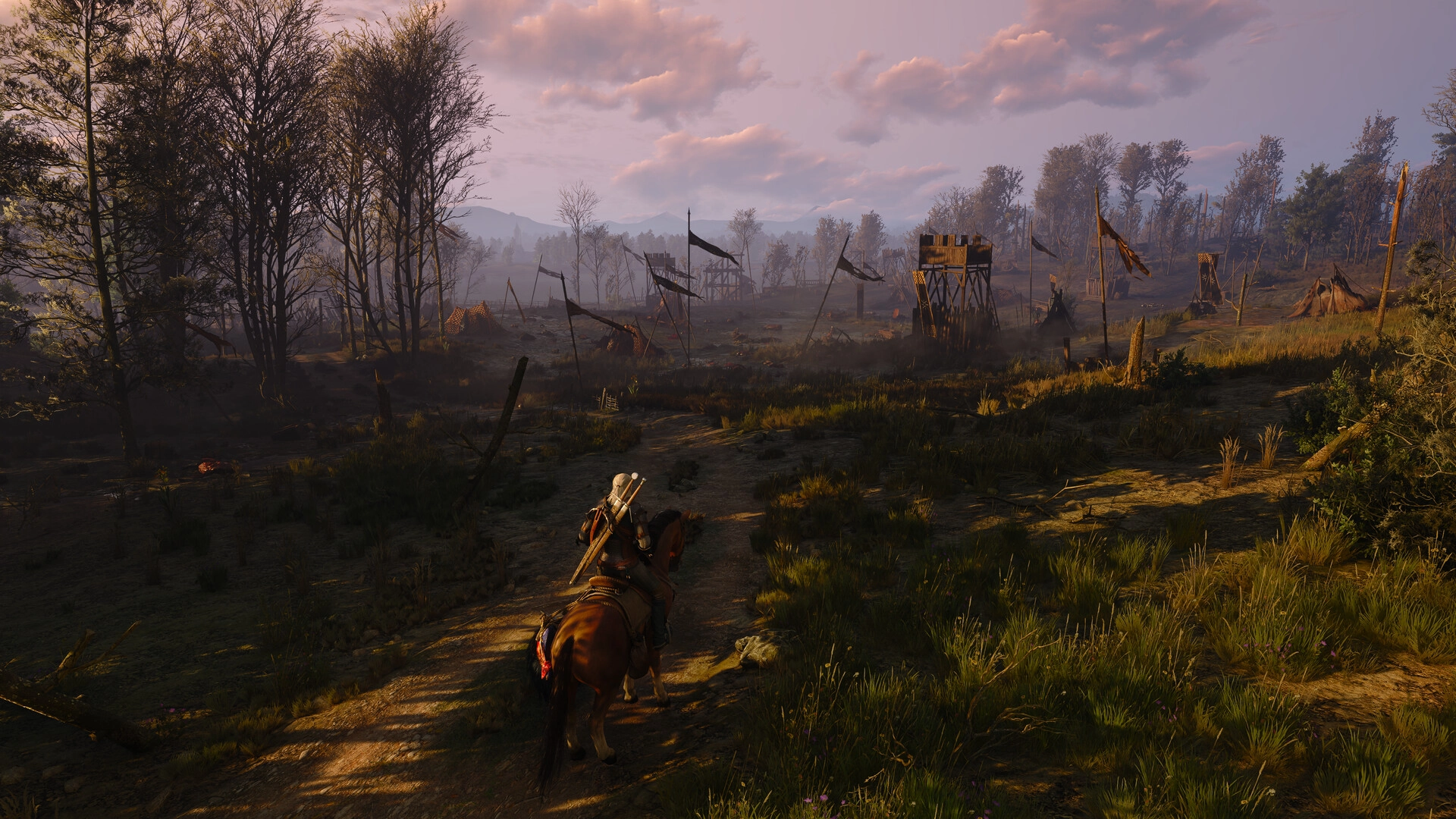
That sense of professionalism extends naturally into exploration, which remains one of the game’s greatest pleasures. The Continent is not a world that exists solely to funnel you towards the next objective; it is a place that invites you to become distracted. A distant structure catches your eye, a noticeboard offers a new contract, or a question mark on the map promises something that might be worth investigating. Sometimes the reward is modest, but often a brief detour develops into an encounter with its own characters, complications and consequences. The war-torn countryside of Velen feels particularly effective in this regard, its villages and fields carrying the visible scars of a conflict that continues to shape the lives of those living through it. Novigrad offers a different kind of fascination, its crowded streets and tangled loyalties providing a reminder that monsters do not always need claws or fangs. Even travelling between destinations becomes an invitation to pay attention, with the landscape frequently offering reasons to abandon whatever plan you had when you set out. There is an occasional excess of map markers, and not every activity possesses the same narrative significance, but the world is generous enough with its discoveries that curiosity rarely feels wasted.

Quests are where that generosity becomes something approaching extraordinary. The main storyline is compelling, but the optional adventures are often just as memorable, demonstrating a willingness to take familiar fantasy ideas somewhere unexpectedly human. Monster contracts provide a particularly effective expression of the game’s central themes, beginning with a problem that appears to have a straightforward solution before gradually revealing the circumstances surrounding it. Tracking a creature, examining evidence and speaking to witnesses gives these assignments the texture of actual investigations, even when the conclusion is less satisfying than the journey. Elsewhere, personal dramas unfold against the larger political upheaval, allowing individual lives to feel consequential without pretending that every encounter must somehow influence the fate of the world. Choices can carry consequences that are difficult to anticipate, and the game is rarely interested in reassuring you that you have made the correct decision. This uncertainty lends even relatively modest quests a welcome weight. Rather than treating side content as disposable padding between major story beats, The Witcher 3 repeatedly demonstrates how much can be achieved with a handful of characters, a difficult predicament and the confidence to leave the player with something to think about.

Beyond the swordplay and storytelling lies a collection of crafting and preparation systems that make Geralt’s profession feel like more than a convenient excuse for combat. Equipment can be upgraded, materials gathered, potions brewed and oils prepared to give you an advantage against particular foes. Finding a promising piece of armour or a better sword offers an immediate incentive to experiment, while the prospect of crafting more powerful equipment gives exploration a practical purpose. These systems are not always as elegant as the quests surrounding them, and the accumulation of ingredients, diagrams and equipment can occasionally become an exercise in inventory management. Nevertheless, they help establish a satisfying relationship between preparation and performance. A difficult encounter can encourage you to reconsider your equipment, learn more about your opponent and return with a more considered approach. There is pleasure in that process, particularly when a little forethought turns an intimidating hunt into a manageable challenge. Crafting never needs to become the game’s main attraction because it serves a larger purpose: making each new discovery feel like another small step towards becoming a more capable witcher.

Progression brings these disparate systems together, providing a steady sense of growth without entirely removing the need for judgement. Experience points unlock new abilities, equipment improves Geralt’s effectiveness, and the skill system encourages you to develop an approach that suits your preferred style of play. The remaster’s reworked skills and combat systems offer a welcome opportunity to reconsider how these elements fit together, while the broader range of customisation gives you more room to shape your journey. Progress is not simply a matter of watching numbers increase, but of gradually understanding which abilities complement one another and which preparations are worth making before a fight. There is a satisfying rhythm to the process: explore, discover, improve, and venture further into a world that seemed daunting only a few hours earlier. The scale of the adventure can occasionally make the accumulation of upgrades feel a little overwhelming, particularly when several systems demand attention at once, but the underlying loop remains compelling. Each new ability or piece of equipment feels like an invitation to test yourself against something that previously seemed beyond your reach, and the prospect of seeing what lies over the next hill is often enough to keep you moving.

The remastered edition gives this already formidable adventure a more contemporary presentation, although its improvements are best understood as refinements to an established whole rather than a wholesale reinvention. Updated textures, improved lighting and more detailed environmental assets help the Continent feel more convincing, while enhancements to foliage, character models and visual effects bring additional life to familiar fantasy landscapes. The difference is not simply a matter of making everything sharper. It is the way these details contribute to the atmosphere, whether sunlight filtering through the trees lends a woodland path an unexpected warmth or a stretch of bleak countryside reinforces the hardship endured by its inhabitants. There remains a distinctive visual identity beneath the technical improvements, one that favours earthy colours, expressive faces and landscapes that seem to have accumulated years of history. Some animations and environmental details still betray the game’s age, but these occasional reminders rarely undermine the broader achievement. The remaster understands that the appeal of the Continent lies not in presenting a spotless fantasy postcard, but in making its beauty and ugliness feel like inseparable parts of the same place.

Sound is equally important to the experience, and the remaster benefits from a world that already knew how to make silence, music and environmental noise work together. The soundtrack lends exploration a sense of melancholy and wonder, swelling when the journey demands grandeur and settling into quieter passages when the landscape deserves to speak for itself. Folk-inspired melodies help distinguish the regions, while the sounds of wind, water, wildlife and distant activity make the world feel inhabited even when Geralt is travelling alone. Combat brings its own satisfying punctuation, with the clash of swords, the impact of attacks and the crackle of magical abilities giving encounters a welcome sense of immediacy. Voice acting does much of the remaining work, lending the cast a variety of personalities that helps prevent the enormous amount of dialogue from becoming monotonous. The remaster’s visual and technical upgrades cannot take credit for all these qualities, many of which were already fundamental to the original game, but they help preserve the atmosphere that makes the adventure so absorbing. There is a rare confidence in the way music and sound know when to draw attention to themselves and when to recede into the background, allowing the world to feel present without constantly demanding to be admired.

On Xbox Series S, the most important question is whether the remaster’s improvements preserve that sense of immersion on less powerful current-generation hardware. The console cannot offer the same visual headroom as its more powerful sibling, so expectations should be shaped accordingly, with particular attention paid to image clarity, environmental detail, loading behaviour and the consistency of performance during demanding encounters. What matters most is that the experience remains cohesive: travelling through the countryside should feel as inviting as exploring a crowded settlement, and the spectacle of combat should not become a distraction from the decisions unfolding within it. The remaster’s wider technical improvements and quality-of-life changes are intended to make returning to the Continent more comfortable, while its controller-focused combat and exploration remain central to the experience. It is worth remembering, too, that this is a substantial role-playing adventure rather than a brief showcase for graphical effects. Its greatest achievements lie in the writing, the world and the relationships that develop across dozens of hours, all of which matter just as much on Series S as they do elsewhere. For a review focused on this version, the final judgement should rest on the performance actually experienced during play, rather than assuming that every enhancement translates identically across the Xbox family.

10
Verdict
Summary

Looking back, I find it difficult to believe that I spent so long allowing The Witcher 3: Wild Hunt to pass me by. The remaster has given me the perfect excuse to discover a game whose reputation, for once, feels entirely justified, and whose greatest achievement is not the size of its world or the number of things it allows you to do, but the care with which those things have been made to matter. Its combat and progression provide a satisfying foundation, its exploration rewards curiosity, and its writing gives even the smallest detours a chance to leave an impression. The remastered improvements help make the journey more inviting, while the inclusion of Hearts of Stone and Blood and Wine adds two substantial adventures that expand an already extraordinary experience. More than anything, though, I have been struck by the feeling that the Continent exists beyond the limits of my own journey, filled with people who have lives to lead and problems to solve whether Geralt happens to be there or not. Some games earn their place in history through a single brilliant idea; others achieve something rarer by sustaining that brilliance across an entire world. I now understand why The Witcher 3 has endured for so long, and why so many players have been reluctant to leave it behind. I simply wish I had given it a chance sooner.

Related Articles

The Relic: First Guardian Review—A Relic of Better Ideas

There is a particular pleasure in finally understanding a Soulslike. At first,...

9
XBOX

The Sinking City 2 Review—A City Drowning in Secrets

There is something strangely appropriate about returning to Arkham and finding that...

7
XBOX

Duskfade Review—A Memory of Games We Thought We’d Lost

There was a particular kind of magic to the 3D platformers of...

7
XBOX

CULTIC Review—Built On The Past, Not Buried By It

There's a particular kind of nostalgia reserved for the shooters that emerged...