

PCSteam Deck

Moros Protocol Review—The Horror of Repetition

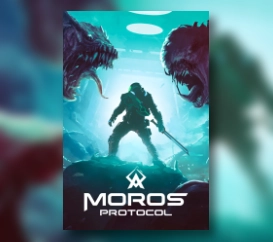
There was something about Moros Protocol that caught my eye almost immediately. Its grimy, pixelated take on science-fiction horror has the texture of a half-remembered nightmare: chunky corridors, sickly lighting and grotesque creatures all rendered with the sort of deliberate roughness that makes everything feel older than it really is. It’s an aesthetic that knows exactly what it wants to evoke, recalling the claustrophobic shooters of another era without simply trying to recreate them. Beneath that familiar surface is a roguelite FPS with Souls-like tendencies, and while not every one of its ideas lands with quite the same force as its presentation, there is an appealing confidence to the way Moros Protocol throws you into its decaying spaceship and asks you to keep moving.

Release Date: September 18th 2025
Developer: Pixel Reign
Publisher: Super Rare Originals
Price: £19.99 / $24.99 USD
Reviewed On: PC / Steam Deck
* Access Provided For Review *

More Details

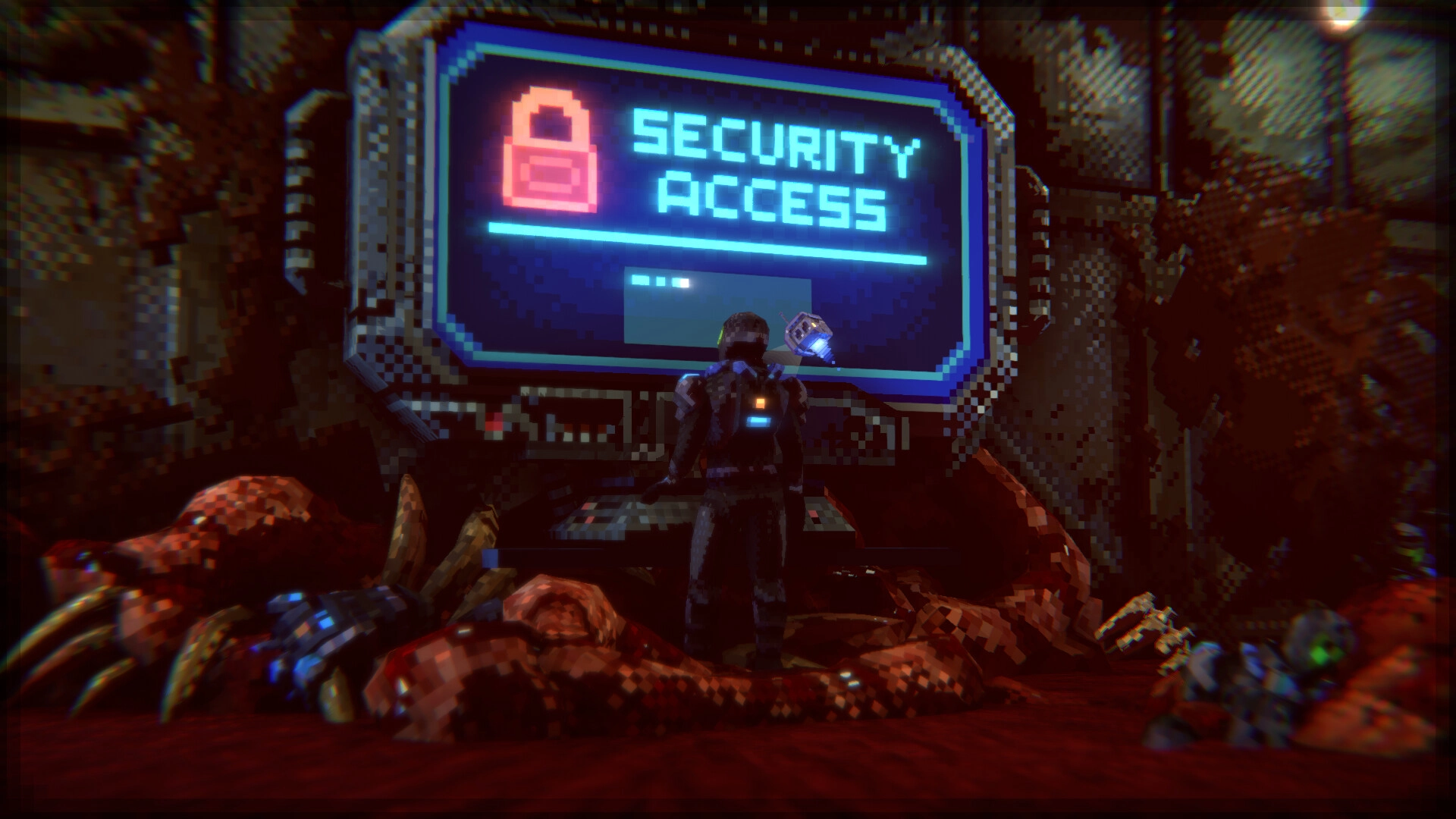
You wake aboard the Orpheus, a derelict vessel lost somewhere in the darkness of space, with little understanding of what happened or why you’re there. The ship has been overtaken by the Darkphage, a mysterious infection that has transformed its inhabitants into something considerably less human, and your journey is largely concerned with pushing deeper into the wreckage to uncover what went wrong. The storytelling is deliberately sparse, relying on environmental details, fragments of information and the oppressive atmosphere of the ship rather than lengthy exposition. It works well enough as a framework for the action, although the further you get, the more the story feels like something you’re moving through rather than something you’re particularly invested in.

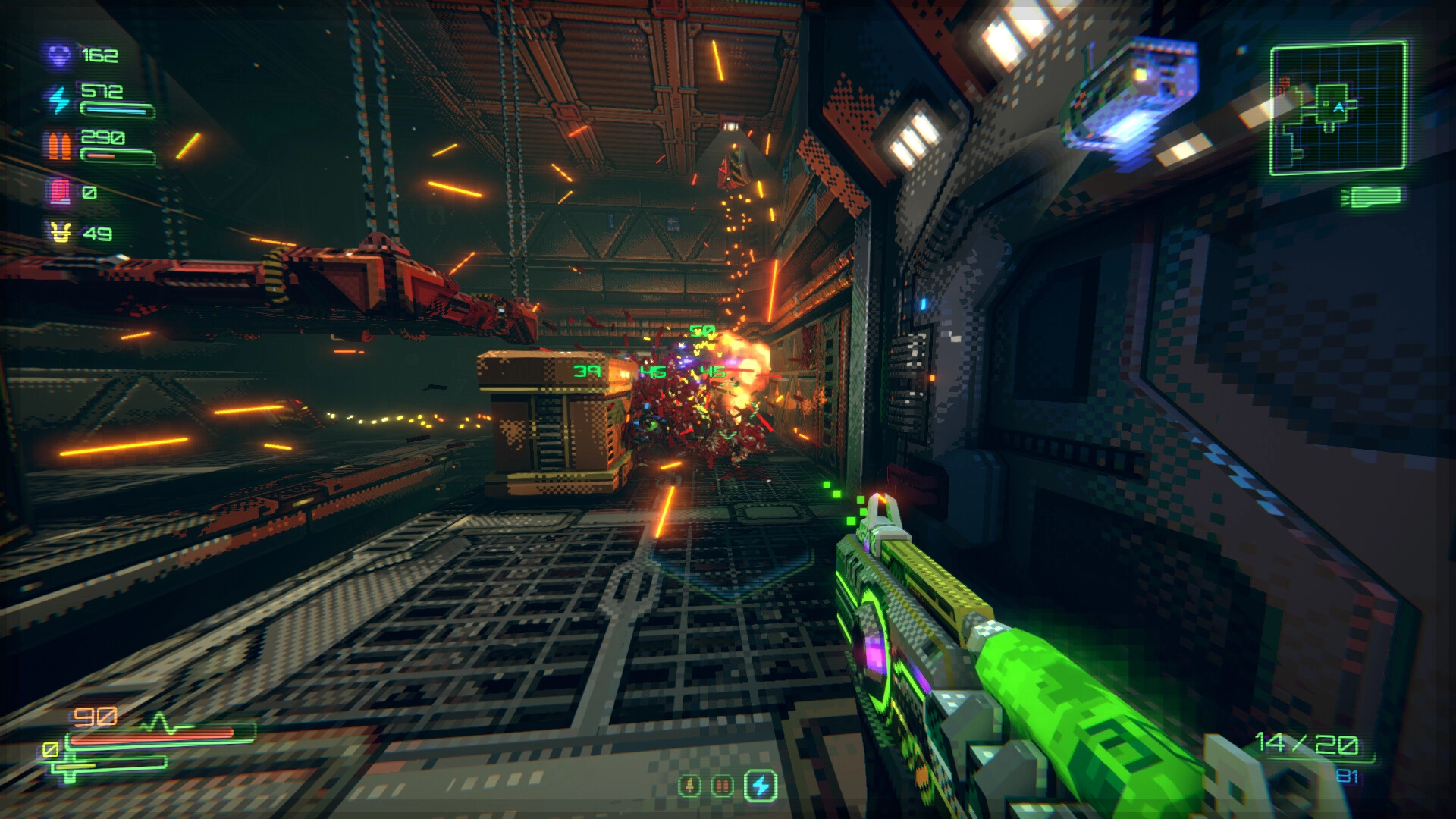
Fortunately, the shooting itself provides plenty of reason to keep pushing forward. Moros Protocol understands that a first-person shooter should make movement feel as important as pulling the trigger, and its encounters encourage you to constantly reposition yourself. Enemies are aggressive enough that simply planting your feet and unloading your weapon rarely feels like the answer. Dodging between attacks, finding space and knowing when to close the distance gives the combat a satisfying physicality, while the ability to kick enemies adds a pleasingly immediate touch to the violence.

That physicality becomes more important as the roguelite structure starts to assert itself. Each run gives you opportunities to acquire new weapons, abilities and upgrades, gradually allowing you to build something more powerful from the scraps available to you. There is a familiar pleasure in starting another expedition with the vague promise that this time you’ll make it further, particularly when a previously troublesome encounter suddenly becomes manageable because you’ve found the right combination of tools. It doesn’t reinvent the roguelite formula, but it understands the simple pleasure of making one more attempt.

The procedural structure also gives the ship an interesting sense of instability. Rooms and encounters can shift between runs, meaning that familiarity never quite becomes routine, while the underlying layouts remain coherent enough that you can gradually learn how to navigate them. That balance is important in a game this short, because without it the repetition could quickly become exhausting. Instead, Moros Protocol makes each death feel like a small lesson, whether that’s learning an enemy’s attack pattern, discovering a more useful route through an area or simply realising that the weapon you’ve been relying on isn’t quite as dependable as you thought.

Boss encounters provide the clearest expression of the game’s Souls-like influence, forcing you to slow down and pay attention to patterns that can be ignored during the more frantic firefights. They’re a useful change of pace, asking for patience where the regular enemies reward aggression. Co-op adds another dimension to the experience, too, allowing the campaign to be tackled alongside another player. It can soften some of the game’s harsher encounters, but it also highlights how much fun there is to be had when its combat systems begin to overlap in unexpected ways.

For all its mechanical familiarity, though, Moros Protocol remains most memorable when it’s simply letting you wander through the Orpheus. The pixelated art style gives every corridor a grimy, almost tactile quality, with darkness swallowing the edges of rooms and harsh lighting picking out just enough detail to make you wonder what might be waiting beyond it. Characters and creatures have a wonderfully chunky quality, and the deliberately limited visual fidelity works in the game’s favour: there’s something more unsettling about a monster that your eyes can’t quite resolve than one rendered in immaculate detail.

The sound design carries much of that atmosphere forward. Gunshots, impacts and explosions have the necessary weight, giving combat the blunt physicality it needs, while the quieter stretches leave room for the ship itself to become part of the soundtrack. Ambient noises and distant sounds create the impression of a machine still functioning long after its purpose has been lost. That contrast between sudden violence and uneasy quiet is particularly effective, because Moros Protocol knows that an abandoned spaceship is often more frightening when nothing is happening at all.

There is also a pleasing consistency between the visuals and audio, both of which seem determined to make the Orpheus feel like a place rather than merely a series of levels. The soundtrack knows when to push the action forward and when to recede into the background, while the crunchy visual presentation gives even familiar corridors a distinctive personality. It isn’t the sort of presentation that overwhelms you with spectacle, but it doesn’t need to. Moros Protocol gets a surprising amount of mileage from a handful of colours, some ugly monsters and the persistent feeling that the walls around you have seen better days.

7
Verdict
Summary

What ultimately makes Moros Protocol work is that sense of modest ambition. It borrows generously from old-school shooters, roguelites and Souls-likes without always finding a way to make those influences feel entirely its own, but the pieces fit together comfortably enough. The story is slight, the repetition can occasionally expose the limitations of its systems, and some of its ideas feel more familiar than fresh. Yet the combat has a satisfying rhythm, progression gives each failed run purpose, and its beautifully grubby presentation makes returning to the Orpheus an oddly inviting prospect. It may not leave the deepest scar, but Moros Protocol understands the pleasure of getting lost in a hostile place, dying there, and deciding you know just enough to go back in.


Related Articles

Roguecraft DX Review—Learning to Read the Dark

There is something wonderfully direct about Roguecraft DX. In an era when...

Onimusha: Way of the Sword Review—Twenty Years Later, The Sword Is Still Sharp

There is a particular kind of excitement that comes from seeing an...

Gunman Contracts – Stand Alone Early Access Review—A Contract Worth Taking

I have a soft spot for Gunman Contracts. I spent a lot...

PixARK: Terracrypt Expansion Review—There Are Worlds Beneath Our Feet

There is a particular kind of pleasure in digging downwards. Perhaps it...