ROG Xbox AllyXBOX

The Relic: First Guardian Review—A Relic of Better Ideas

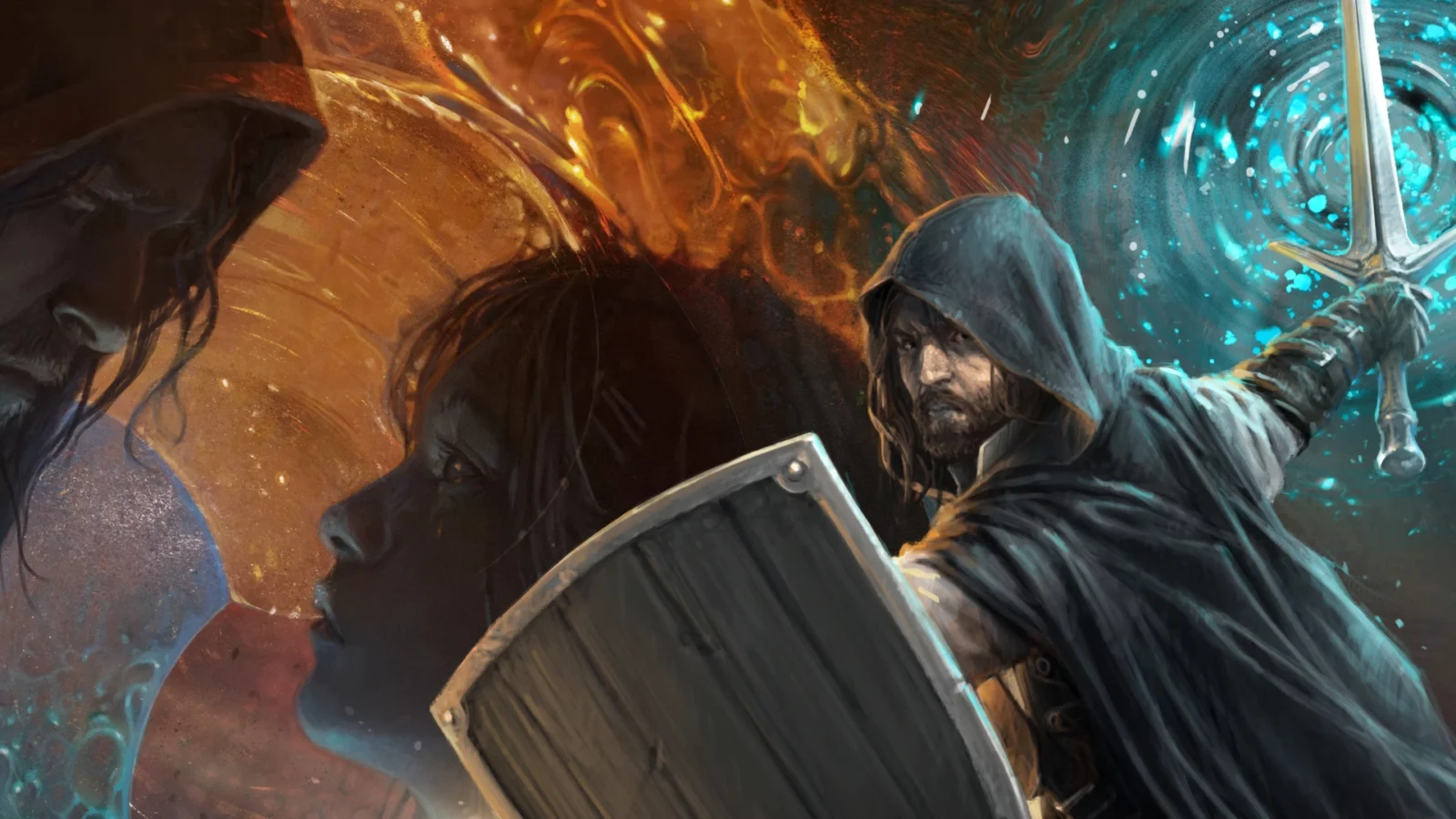
There is a particular pleasure in finally understanding a Soulslike. At first, its enemies seem to speak in a language of feints, delayed strikes and impossible combinations, but gradually the grammar reveals itself. A dodge comes a little later. A parry a little sooner. Eventually, the things that once felt hostile begin to feel almost familiar. I’ve recently found myself enjoying that process more than I expected, which makes The Relic: First Guardian an interesting game to arrive at. It wears the familiar shape of a Soulslike, but beneath the ruined kingdoms and enormous monsters is something considerably more immediate: a game that wants you to stop worrying about every swing and simply get stuck in. It is one of its better ideas, and unfortunately, one of several that never quite escape the roughness surrounding them.

Release Date: September 25th 2026
Developer: Project Cloud Games
Publisher: Perp Games
Price: £29.99/ $34.99 USD
Reviewed On: Xbox Series S / ROG Xbox Ally
* Access Provided For Review *

More Details

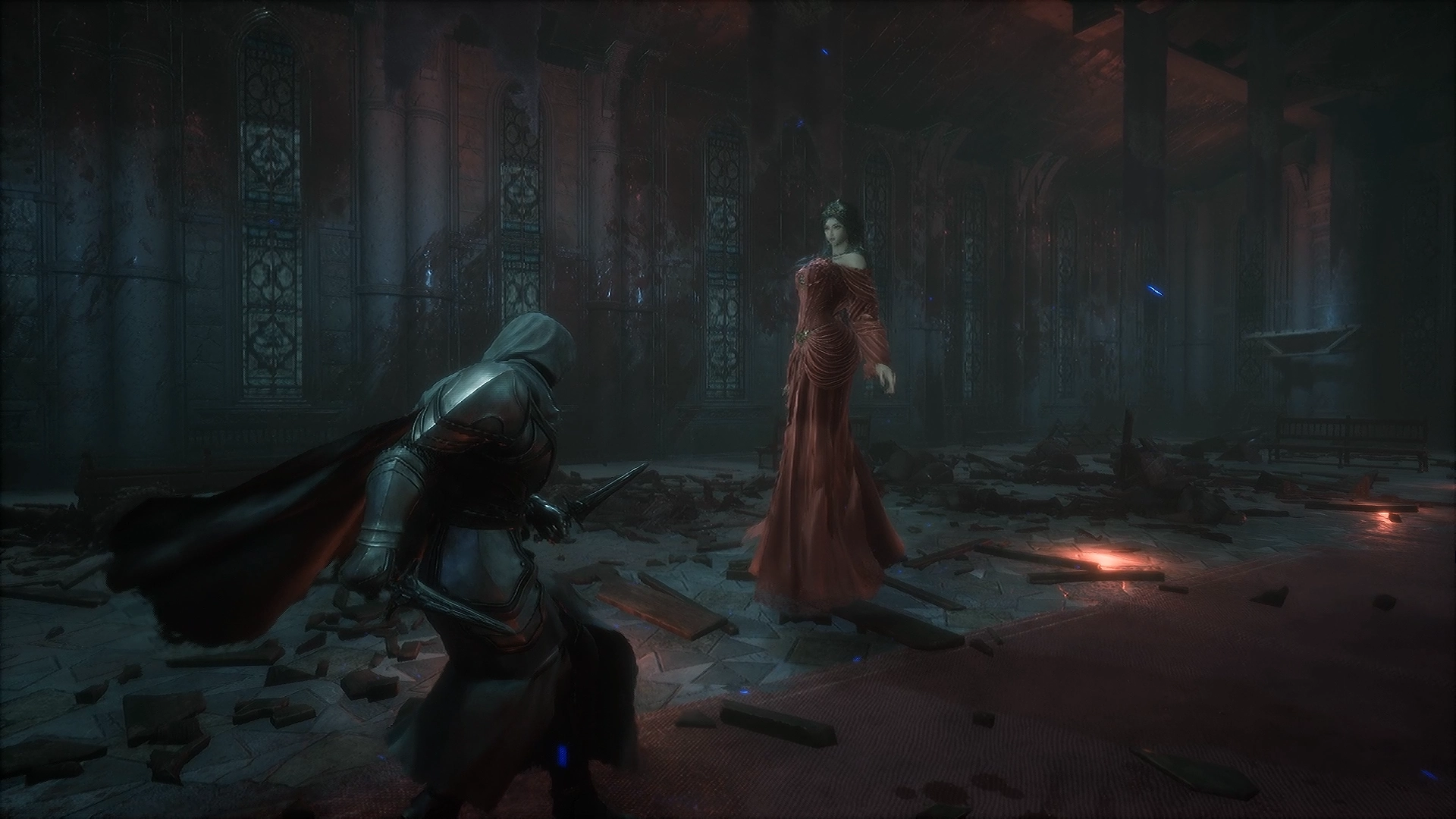
Arsilthus has already suffered its great catastrophe when the game begins. The relic that once held the Void at bay has been shattered, leaving the land to decay around its absence. As the last Guardian, you set out to recover its fragments and restore what has been lost, passing through the remains of a civilisation that has become increasingly difficult to distinguish from the monsters now inhabiting it. There are fragments of an interesting story here, particularly in the way the game’s Korean folklore influences its imagery and mythology, but the narrative is content to sit in the background for much of the journey. Characters come and go, histories are uncovered and the world offers glimpses of what it once was, though rarely with enough weight to make those discoveries linger.

What does linger is the game’s most successful idea, which is also one of its simplest. Attacking does not consume stamina. Instead, the familiar green bar is reserved for defence: dodging, blocking and parrying. It is a small rearrangement that gives the combat an entirely different cadence. Rather than approaching an enemy with the careful economy expected of a Soulslike, you are encouraged to stay close, keep swinging and let the fight unfold almost as a conversation between aggression and reaction. Your attacks are free; your mistakes are not.

That distinction makes The Relic feel closer to an action game than many of its contemporaries. There is a pleasing looseness to combat when you aren’t constantly counting the number of attacks left in the tank, and the best encounters have a fluidity that comes from moving between offence and defence rather than retreating after every exchange. Stamina still matters, perhaps more than ever, but it matters at the moment you need to escape rather than the moment you decide to attack. A subtle change, perhaps, but one that gives the game a personality of its own. It asks you to be aggressive, then quietly reminds you that aggression still has consequences.

That philosophy is particularly apparent in the game’s bosses, or Brutals, of which there are 80 scattered throughout the world. It is a number large enough to make the word ‘boss’ begin to lose some of its usual meaning. These encounters aren’t occasional landmarks at the end of long journeys; they are almost the journey itself. Arsilthus seems to exist partly as a way of carrying you towards the next large thing waiting to test what you’ve learned, and there is something appealing in that constant sense of anticipation.

Some of these fights are genuinely satisfying. There is pleasure in recognising an attack, finding the space between a sequence of blows, and gradually turning something that initially seemed chaotic into a pattern. Yet eighty is a difficult number to make feel meaningful. Not every Brutal has the same presence, and the sheer frequency of these encounters inevitably makes some feel less like memorable confrontations and more like another item on a long list. Still, when The Relic gets one right, it captures something close to the genre’s old magic: that peculiar satisfaction of finally understanding something that was once incomprehensible.

Between those confrontations, the semi-open world offers a little more breathing room. Arsilthus is not simply a sequence of corridors leading towards increasingly imposing arenas, and there is enough freedom in its layout to encourage wandering rather than following the most obvious road. Ruined structures, hidden paths and distant landmarks give exploration a modest sense of purpose, particularly when you begin to suspect that something useful might be waiting beyond the route you were originally taking. The world isn’t especially dense, but there is a pleasant feeling of being allowed to find your own way through it.

Progression takes a similarly unusual path. There is no traditional levelling system here, so you don’t gradually inflate a collection of statistics through experience points, nor can you simply return to an earlier area and grind until an obstacle becomes smaller. Instead, progression comes through equipment, Relics and abilities, allowing your character to change through what you find rather than through an increasingly large number beside your name. It makes exploration feel more consequential. When you discover something useful, it feels like a discovery rather than merely another increment, and there is a pleasing simplicity to knowing that becoming stronger means finding something rather than simply repeating what you’ve already done.

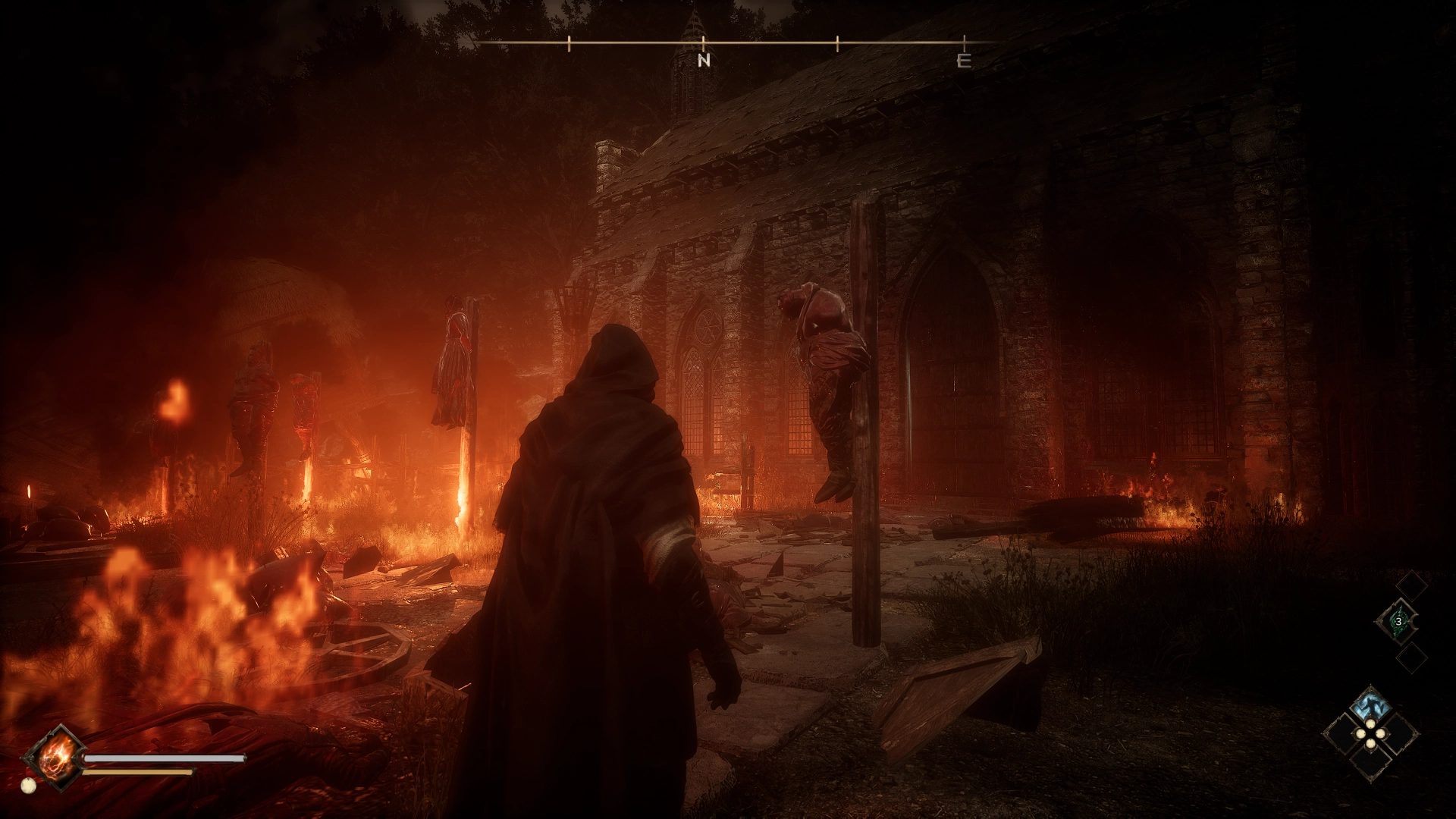
There are moments when Arsilthus is beautiful, too. The landscapes have a suitably melancholy quality, with ruined architecture and corrupted wilderness creating the impression of a place that has been left alone for too long. Its visual identity is at its strongest when it allows the mythology beneath the surface to show through, and there are occasional vistas that suggest a more accomplished game hiding somewhere underneath. Unfortunately, the illusion is fragile. Textures can become blurry, details arrive late, and pop-in occasionally makes the world seem less like somewhere you are travelling through than somewhere being assembled just ahead of you.

Those rough edges are not quite enough to destroy the atmosphere, but they frequently interrupt it. The problem is compounded by a lack of variety. Enemies begin to resemble one another, while the wider world can feel strangely empty of life. For a setting that spends so much time reminding you that an entire civilisation has fallen apart, there is surprisingly little sense of what that civilisation might once have been. Even the soundscape can falter, with occasional losses of audio leaving you wandering through this already quiet world in an almost complete silence.

The voice acting makes matters worse. There are moments when the delivery feels so stiff that it becomes difficult to take the scene around it seriously, and lines that should carry some sense of tragedy or mystery instead arrive with an awkwardness that pulls the curtain back. It is particularly unfortunate because the game is otherwise so committed to its mythology. There is clearly a story being told beneath the ruins, but the performances rarely give it the gravity it is reaching for. What should be solemn can become unintentionally funny, and what should feel mysterious can instead feel strangely distant.

Ultimately, The Relic: First Guardian is caught between two versions of itself. There is the game suggested by its best combat encounters, its strange mythology and its willingness to rearrange some of the conventions it has inherited. Then there is the game you actually have to play, with its technical blemishes, repeated enemies and presentation that too often feels unfinished. The distance between those two things is sometimes more noticeable than the world itself.

5
Verdict
Summary

There is enough here to make you wish The Relic had been given a little more time to realise its ideas. Its defence-based stamina system gives the combat an appealing sense of momentum, while the sheer number of Brutals ensures that there is always another fight waiting somewhere beyond the horizon. The semi-open world and equipment-based progression complement those ideas nicely, encouraging you to explore rather than simply become stronger. But too much of the game feels caught halfway between ambition and execution. Blurry visuals, pop-in, sparse environments, repetitive enemies, missing sound and painful voice acting steadily wear away at the atmosphere. What remains is an interesting Soulslike that occasionally finds something worth saying, but rarely finds the polish or restraint to say it with much confidence.


Related Articles

9
XBOX

The Sinking City 2 Review—A City Drowning in Secrets

There is something strangely appropriate about returning to Arkham and finding that...

7
XBOX

Duskfade Review—A Memory of Games We Thought We’d Lost

There was a particular kind of magic to the 3D platformers of...

7
XBOX

CULTIC Review—Built On The Past, Not Buried By It

There's a particular kind of nostalgia reserved for the shooters that emerged...

Halo: Campaign Evolved Review—A Classic Reborn for a New Generation

Some games become landmarks. Others become places you return to, not simply...