Nintendo Switch

The Legend of Zelda: Ocarina of Time Review—A Song That Never Fades

There are certain games that stay with you long after the console has been switched off, their worlds and adventures becoming something of a fond memory that never quite loses its lustre. For me, The Legend of Zelda: Ocarina of Time has always been one of those games. My affection for the original Nintendo 64 release runs particularly deep, having spent countless hours exploring Hyrule, uncovering its secrets and losing myself in one of Nintendo’s most wonderful adventures. So, when a full remake was announced for Nintendo Switch 2, my excitement was difficult to contain. This wasn’t simply another opportunity to revisit an old favourite, but the chance to experience a game that means so much to me in an entirely new light. Thankfully, Nintendo has understood precisely what makes Ocarina of Time so special, delivering a remarkable reimagining that feels every bit as magical as I remember.

Release Date: November 5th 2026
Developer: Nintendo EPD
Publisher: Nintendo
Price: £49.99 / $59.99 USD
Reviewed On: Nintendo Switch 2
* Copy Purchased For Review *

More Details

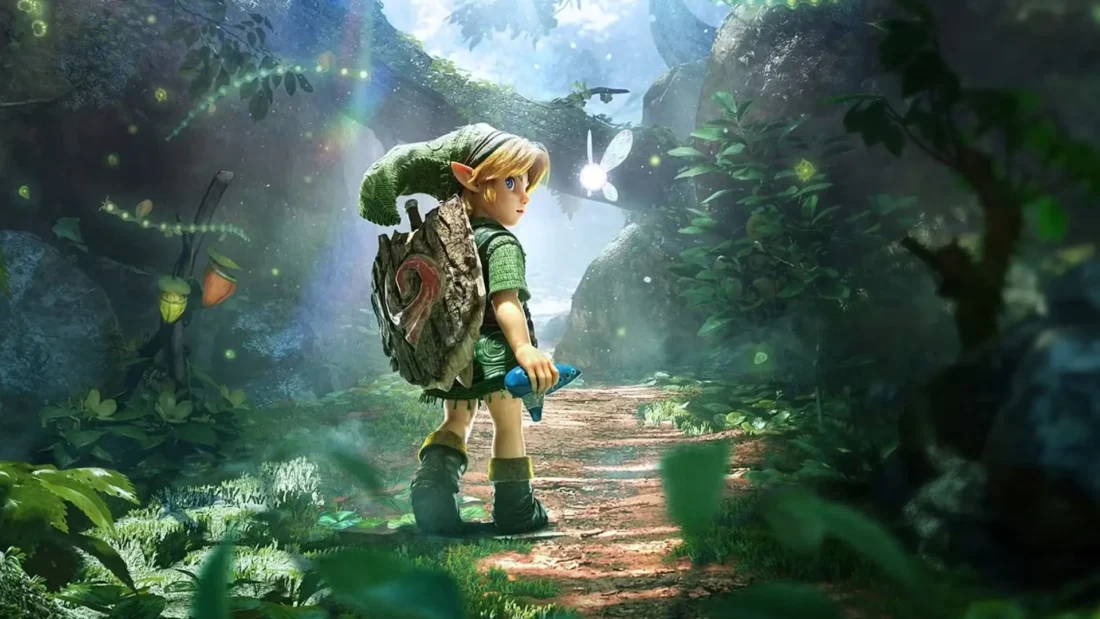
At the heart of Ocarina of Time is a wonderfully timeless tale of courage, destiny and the battle between good and evil. Taking on the role of a young Link, you are drawn into an adventure that begins with the peaceful surroundings of Kokiri Forest before gradually unfolding into something far more extraordinary. Guided by the mysterious Great Deku Tree and entrusted with an important task, Link soon finds himself caught up in Ganondorf’s pursuit of the Triforce, an ancient relic possessing the power to reshape the fate of Hyrule. What follows is a journey that stretches across generations, with the passage of time bringing both personal growth and profound changes to the kingdom you are fighting to protect. There is a lovely simplicity to the storytelling, yet beneath its familiar fairy-tale foundations lies a surprisingly affecting tale about growing up, the weight of responsibility and the bittersweet nature of time. Even after all these years, its narrative retains an enchanting quality that makes every step of Link’s journey feel meaningful.

What becomes immediately apparent is just how naturally Ocarina of Time’s adventure has survived the passage of time. Beneath its refreshed presentation remains an extraordinarily well-considered blend of exploration, combat and puzzle solving, with Hyrule continuing to offer that wonderful sense of discovery that makes every journey feel worthwhile. The revised movement controls make Link considerably more responsive, while the improved camera gives you greater freedom to appreciate the environments around you. Small refinements perhaps, but they make a substantial difference to the overall experience, allowing the adventure to feel considerably more fluid without losing the character of its original design. There is something wonderfully reassuring about finding that the foundations remain so remarkably strong.

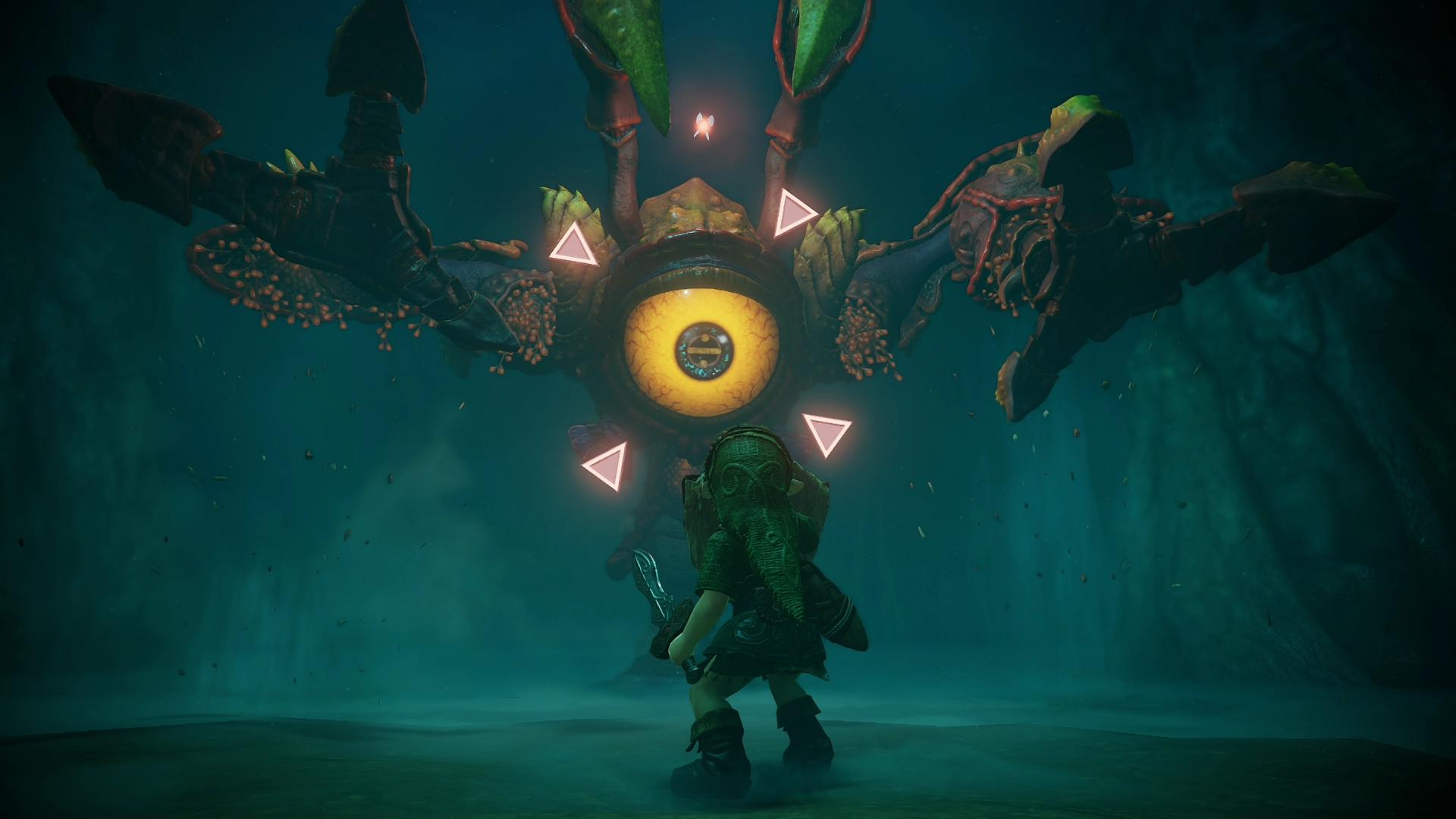
Much of that strength comes from the game’s dungeons, which remain some of the finest examples of environmental puzzle design in the medium. Each presents its own distinctive collection of challenges, encouraging you to observe your surroundings, experiment with the tools at your disposal and gradually piece together the solution. Whether navigating the twisting corridors of a forgotten temple or working your way through a particularly elaborate puzzle, there is a satisfying rhythm to the way Ocarina of Time introduces its ideas and builds upon them. Nothing feels unnecessarily complicated, yet there is enough ingenuity to ensure that every discovery feels earned. It is a reminder of just how much can be achieved through thoughtful design rather than an endless accumulation of mechanics.

Equally important is the way the adventure gradually expands beyond its familiar beginnings. The transition between childhood and adulthood remains one of the game’s most inspired ideas, transforming both Link and the world around him in ways that give the journey a genuine sense of consequence. Revisiting familiar locations and discovering how they have changed gives Hyrule an emotional weight that few adventure games manage to replicate. There is a lovely melancholy running through these moments, particularly as the consequences of Ganondorf’s ambitions become increasingly apparent. It is a simple storytelling device, but one that gives the adventure an identity all of its own, ensuring that the passage of time feels like something far more meaningful than a convenient gameplay mechanic.

Elsewhere, the additional refinements make this an especially inviting version of an already exceptional adventure. The improved day-and-night cycle, which now continues regardless of where you find yourself, helps make the world feel more cohesive, while the new progression tapestry provides a lovely visual record of your journey. These additions never threaten to overwhelm the original experience, instead offering little touches that make returning to Hyrule all the more enjoyable. Even the ability to hum familiar melodies for Link to perform on his ocarina feels like a charming extension of the game’s identity. It is this attention to detail that makes the remake so successful: rather than attempting to reinvent everything, Nintendo has concentrated on making an already wonderful adventure feel more complete.

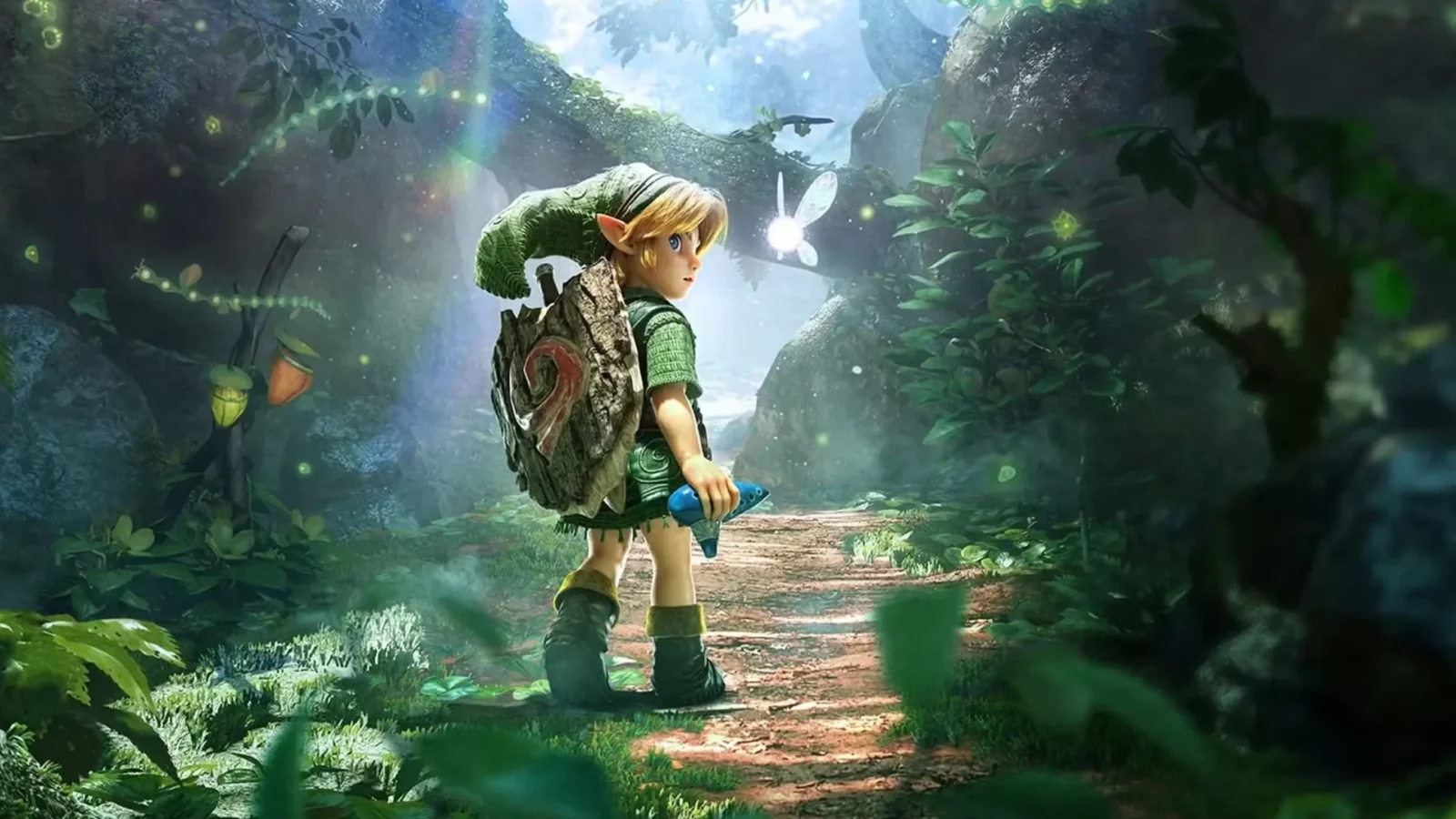
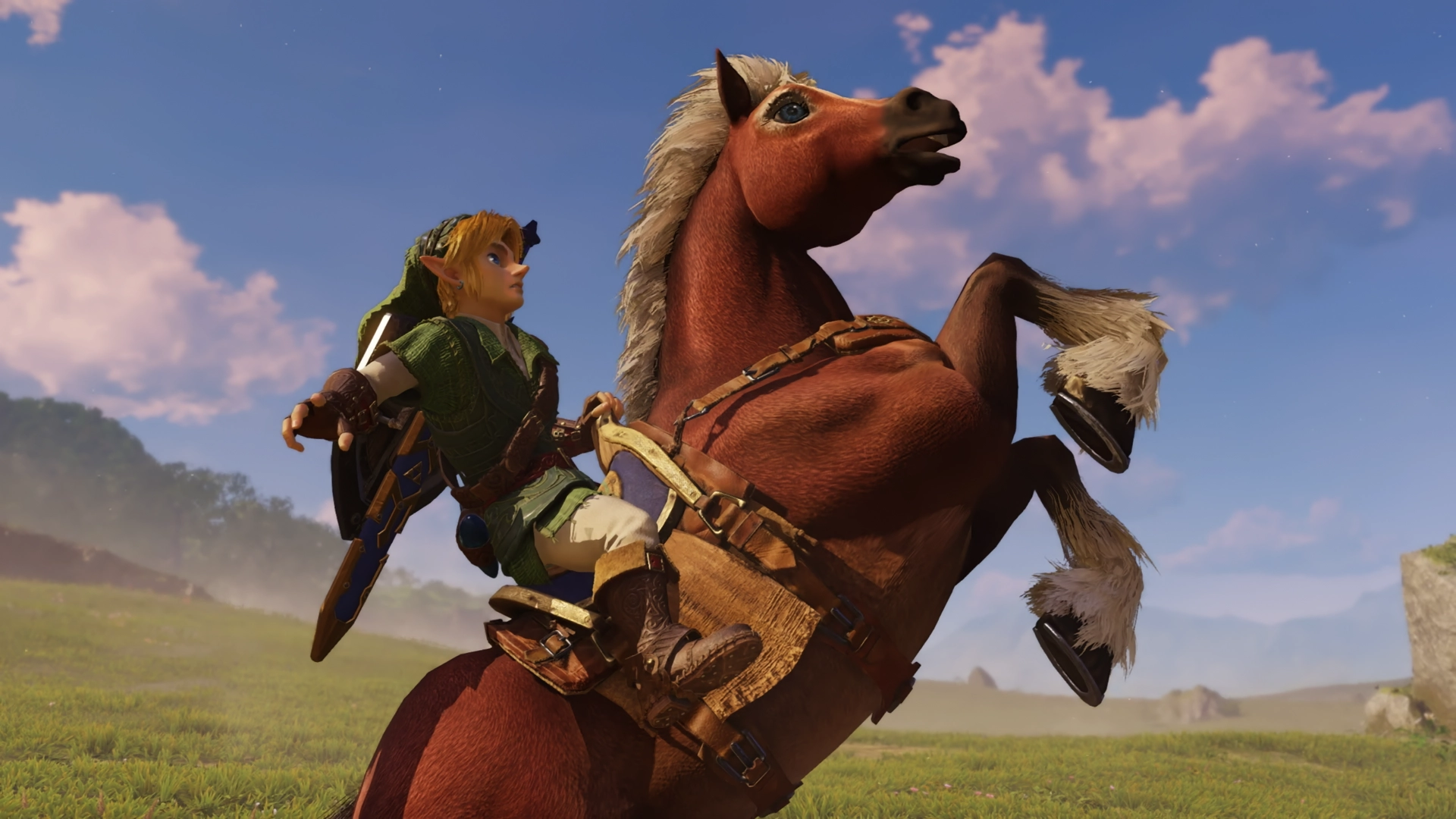
That same consideration extends to the visual overhaul, which is arguably the most immediately striking aspect of this new release. Hyrule has been transformed into a beautifully realised world, with environments that possess a richness and personality that the original hardware could only hint at. Familiar locations have been reconstructed with an extraordinary level of detail, from the lush greenery surrounding Kokiri Forest to the imposing architecture of Hyrule Castle and the atmospheric depths of its many dungeons. Textures, lighting and environmental details have all received considerable attention, yet there is a welcome restraint to the redesign. Everything feels recognisably Ocarina of Time, retaining the visual identity that made the original so memorable while giving its world the breathing room it deserves.

What makes the presentation particularly impressive is how beautifully it translates to Nintendo Switch 2 in both handheld and docked modes. Playing on the television allows Hyrule’s environments to really open up, with the improved detail and richer lighting giving familiar locations an almost storybook quality. Yet taking the adventure into handheld mode is every bit as rewarding. The world looks wonderfully crisp on the console’s display, making those quieter moments of exploration feel surprisingly intimate. Whether settling down for a lengthy journey through its dungeons or simply spending a little time wandering around Hyrule Field, the experience feels consistently gorgeous. More importantly, the visual improvements never come at the expense of readability, ensuring that puzzles, characters and the surrounding environments remain wonderfully clear.

Accompanying all of this is a refreshed presentation that gives Ocarina of Time’s already iconic atmosphere an entirely new dimension. The symphonic orchestral soundtrack lends familiar melodies a renewed sense of grandeur, making everything from the peaceful surroundings of Kokiri Forest to the more dramatic moments of the adventure feel wonderfully evocative. The expanded dialogue and fully voiced cutscenes also give the characters greater presence, adding another layer of personality to a story that has always been one of Nintendo’s most memorable. Yet it is the music that continues to leave the strongest impression. Those familiar melodies still possess an extraordinary ability to stir something within you, reminding you why this adventure has remained so cherished for so many years. Hearing them brought to life with such care is genuinely special.

10
Verdict
Summary

The Legend of Zelda: Ocarina of Time on Nintendo Switch 2 is everything I could have hoped for from a remake of one of my all-time favourite games. It is a beautiful celebration of an adventure that has lost none of its magic, combining the thoughtful improvements of a modern release with the timeless design that made the original such an important part of gaming history. Nintendo has approached the material with an evident affection, understanding that the greatest achievement was never going to be changing Ocarina of Time beyond recognition, but finding new ways to let its brilliance shine. Returning to Hyrule has been an absolute joy, and discovering just how beautifully this familiar adventure has been brought into the present has only strengthened my affection for it. Some games deserve to be remembered, while others deserve to be experienced all over again. Ocarina of Time belongs firmly in the latter category.

Related Articles

Eternal Palace Sakura Review—A Roguelite That Struggles to Blossom

Eternal Palace Sakura makes a striking first impression, its colourful anime-inspired presentation...

Silver Pines Review—The Haunting Beauty of Silver Pines

There is something immediately captivating about Silver Pines. It was the game's...

Jupiter & Mars: Definitive Edition Review—Plenty of Ocean, Little to Explore

Some games leave an impression long after the credits have rolled, while...

Kalanoro Review—A Little Band of Hope

I had already decided what sort of game Kalanoro was before I...