



Nintendo Switch

Eternal Palace Sakura Review—A Roguelite That Struggles to Blossom

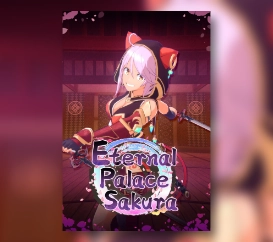
Eternal Palace Sakura makes a striking first impression, its colourful anime-inspired presentation immediately catching the eye with a vibrancy that is difficult to overlook. There is an unmistakable sense of playfulness to its visual identity, one that feels comfortable embracing the more eccentric corners of its fantasy setting without taking itself too seriously. It is an aesthetic that gives the game an immediate sense of character, drawing you in through its bright colours and expressive designs. Beneath that inviting exterior, however, lies an experience that doesn’t always manage to capture the same level of enthusiasm in its execution.

Release Date: November 5th 2026
Developer: 電猫遊戯
Publisher: Shochiku
Price: $11.99 USD
Reviewed On: Nintendo Switch 2
* Access Provided For Review *

More Details

At its heart, Eternal Palace Sakura is a roguelite built around repetition, gradual progression and the promise that each attempt might bring something a little different. Taking control of Retla, players venture through an ever-changing labyrinth, navigating a succession of rooms filled with enemies, treasures and opportunities to strengthen their abilities. There is a pleasing simplicity to the structure, with each encounter offering a small decision about whether to pursue another reward or move towards the next floor. The introduction of Mugen Depth adds an interesting complication, increasing the danger as you explore and forcing you to consider whether another detour is really worth the risk. It is an idea that gives the otherwise familiar room-by-room progression a welcome sense of consequence, even if its balancing occasionally feels more punishing than thoughtfully challenging.

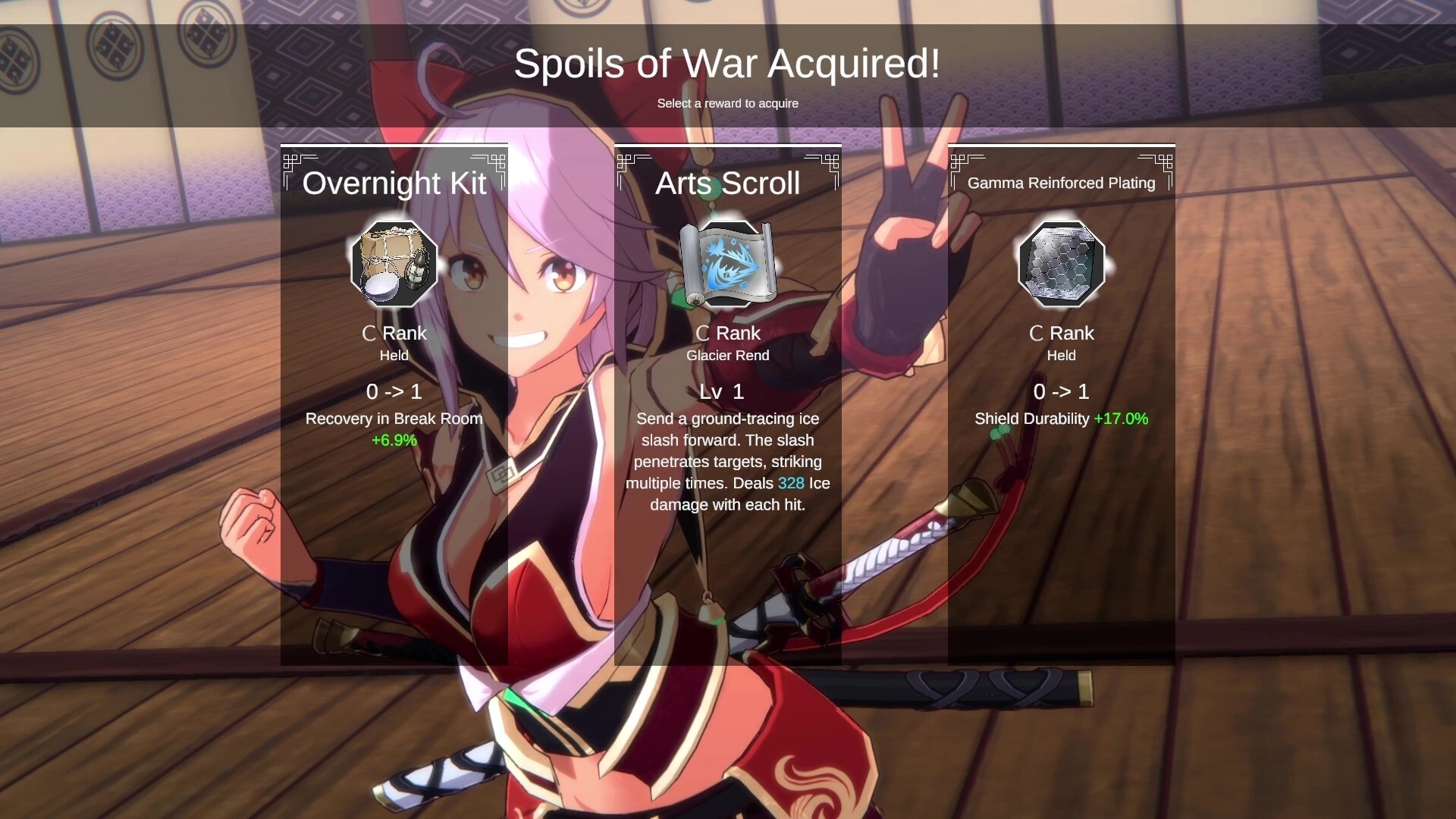
Combat, meanwhile, is built around a combination of basic attacks, defensive manoeuvres and special abilities known as Arts. Retla’s dual-blade fighting style provides the foundation for a system that initially feels accessible, with attacks capable of flowing into more elaborate combinations as you become familiar with its mechanics. Perfect dodges and well-timed blocks offer opportunities to regain resources and turn defensive actions into offensive advantages, while the Over-Tension system provides a satisfying payoff once its gauge has been filled. There are moments when everything comes together, particularly when chaining Arts into a succession of flashy attacks, but the underlying combat never quite achieves the fluidity it seems to be reaching for. Pauses between movements, occasional awkwardness in defensive actions and difficulties reading certain enemy attacks can make encounters feel unnecessarily cumbersome. The ingredients are there, but the rhythm rarely settles into something consistently enjoyable.

Much of the difficulty comes from how little variation there is between the enemies encountered throughout the labyrinth. Although the procedural nature of the environments changes the arrangement of encounters, familiar opponents return with such regularity that individual runs begin to blur together. Stronger abilities and collected Attributes can occasionally transform Retla into a formidable force, allowing encounters to be dispatched with considerably greater ease, but this progression also exposes some unevenness in the game’s balancing. Certain combinations can make you feel almost unstoppable, while other situations introduce sudden difficulty spikes that bring an otherwise promising run to an abrupt end. Boss encounters provide some welcome punctuation, offering larger health pools and more demanding patterns, but they cannot entirely disguise the repetitive nature of the journey leading towards them. There is a satisfying framework here, though the incentive to begin another run becomes increasingly difficult to justify once the novelty has worn away.

Visually, Eternal Palace Sakura has considerably more personality in its character presentation than in the environments surrounding it. Retla is an expressive protagonist, brought to life through colourful anime-inspired modelling and lively animations that give her a distinct presence during combat. Her movements are often exaggerated in a way that suits the game’s playful identity, while the visual flourishes accompanying her special abilities provide some much-needed spectacle during the more hectic encounters. Unfortunately, the same attention to detail does not extend quite so generously to the labyrinth itself. Many of the rooms feel functional rather than particularly memorable, relying on familiar architectural arrangements and relatively understated environmental details. There is enough here to establish the game’s fantastical setting, but rarely enough to make its individual locations linger in the imagination.

That sense of missed opportunity becomes more apparent as the journey progresses, although the changing environments do provide occasional moments of visual variety. The transition between different areas helps prevent the entire experience from becoming completely monotonous, introducing new colour palettes and settings that offer a welcome change from the palace’s more enclosed surroundings. Nevertheless, the overall presentation remains somewhat inconsistent, with the character models and combat effects often feeling noticeably more accomplished than the spaces in which they appear. The atmosphere consequently struggles to develop much of an identity beyond its colourful fantasy aesthetic. There are glimpses of something more enchanting in the combination of Japanese-inspired imagery, mysterious architecture and the occasional flourish of visual spectacle, but the world rarely feels as richly realised as its initial presentation promises.

Accompanying all of this is a soundtrack and collection of sound effects that largely serve their purpose without becoming particularly distinctive. The music complements the fantasy setting and provides an appropriate backdrop for the action, helping maintain momentum during encounters without demanding too much attention. Likewise, the various combat sounds give attacks and abilities a necessary sense of impact, although there is little here that elevates the overall audio presentation beyond functional accompaniment. It is perfectly serviceable, but much like the environments themselves, it lacks the character and variety needed to make the experience feel truly memorable. In a game so reliant on returning to familiar locations and repeating familiar encounters, a stronger musical identity might have gone some way towards giving each expedition a greater sense of occasion.

5
Verdict
Summary

Eternal Palace Sakura is a game that demonstrates plenty of enthusiasm without quite possessing the refinement to make its ideas consistently compelling. Its progression systems and Mugen Depth mechanic offer some interesting wrinkles to an otherwise familiar roguelite formula, while Retla's colourful character design provides a welcome source of personality throughout. Unfortunately, repetitive encounters, uneven difficulty and combat that never quite reaches its potential gradually undermine the appeal of returning to the labyrinth. There is enjoyment to be found in experimenting with different abilities and occasionally stumbling upon a particularly satisfying combination, but these moments are too sporadic to sustain the experience over the longer term. Eternal Palace Sakura is an agreeable enough diversion, and one that hints at a more engaging game beneath its surface, but its charm ultimately proves rather more enduring than its gameplay.


Related Articles

Silver Pines Review—The Haunting Beauty of Silver Pines

There is something immediately captivating about Silver Pines. It was the game's...

Jupiter & Mars: Definitive Edition Review—Plenty of Ocean, Little to Explore

Some games leave an impression long after the credits have rolled, while...

Kalanoro Review—A Little Band of Hope

I had already decided what sort of game Kalanoro was before I...

1000xRESIST Nintendo Switch 2 Edition Review—A Strange Kind of Immortality

There are games that tell you a story, and then there are...