



Nintendo Switch

Silver Pines Review—The Haunting Beauty of Silver Pines

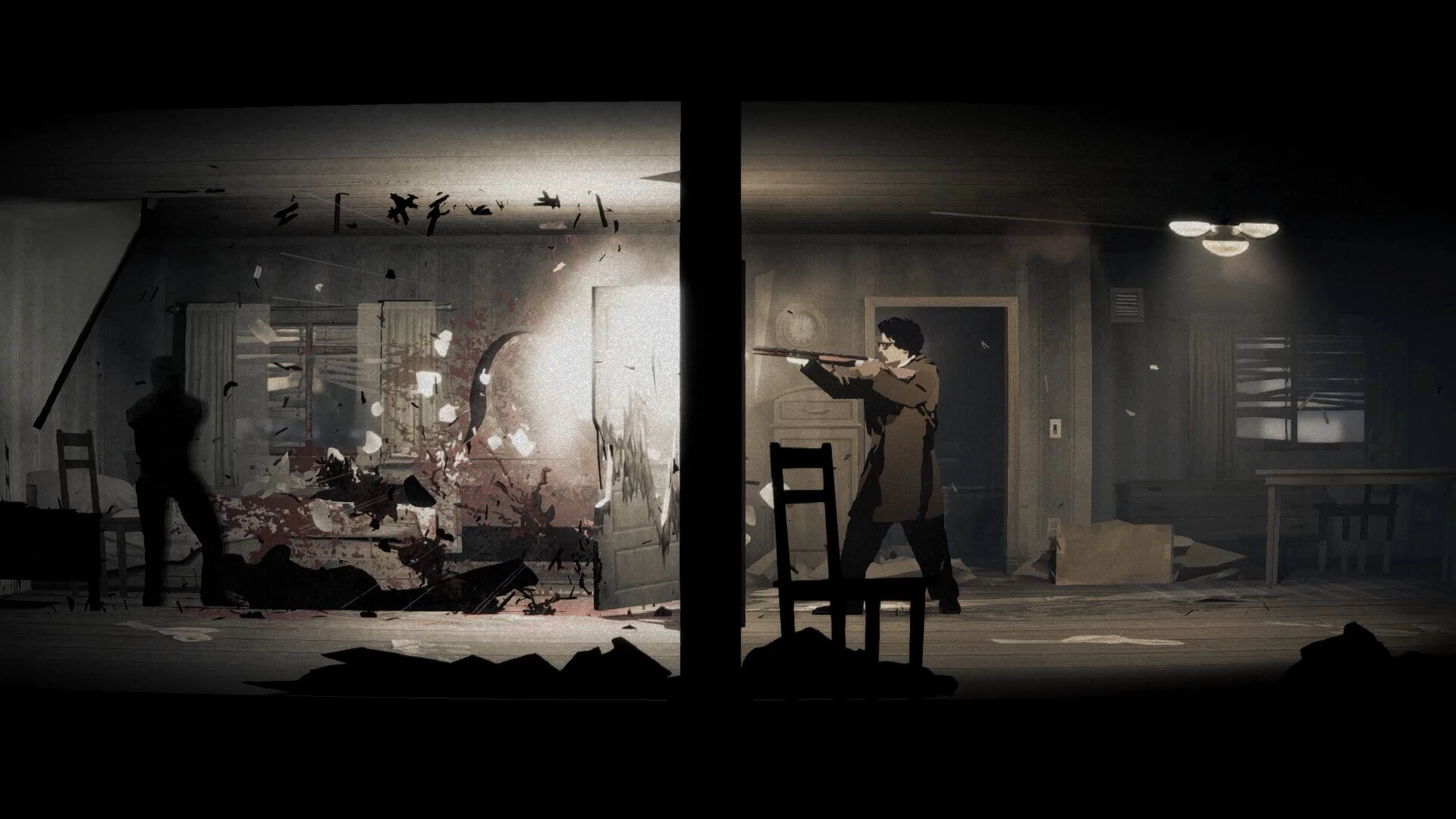
There is something immediately captivating about Silver Pines. It was the game’s visual style that first drew me towards it, with its peculiar marriage of rotoscoped characters and beautifully illustrated environments conjuring memories of forgotten horror comics and late-night television broadcasts. There’s a tactile, almost dreamlike quality to its presentation, as though the world has been assembled from fragments of some half-remembered nightmare. Yet beneath its curious exterior lies an equally intriguing blend of survival horror, detective fiction and Metroidvania exploration. It’s an unusual cocktail, but one that gives Silver Pines an identity all of its own, inviting you into a place where the ordinary has become quietly, insistently strange.

Release Date: October 8th 2026
Developer: Wych Elm
Publisher: Team17
Price: £21.99/ $24.99 USD
Reviewed On: Nintendo Switch 2
* Access Provided For Review *

More Details

The mystery begins with Red Walker, a private investigator dispatched to the titular town in search of a missing musician named Eddie Velvet. What should be a relatively straightforward assignment soon becomes something considerably more troubling, as Walker discovers a community seemingly abandoned to the elements, its remaining inhabitants behaving with the peculiar indifference of people who have grown accustomed to the inexplicable. A gathering storm hangs over the town, but there’s a more pervasive darkness beneath the surface, one that gradually reveals itself through strange encounters, cryptic conversations and unsettling discoveries. Silver Pines is at its best when it allows its mysteries to breathe, resisting the temptation to explain everything at once. Its narrative has the curious, dreamlike logic of a story recalled rather than experienced, and there’s a genuine pleasure in following its increasingly tangled threads without quite knowing where they might lead.

At the heart of the experience is a wonderfully interconnected world, one that borrows the familiar language of Metroidvania design and gives it an appropriately sinister twist. The town is a labyrinth of abandoned buildings, forgotten passageways and seemingly innocuous locations that gradually reveal hidden depths. Progress is frequently dictated by the discovery of new keys, tools and abilities, encouraging you to reconsider places that once appeared inaccessible. There’s a pleasing sense of geography to it all, as familiar landmarks slowly become part of a larger mental map, and the discovery of a previously unreachable route can feel almost as rewarding as uncovering another piece of the central mystery. Like any good detective story, Silver Pines understands that the satisfaction often lies not in reaching the destination, but in discovering how all the disparate pieces fit together.

That investigative sensibility extends to the puzzles, which provide a welcome counterpoint to the game’s more traditional survival horror elements. Safes, locked doors and cryptic clues are scattered throughout the environment, encouraging you to pay attention to details that might otherwise disappear into the background. A camera proves particularly useful, allowing Walker to photograph interesting discoveries and preserve them on his map for later consideration. It’s a small but meaningful addition, reinforcing the idea that you’re conducting an investigation rather than simply wandering through another haunted town with a gun. The puzzles themselves are generally well judged, asking you to think laterally without becoming needlessly obscure. Occasionally, though, the reliance on backtracking begins to feel a little too deliberate, with the excitement of uncovering a new route sometimes giving way to the less romantic business of retracing familiar ground.

Combat, meanwhile, is where Silver Pines reveals its more imperfect side. Resources are scarce, encounters can be dangerous, and every confrontation carries the uncomfortable possibility of leaving you less prepared for whatever might be waiting around the next corner. In theory, it’s an approach that fits the game’s atmosphere beautifully, turning even relatively ordinary encounters into small calculations of risk and reward. In practice, however, the combat doesn’t always possess the precision or fluidity necessary to make these moments consistently enjoyable. Some encounters feel awkwardly paced, while certain boss battles struggle to find the balance between genuine tension and straightforward frustration. It’s a shame, particularly because the surrounding exploration is so carefully considered. The horror is often more effective when you’re anticipating what might be waiting in the darkness than when you’re actually required to fight it.

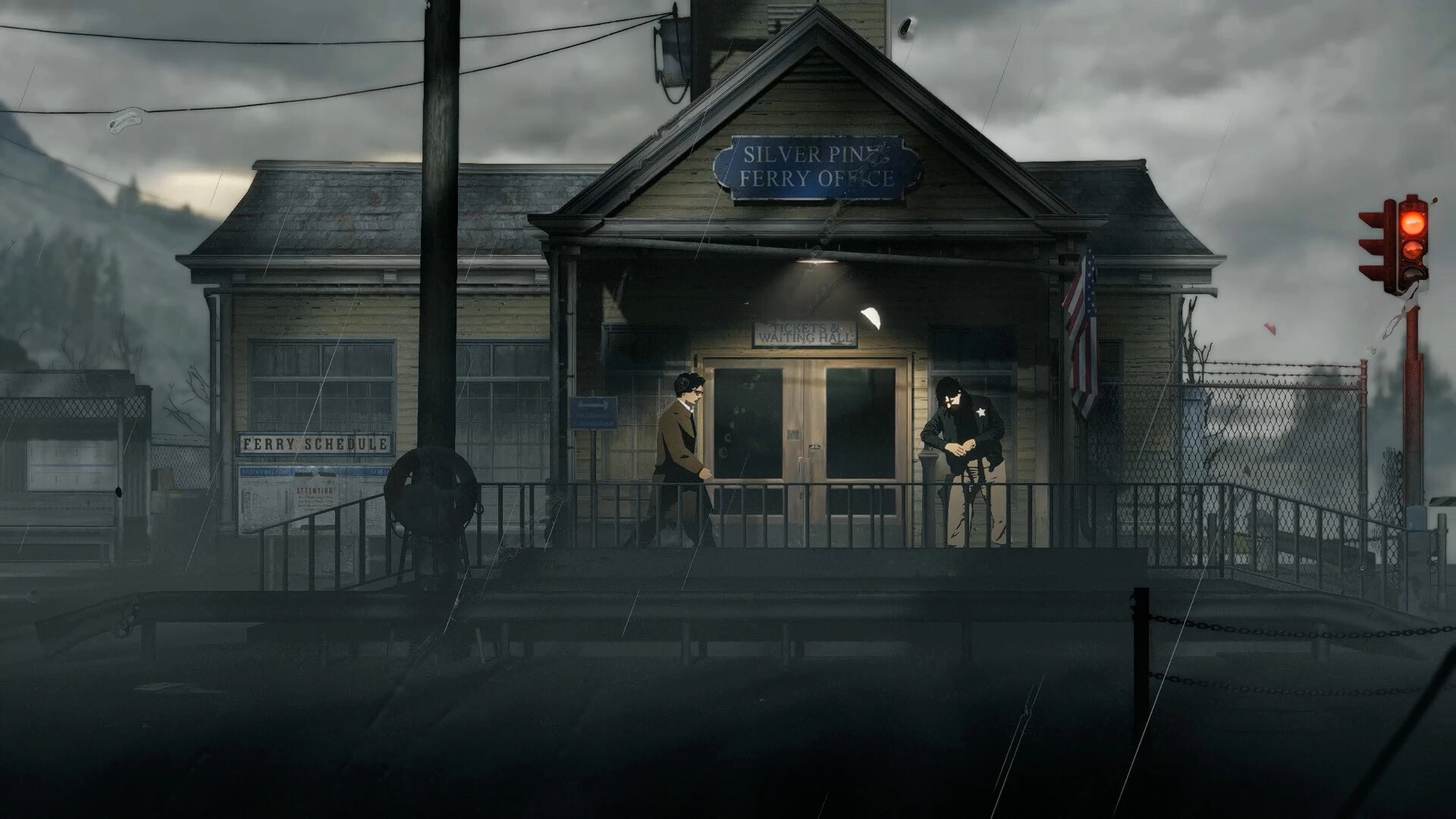
Visually, Silver Pines is something of a small wonder. Its rotoscoped animation lends the characters an unusual physicality, their movements possessing an almost theatrical realism that sits wonderfully uneasily against the game’s more stylised surroundings. There’s something faintly uncanny about watching these recognisably human figures inhabit a world that looks as though it has been painted from memory. Their movements are expressive without becoming overly exaggerated, while the occasional peculiarities of their animation only reinforce the sense that something isn’t quite right. It’s a distinctive approach that recalls the strange marriage of reality and artifice found in old illustrated horror stories, giving even the most mundane interactions a curious sense of significance. The result is a game that feels immediately recognisable, yet never entirely comfortable.

Its environments are every bit as evocative. Silver Pines is a place of faded Americana, where roadside establishments, abandoned homes and forgotten public spaces seem to retain the faint impressions of the lives once lived within them. Richly illustrated backgrounds and carefully layered scenery give the world a remarkable sense of depth, while the interplay of light and shadow transforms familiar surroundings into something considerably more threatening. There’s a melancholy beauty to these locations, as though the town hasn’t simply been abandoned but left behind by time itself. Even its quieter corners feel steeped in history, and the longer you spend exploring, the more the landscape begins to resemble an enormous collection of unanswered questions. It’s a world that rewards looking, not simply moving, and its visual storytelling is all the stronger for it.

Perhaps most impressive, though, is the way the game’s soundscape completes this carefully constructed sense of unease. Its soundtrack moves between atmospheric ambient compositions and more evocative musical passages, occasionally offering moments of unexpected warmth amid the surrounding desolation. Environmental sounds are used just as effectively, with distant noises and stretches of relative silence making the town feel like a place that continues to exist beyond the boundaries of your immediate surroundings. The voice acting adds another layer of peculiar character, lending conversations an appropriately strange quality that makes it difficult to know quite how seriously to take some of the people you encounter. There’s a distinctly Lynchian quality to the whole affair, not simply in its oddities, but in the way it allows the unsettling to emerge from the everyday. Silver Pines rarely needs to shout to make itself heard.

8
Verdict
Summary

For all its occasional frustrations, Silver Pines is a thoroughly absorbing adventure, one whose greatest strengths lie in the world it creates and the peculiar mysteries hidden within it. Its interconnected exploration is consistently rewarding, its puzzles provide a satisfying sense of discovery, and its distinctive presentation gives the experience a personality that lingers long after you've left its rain-soaked streets behind. The combat could certainly be more refined, and its fondness for backtracking occasionally threatens to undermine the otherwise excellent pace of its exploration. Yet these are imperfections in an experience that gets so much else wonderfully right. Wych Elm has created a place that feels both strangely familiar and utterly alien, a forgotten corner of Americana where the mundane and the macabre have become inseparable. Silver Pines isn't always an entirely comfortable place to visit, but there's an undeniable magic in its peculiar darkness.


Related Articles

Jupiter & Mars: Definitive Edition Review—Plenty of Ocean, Little to Explore

Some games leave an impression long after the credits have rolled, while...

Kalanoro Review—A Little Band of Hope

I had already decided what sort of game Kalanoro was before I...

1000xRESIST Nintendo Switch 2 Edition Review—A Strange Kind of Immortality

There are games that tell you a story, and then there are...

LEGO® Party! Review—More Than The Sum Of Its Bricks

Party games have always thrived on company. They're built around laughter that...