Meta Quest

Roboquest VR Review—Built for Speed, Tested by Hardware

There was always a degree of scepticism surrounding Roboquest VR. Translating one of the fastest roguelite shooters in recent years into virtual reality is one challenge; asking a standalone headset to shoulder that same relentless pace is another entirely. On paper, it feels like the sort of project that should involve significant compromise, whether through reduced ambition or technical concessions. Instead, Roboquest VR spends much of its time asking a different question altogether: not whether the format can survive the transition, but how much of the original’s identity can be preserved when the hardware could be working at its limits.

Release Date: July 23rd 2026
Developer: Flat2VR Studios, RyseUp Studios
Publisher: Impact Inked
Price: £22.99/ $29.99 USD
Reviewed On: Meta Quest 3
* Access Provided For Review *

More Details

Movement Is Survival

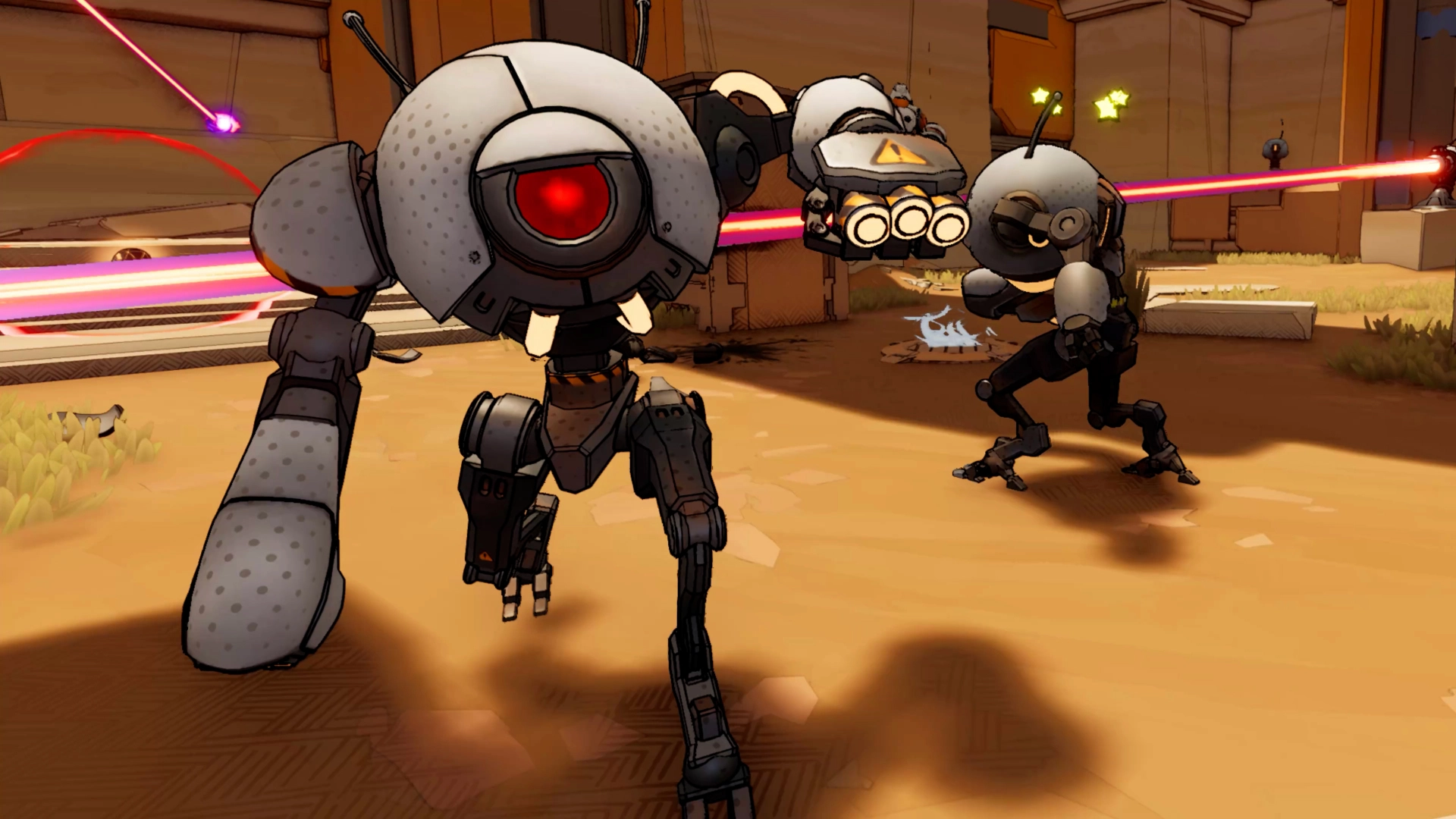
For all the spectacle Roboquest VR delivers, its greatest success lies in understanding that speed is the game’s defining mechanic rather than simply one of its features. Flat2VR Studios hasn’t slowed the original experience to accommodate virtual reality, instead trusting players to keep pace with firefights that rarely pause for breath. Standing still is punished almost immediately as plasma fire tears across arenas, making every encounter a constant exercise in repositioning. The result is a shooter that rarely allows complacency, with movement becoming as important as accuracy in determining whether a run survives another room.

That emphasis on momentum gives the traversal real purpose. Sliding beneath incoming fire, chaining together increasingly ambitious jumps and eventually gliding along rails transforms each arena into something approaching a platforming challenge without ever abandoning its focus on gunplay. VR adds another layer by asking players to physically lean away from incoming projectiles or shift their bodies to avoid attacks that would have been simple button presses elsewhere. It rarely feels like a gimmick. Instead, the headset becomes another tool the game expects you to master, making encounters feel more immediate without sacrificing readability.

The arsenal complements that philosophy well. More than seventy weapons ensure runs rarely become repetitive, and the shift to physical handling gives familiar firearms a renewed sense of character. Shotguns demand deliberate reloads, sniper rifles reward steady two-handed aiming, while bows require the tension of manually drawing each shot before release. Those less interested in juggling magazines during increasingly frantic encounters can opt for automatic reloading, a sensible concession that preserves the game’s rhythm rather than disrupting it. Even with that accessibility, the weapons retain enough individuality that discovering a new favourite remains one of the roguelite loop’s simple pleasures.

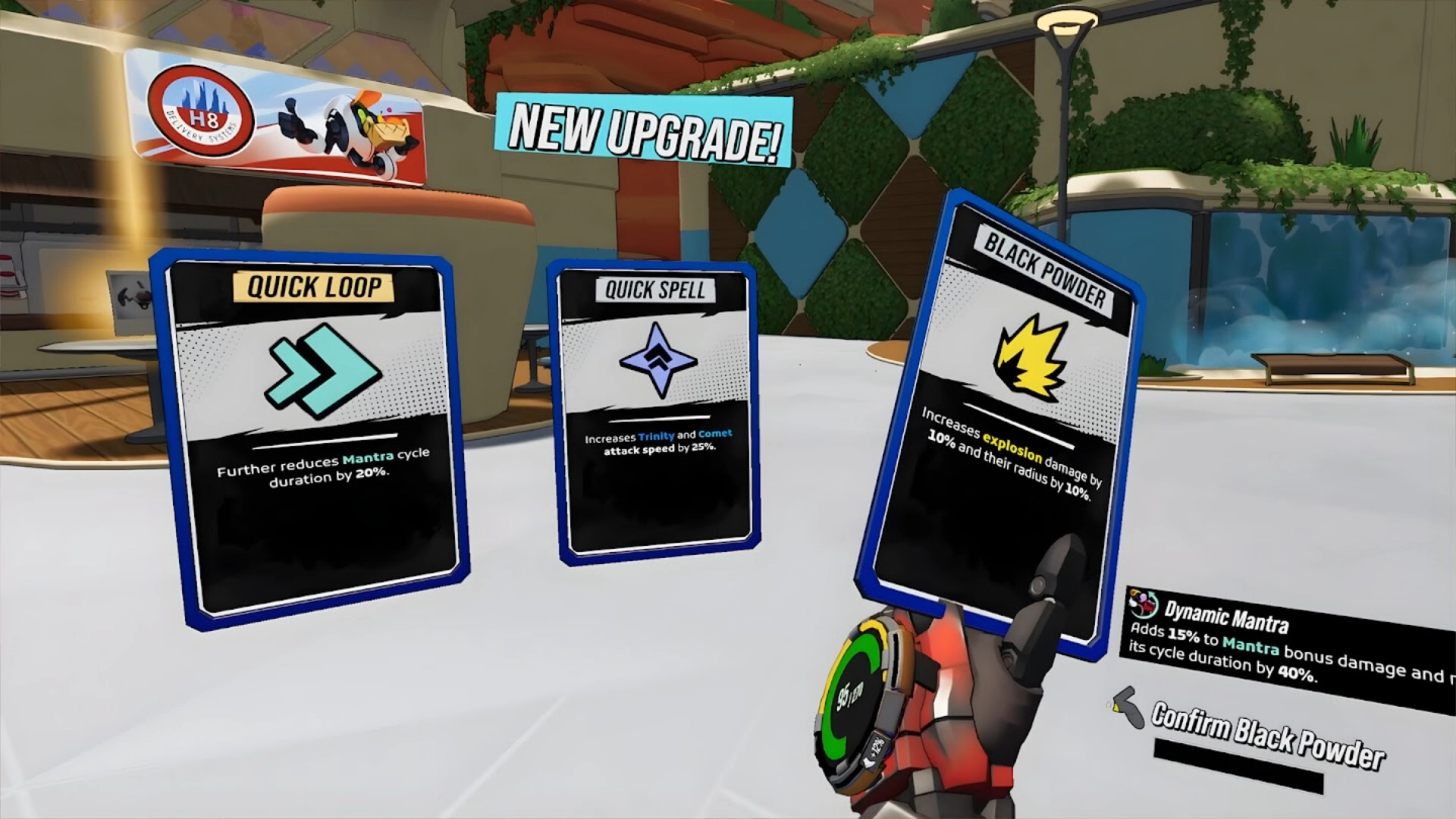
Progression follows a similarly measured approach. The seven Guardian classes offer meaningful differences without fundamentally rewriting the formula, whether that’s deploying an emergency shield directly from your chest or relying on holographic decoys and thrown spears to control space. Mid-run upgrades arrive as physical cards that can be picked up and examined before committing to a build, while collected wrenches feed into permanent upgrades back at base camp. Alongside Power Cores that provide immediate rewards during a run, Roboquest VR manages to make both short-term decisions and long-term progression feel worthwhile without burying players beneath unnecessary complexity.

Procedural biomes and their rotating enemy compositions keep individual runs unpredictable, although the underlying structure remains familiar to anyone who has spent time with modern roguelites. The addition of online co-operative play arguably gives the game its strongest dimension. Shared survival isn’t built around competing for resources, with weapons, health and loot generated individually, but cooperation still matters through the ability to physically hand equipment to teammates or split your own health to revive a fallen partner. It’s a simple set of ideas that suits VR remarkably well, encouraging communication without forcing it, and giving Roboquest VR a sense of momentum that extends beyond its movement alone.

The Cost of Ambition

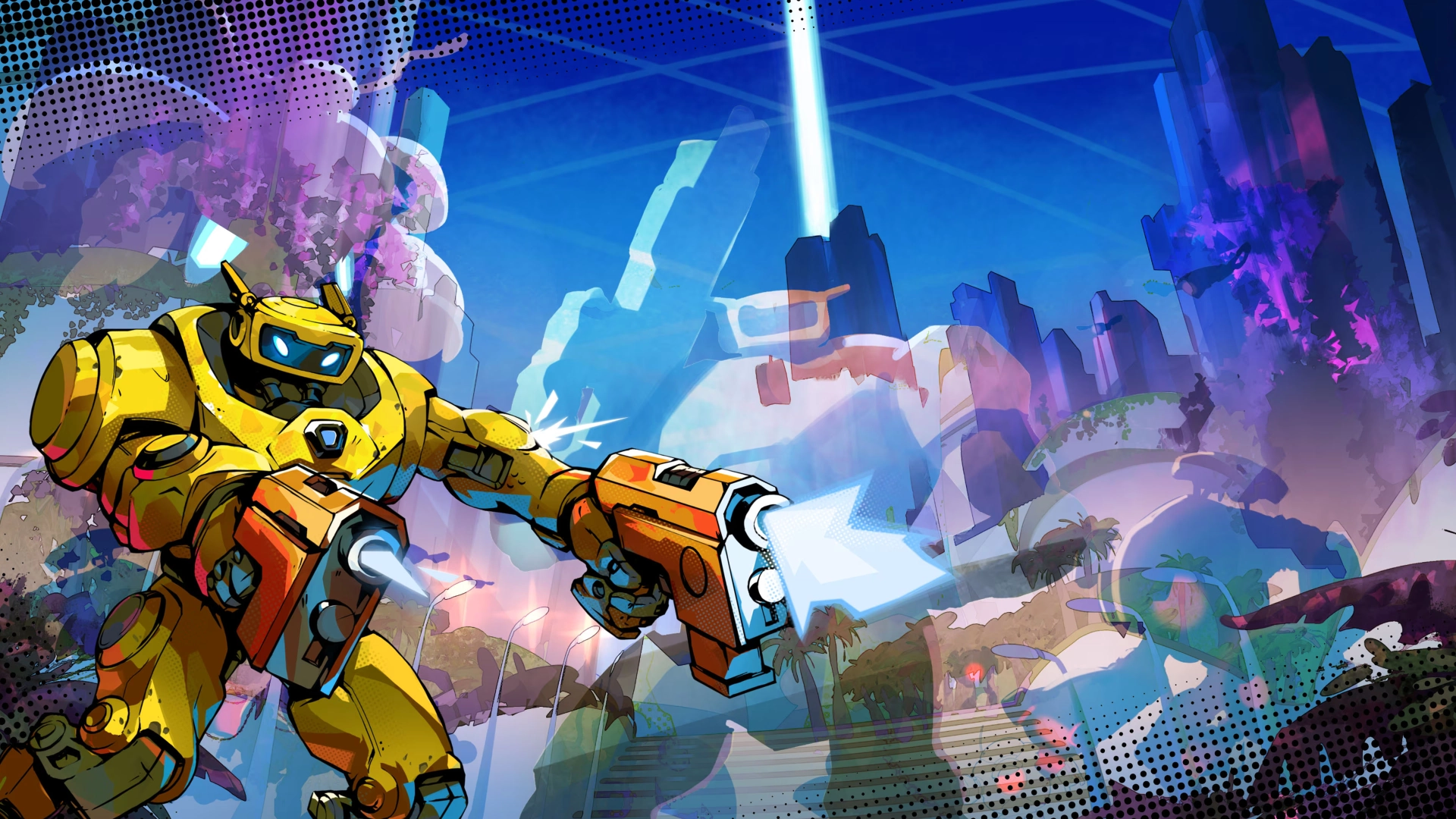
Roboquest VR’s comic-book presentation makes an unexpectedly natural fit for virtual reality. Rather than chasing photorealism, its bold cel-shaded aesthetic benefits from the medium, with thick outlines, vibrant colours and clean environmental design remaining remarkably close to the original release. On Meta Quest 3, the headset’s pancake lenses do much of the heavy lifting, offering impressive edge-to-edge clarity that allows you to track enemies with your eyes instead of constantly turning your head. It’s a small detail that has a surprisingly large impact on comfort, particularly during the game’s busiest encounters where threats arrive from every direction. Equally welcome is the option to adjust the world’s physical scale, an unusual accessibility feature that subtly changes how environments feel without affecting gameplay itself.

The presentation isn’t without its compromises, however. Roboquest VR is an ambitious game to run on standalone hardware, and there are moments where those ambitions stretch the Quest 3 beyond its comfort zone. Texture pop-in becomes difficult to ignore as environments stream in, while occasional texture flickering briefly breaks the otherwise cohesive visual style. They’re rarely issues that derail the experience outright, but they do serve as reminders that this is a technically demanding shooter running on comparatively modest hardware. It’s an impressive conversion overall, even if the illusion occasionally cracks under pressure.

Performance follows a similar pattern. Most of the time the game maintains the speed and responsiveness its design depends upon, but particularly hectic firefights expose clear CPU limitations. With enemies flooding arenas alongside particle effects, bouncing damage numbers and relentless movement, noticeable frame-rate dips begin to creep in. In a slower VR experience these fluctuations might pass unnoticed, yet Roboquest VR asks players to slide, jump and dodge with split-second precision, making those moments far more apparent. Those especially sensitive to motion sickness may find these brief stutters more distracting than the average player.

The audio work, by contrast, is consistently strong. The driving electronic soundtrack understands exactly when to push the pace, lending each encounter a sense of urgency without overwhelming the action. Spatial audio proves equally effective, making it surprisingly easy to locate robotic enemies through the direction of mechanical footsteps, weapon fire and incoming projectiles alone, while Quest 3’s haptic feedback gives heavier weapons and drawn bows a convincing physical weight that complements every shot. Unfortunately, there remains an intermittent bug where gameplay sound effects disappear entirely, leaving only the soundtrack until the headset is restarted. It’s an uncommon issue, but one that can momentarily undermine an otherwise excellent soundscape.

Comfort

8
Verdict
Summary

Roboquest VR succeeds because it understands that preserving the original's relentless pace matters more than simply recreating its mechanics in virtual reality. Flat2VR Studios has delivered a conversion that feels surprisingly natural on standalone hardware, pairing exhilarating movement, satisfying physical weapon handling and rewarding roguelite progression with thoughtful co-operative play that complements the experience rather than distracting from it. The bold cel-shaded visuals and excellent spatial audio translate well to Quest 3, while smart comfort and accessibility options help make its demanding action more approachable. Technical shortcomings, including texture pop-in, occasional frame-rate drops during the busiest encounters and an intermittent audio bug, prevent the adaptation from feeling completely seamless, but they do little to diminish what remains one of the most accomplished examples of a flatscreen shooter successfully reimagined for virtual reality.
Related Articles

Pinball FX VR: The Princess Bride Table Review—Where Fairytales Meet Silver Ball Excellence

Few films lend themselves to pinball quite as naturally as The Princess...

Pinball FX VR: Pacific Rim Table Review—Great Pinball First, Pacific Rim Second

There's an easy temptation with a licence like Pacific Rim to let...

Pinball FX VR: Goat Simulator Table Review – Pinball Goes Completely Goat

Zen Studios' Goat Simulator Pinball successfully translates the wonderfully chaotic spirit of...

Arcade2TV-XR X-Force Haptics Kit Review—A Game-Changing Upgrade for Pinball Fans

The Arcade2TV-XR significantly enhances the virtual pinball experience by adding a physical...