
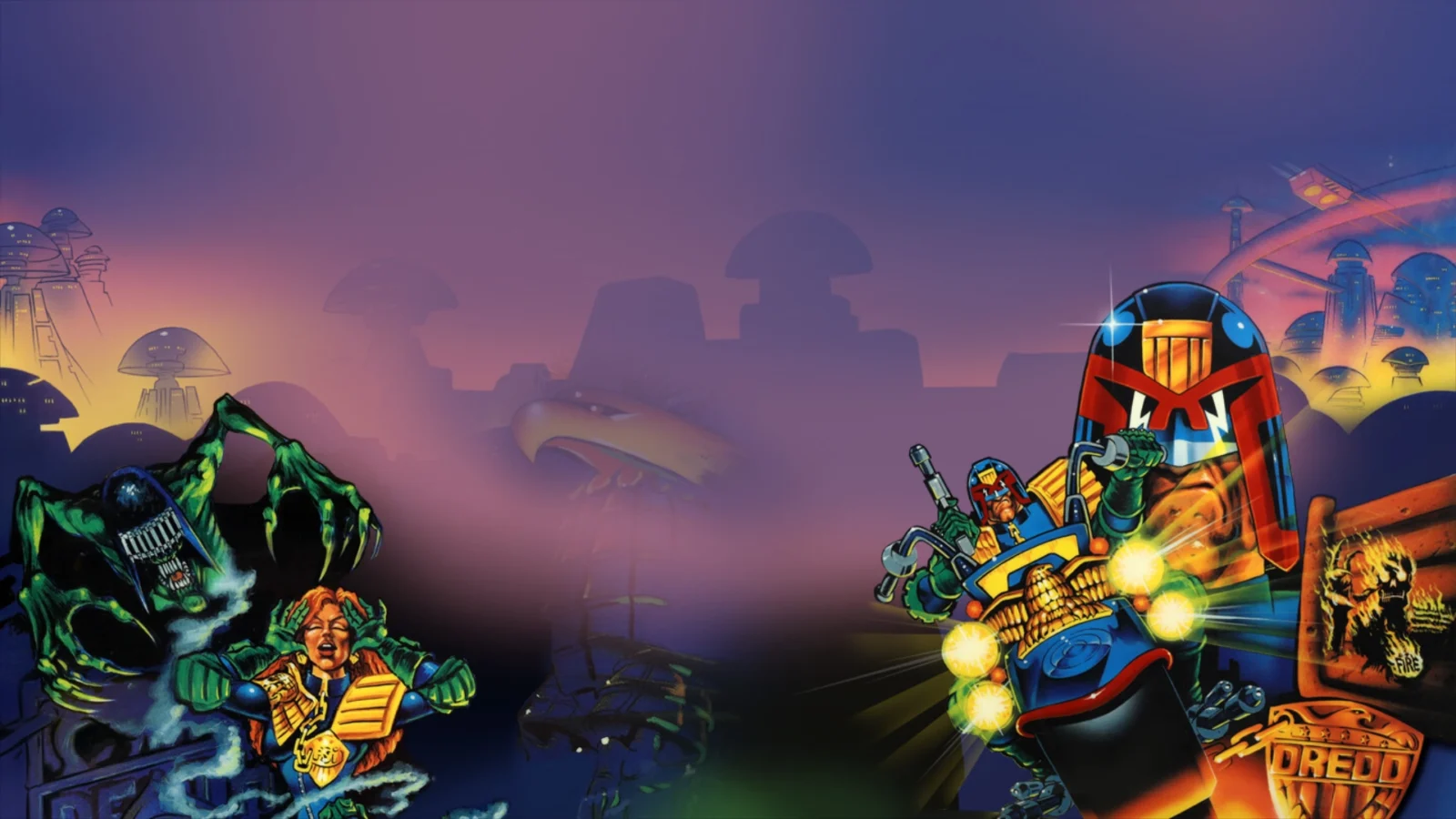
There is something fitting about Judge Dredd finding a home on a pinball table. Mega-City One has always been a place of noise, excess and barely contained chaos, a world where the machinery of justice threatens to become as absurd as the crimes it punishes. Bally’s 1993 table captures that spirit beautifully, and its arrival in Pinball FX VR offers a chance to step into this peculiar corner of pinball history, where the law is absolute and the ball is rarely where you want it to be.
The table itself is a wonderfully busy thing, its playfield crowded with ramps, targets and mechanical diversions that give the eye plenty to follow without losing the satisfying logic of its layout. The Space Station robotic arm, which releases balls locked in Deadworld’s orbit, is an especially memorable centrepiece, lending the proceedings a physicality that feels well suited to virtual reality. There is a pleasing sense of theatricality to it all, too, with the table’s comic-book dystopia providing a distinctive backdrop to the familiar clatter and rhythm of pinball. It feels like a relic from an era when licensed arcade machines were allowed to be gloriously, unapologetically strange.
There is more to the table than simply keeping the ball alive, with ten play modes offering different objectives to pursue. Super Game provides an immediate multiball, throwing several balls into play from the outset, while the standard modes encourage you to explore the table’s various features. Pursuing criminals along the Mega-City Super Highway adds a welcome sense of momentum, while the escalating crime levels provide a useful incentive to keep targeting the designated crime scenes. Raise those crimes to Class X Felony and the rewards grow, turning what might otherwise be incidental shots into a more deliberate scoring strategy. Each mode has its own leaderboard, giving repeat visits a little extra purpose.
Scoring well is largely a matter of learning the table’s rhythms and recognising when to chase a particular objective rather than simply batting the ball around and hoping for the best. The crime scenes are central to that process, with their increasing values rewarding players who take the time to advance the crime level before collecting them. Multiball, meanwhile, creates those lovely moments of controlled panic in which several opportunities compete for your attention, and the robotic arm adds another wrinkle to the business of managing locked balls. There is a satisfying progression towards The Ultimate Challenge, the Wizard Mode that pits you against Judge Death and the Dark Judges of Deadworld. As with the best pinball tables, mastery comes gradually, through familiarity with the shots and the small victories that turn a decent run into a memorable one.
Judge Dredd remains an appealing piece of pinball history, its elaborate mechanisms and playful interpretation of 2000 AD’s grim future giving it a personality that many more anonymous tables lack. Its wealth of modes and escalating objectives offer plenty to learn, while the VR presentation makes its physical contraptions feel particularly immediate. There is a certain old-fashioned complexity here that can seem daunting at first, and the table asks for patience before its many systems begin to make sense. But that is part of its appeal: this is pinball with a sense of place, a machine with enough character to make each successful shot feel like a small act of justice. The law may be merciless, but at least it makes for a good game.
Tiny Flock was the standout of the VR Games Showcase when it...

October 4, 2026There is something immediately comforting about returning to CharacterBank's worlds. I have...

September 6, 2026There was always a degree of scepticism surrounding Roboquest VR. Translating one...

August 2, 2026Few films lend themselves to pinball quite as naturally as The Princess...
July 27, 2026