Meta Quest

Project Hail Mary: Journey Among the Stars Review—A Universe of Possibilities, Grounded by Reality

The idea of stepping into the shoes of an astronaut, drifting through the vastness of space with the fate of two worlds resting on your shoulders, is an enticing one. Yet, for all the promise of the technology, I feel games focusing on mixed reality rarely manage to shine in quite the way they ought to. Too often, the novelty of bringing a digital world into our own physical surroundings feels like a distraction from the experience itself, rather than something that meaningfully enhances it. Project Hail Mary: Journey Among the Stars certainly has the ingredients for something special, drawing upon one of modern science fiction’s most endearing stories and placing its unlikely friendship at the centre of an entirely new adventure. Unfortunately, while its heart is very much in the right place, its ambitions are rather less successfully realised.

Release Date: November 12th 2026
Developer: Maze Theory Games Studio Ltd
Publisher: Maze Theory Games Studio Ltd
Price: £19.99 / $24.99 USD
Reviewed On: Meta Quest 3
* Access Provided For Review *

More Details

Set during an untold chapter of the Hail Mary mission, the story follows Ryland Grace and his unlikely companion Rocky as they journey towards the latter’s home planet of Erid. With their precious cargo aboard and the future of two civilisations hanging in the balance, the pair must navigate the increasingly precarious conditions of their spacecraft, relying upon one another to overcome the problems that threaten their journey. There is an inherent warmth to this unlikely partnership, and much of what made Andy Weir’s original story so affecting remains present here. Rocky, in particular, is a wonderful presence, his peculiar mannerisms and evolving relationship with Grace providing occasional moments of genuine charm. Yet the narrative struggles to find much momentum of its own, feeling more like an extended interlude than a particularly meaningful addition to the wider story. For an adventure built around the extraordinary bond between two very different beings, there is surprisingly little emotional depth to discover.

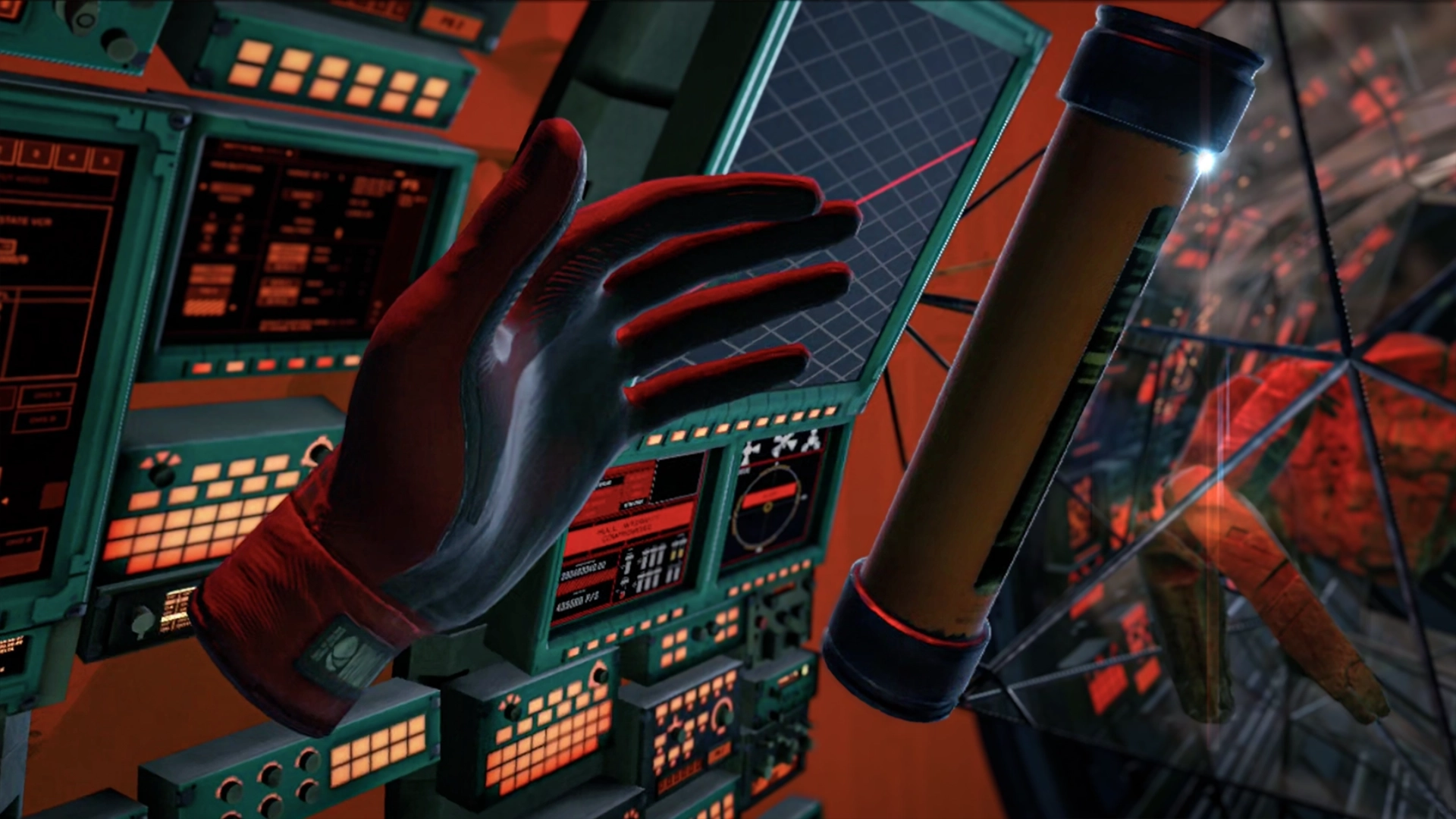
Much of your time aboard the Hail Mary is spent tending to its increasingly temperamental machinery, with a steady procession of malfunctioning systems requiring your attention. Whether replacing fuses, reconnecting electrical components or investigating atmospheric leaks, the emphasis is firmly placed on physical interaction, asking you to reach out, pick up objects and manipulate the various instruments scattered around your surroundings. In theory, there is something wonderfully tactile about this approach. The idea of physically repairing a spacecraft, rather than simply pressing a button or navigating another conventional menu, feels perfectly suited to the premise. In practice, however, these activities rarely develop beyond their most basic intentions. What initially feels like an opportunity to become an astronaut gradually settles into a rather repetitive routine of picking things up and putting them where the game tells you.

There are occasional attempts to introduce a little more ingenuity into proceedings, particularly when investigating electrical conduits or attempting to diagnose the source of a malfunction. These moments hint at the sort of scientific problem-solving that made Weir’s original story so compelling, where seemingly impossible situations are approached through curiosity, experimentation and a healthy amount of improvisation. Sadly, the execution rarely matches the ambition. The puzzles are generally straightforward, offering little opportunity to properly engage with the underlying mechanics, while the physical interactions themselves can feel inconsistent and imprecise. Objects don’t always respond as expected, and what should be satisfying little moments of mechanical ingenuity can instead become exercises in wrestling with the controls. It is difficult to feel like a resourceful scientist when the most pressing challenge is persuading a virtual object to behave.

Elsewhere, the opportunity to take control of the Hail Mary’s flight offers a welcome change of pace, briefly shifting the experience away from the confines of its maintenance duties. Guiding the spacecraft through the darkness of space should, by all accounts, be one of the adventure’s defining moments, offering a glimpse of the enormous journey taking place beyond the walls of your temporary surroundings. Unfortunately, these sequences are surprisingly underwhelming, lacking the sense of danger and spectacle that their premise suggests. The flight sections feel somewhat disconnected from the rest of the experience, with their objectives not always particularly clear and their sense of progression occasionally difficult to follow. Rocky provides a reassuring voice throughout, but even his company cannot entirely disguise how little there is to engage with. It is another example of an idea that sounds considerably more exciting on paper than it proves to be in practice.

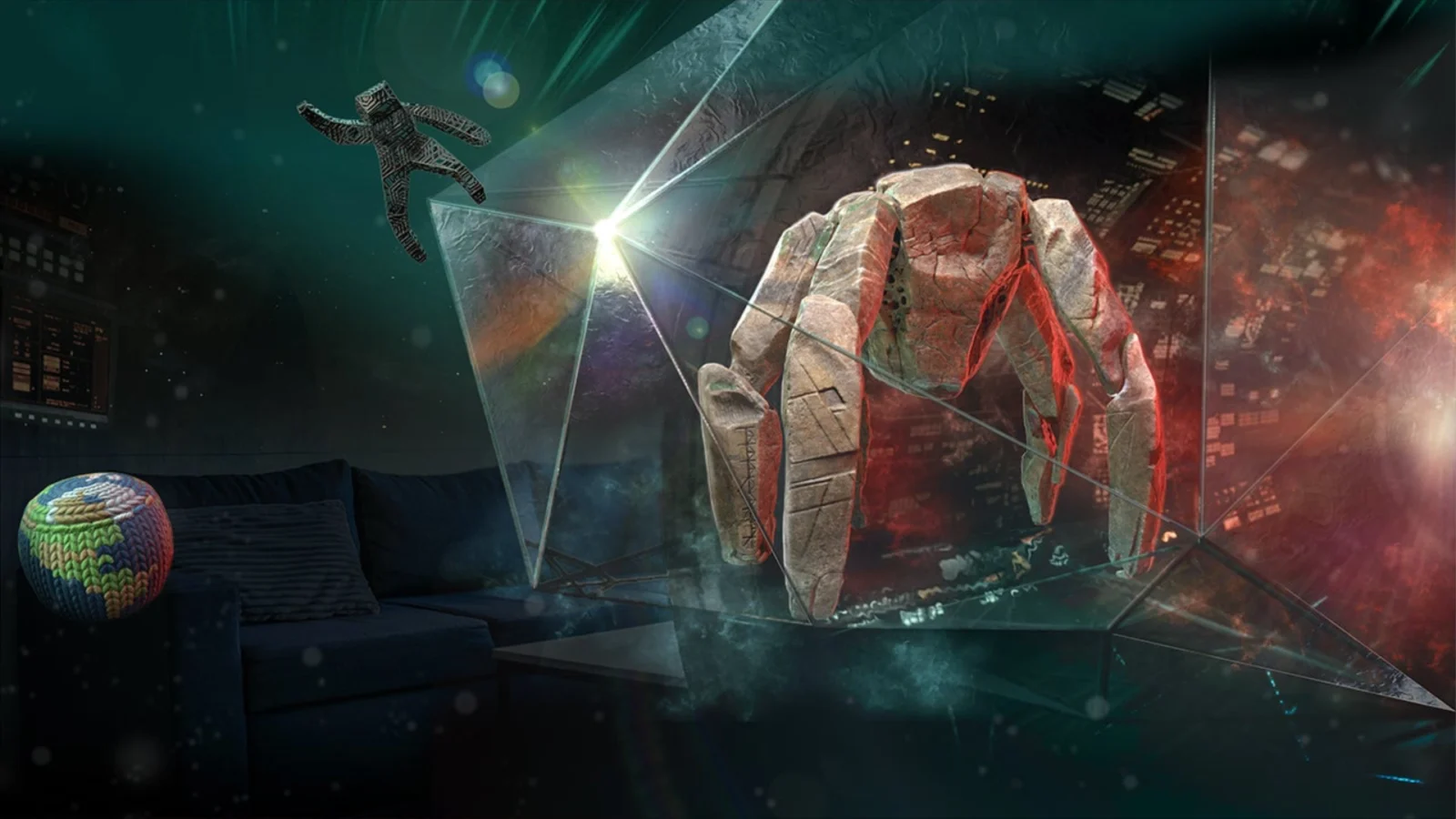
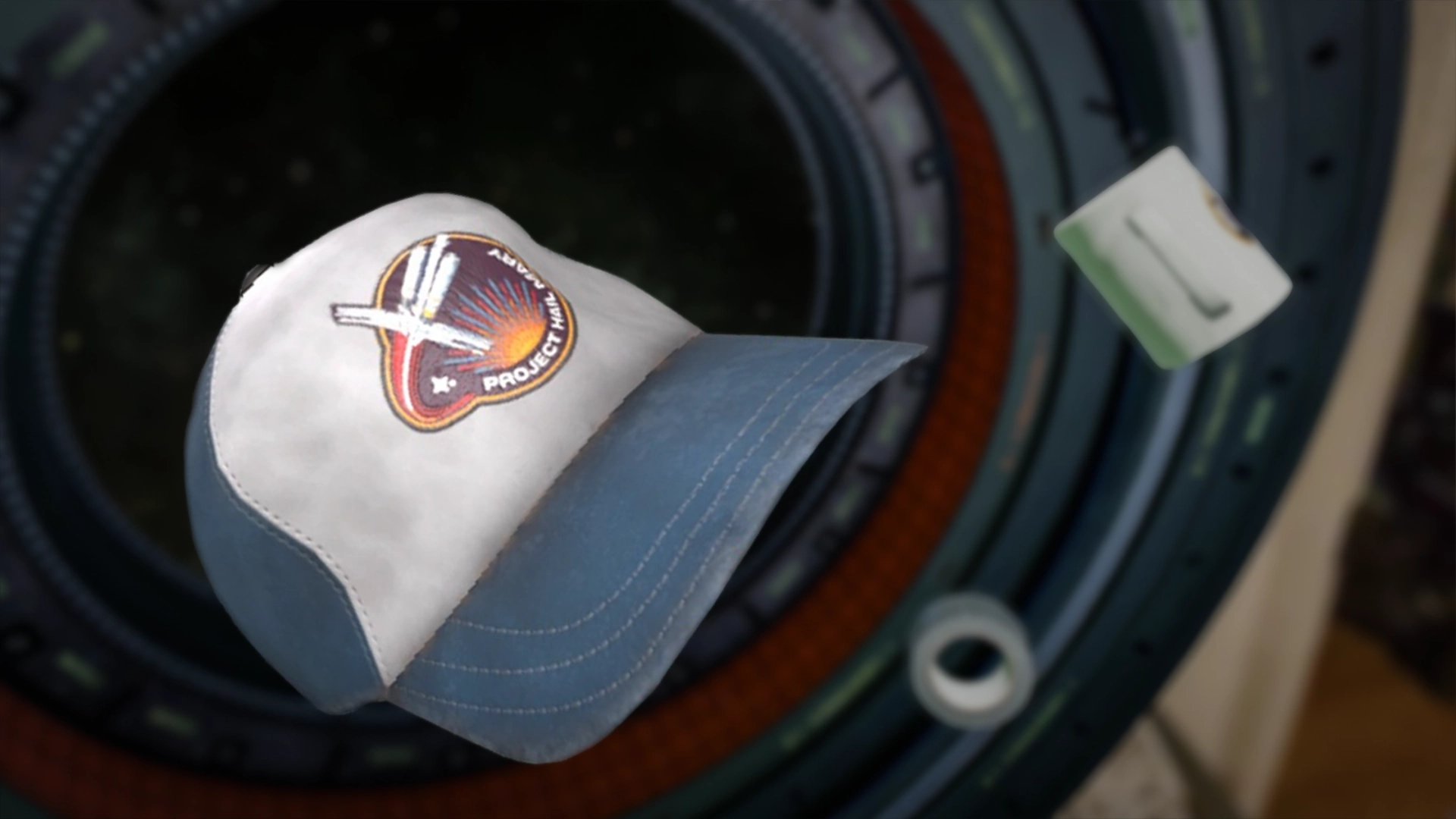
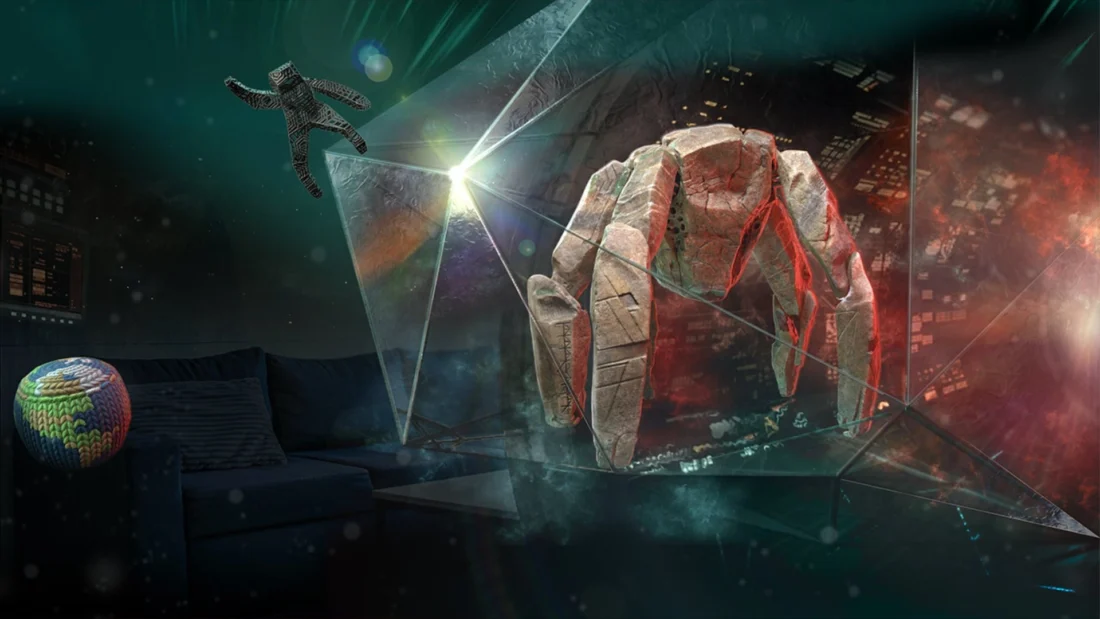
Visually, however, there is considerably more to admire. The Hail Mary itself is brought to life with an appealing sense of industrial character, its collection of cramped compartments, mechanical fixtures and illuminated control panels providing a convincing impression of a vessel held together by necessity and ingenuity. There is a pleasing attention to the smaller details, too, with the various instruments and pieces of equipment helping to establish a sense of place that feels appropriate for Weir’s grounded approach to science fiction. Rocky is undoubtedly the visual highlight, retaining the distinctive appearance and peculiar physicality that make him such an instantly endearing creation. Seeing him occupy the same physical space as your surroundings is an initially delightful novelty, even if the limitations of the technology occasionally undermine the illusion.

The mixed-reality presentation is, naturally, the defining feature of the experience, allowing the Hail Mary to seemingly materialise within your own surroundings. There is something undeniably fascinating about watching elements of a spacecraft emerge from the familiar walls of your room, transforming an otherwise ordinary space into something altogether more extraordinary. Yet I found myself increasingly wondering whether this particular adventure might have benefited from a more traditional virtual reality approach. The constant awareness of your physical surroundings can make it difficult to fully surrender to the illusion, while the occasional awkwardness of interacting with virtual objects only serves to remind you of the technology sitting between yourself and the experience. Rather than feeling transported to the far reaches of the galaxy, there are moments when you are simply reminded that you are standing in your own room, reaching for something that isn’t really there. It is an interesting technological showcase, certainly, but not always a particularly convincing piece of escapism.

Thankfully, the audio presentation does a rather better job of drawing you into the adventure. The voice performances bring a welcome personality to proceedings, with Rocky remaining an especially entertaining companion whose peculiar expressions and mannerisms provide some much-needed levity. The dialogue helps preserve the gentle humour and warmth associated with the original story, even when the surrounding narrative struggles to make the most of their relationship. The soundtrack is equally effective, lending a sense of scale and quiet wonder to an adventure that otherwise spends much of its time dealing with rather mundane mechanical problems. There is a lovely contrast between the intimacy of your interactions aboard the spacecraft and the immense emptiness of the universe beyond it. For all the shortcomings elsewhere, the soundscape occasionally manages to capture that peculiar feeling of being impossibly far from home, with only an unlikely friend for company.

Comfort

5
Verdict
Summary

Project Hail Mary: Journey Among the Stars feels like an adventure caught between two rather different ambitions. On one hand, it wants to offer an intimate continuation of a wonderfully human science-fiction story, celebrating the friendship between two beings brought together by circumstance and an extraordinary shared purpose. On the other, it is clearly intended to demonstrate the possibilities of mixed-reality gaming, placing physical interaction at the heart of its design. Neither ambition is entirely without merit, but the two never quite come together in a way that feels wholly satisfying. Rocky remains a delight, the presentation has its moments, and there are fleeting glimpses of the imaginative adventure this could have been. Yet repetitive activities, awkward interactions and an underwhelming sense of progression leave much of the experience feeling strangely mechanical. For a story about overcoming the impossible through cooperation and ingenuity, it is a shame that Journey Among the Stars struggles to find much of either itself. A missed opportunity, then, and one that leaves you wishing this particular journey had reached a little further among the stars.

Related Articles

Hot Dogs, Horseshoes & Hand Grenades 2 Review—A Promising Experiment Still Finding Its Feet

There is something immediately appealing about the idea of taking the familiar...

Pinball FX VR: Judge Dredd Table Review—Mega-City One Goes Tilt

There is something fitting about Judge Dredd finding a home on a...

Tiny Flock Review—A Little World of Its Own

Tiny Flock was the standout of the VR Games Showcase when it...

Knights of Fiona Review—A Knight’s Journey That Never Quite Begins

There is something immediately comforting about returning to CharacterBank's worlds. I have...