
PCSteam Deck

PixARK: Terracrypt Expansion Review—There Are Worlds Beneath Our Feet

There is a particular kind of pleasure in digging downwards. Perhaps it is the oldest instinct in a game like PixARK: to look at a mountain not as scenery but as a problem, to wonder what lies behind its square face, and then to take a pickaxe to it until the world gives way. The surface is only ever temporary. There is always another layer beneath it, another seam of ore, another hollow space waiting to be made visible. Terracrypt understands this impulse and, rather beautifully, makes it the point. Here, PixARK’s familiar horizon disappears beneath your feet. The forests and open skies give way to caverns, buried settlements and strange subterranean biomes, and the simple act of digging becomes a kind of narrative punctuation. You descend because there is nowhere else to go, and then you keep descending because the darkness has begun to feel like an invitation.

Release Date: August 27th 2026
Developer: Snail Games USA
Publisher: Snail Games USA
Price: £9.09 / $9.99 USD
Reviewed On: PC / Steam Deck
* Access Provided For Review *

More Details

It is at its best in those moments when you forget that you are moving through a collection of systems and simply become curious about what is around the next corner. Terracrypt’s three underground layers and thirteen biomes give the depths a pleasing sense of geography. Tunnels fold back upon themselves, narrow passages suddenly spill into enormous chambers, and the reassuring logic of the surface world begins to feel less certain the further down you travel. The voxel construction helps here. Everything is so plainly constructed that it should, in theory, leave little room for mystery, yet the opposite can happen. A dark opening cut into a wall can become strangely compelling precisely because you made it yourself. Every hole is a question. Every unanswered passage is something you have left unfinished.

For a game so closely associated with making your own fun, Terracrypt is also surprisingly interested in giving you a reason to keep moving. Its story, quests, settlements and NPCs introduce a sense of authored purpose that PixARK has largely been without, drawing you through the underground rather than leaving you entirely to wander it. The writing is not always sophisticated enough to carry that weight on its own, but it doesn’t need to be. The story works more as a thread through the maze than as the maze itself. You have somewhere to go now, and the eleven bosses scattered along the journey provide a satisfying punctuation to all that gathering and preparation. There is a subtle difference between collecting resources because you might need them one day and collecting them because there is something waiting further below that you want to be ready for.

That makes the expansion’s new technology feel more meaningful, too. Steam and gas-powered machinery and expanded automation give the underground its own rhythm, turning survival into something closer to settlement-building. There is pleasure in watching a process that once required your attention begin to happen without you, particularly when you can finally step away from the machinery and go exploring. The new creatures add another layer to that relationship with the world, becoming discoveries, threats and practical tools in equal measure. Yet Terracrypt never entirely escapes the familiar drag of survival games: inventories fill, resources disappear, crafting queues grow, and sometimes the adventure feels as though it has been briefly buried beneath a pile of administrative work. It is an old tension, but an important one. The deeper Terracrypt wants you to go, the more it asks you to stop and prepare.

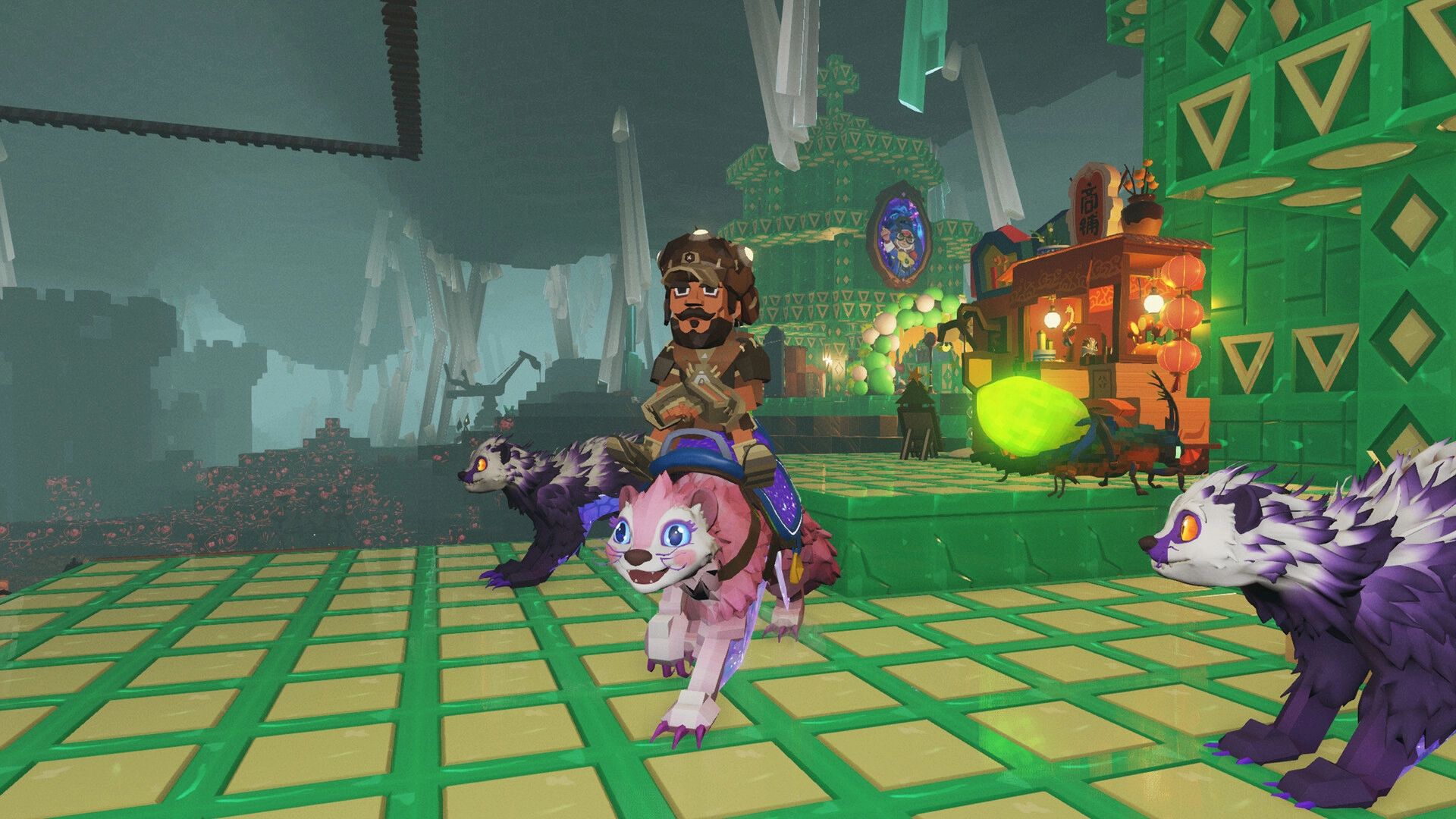
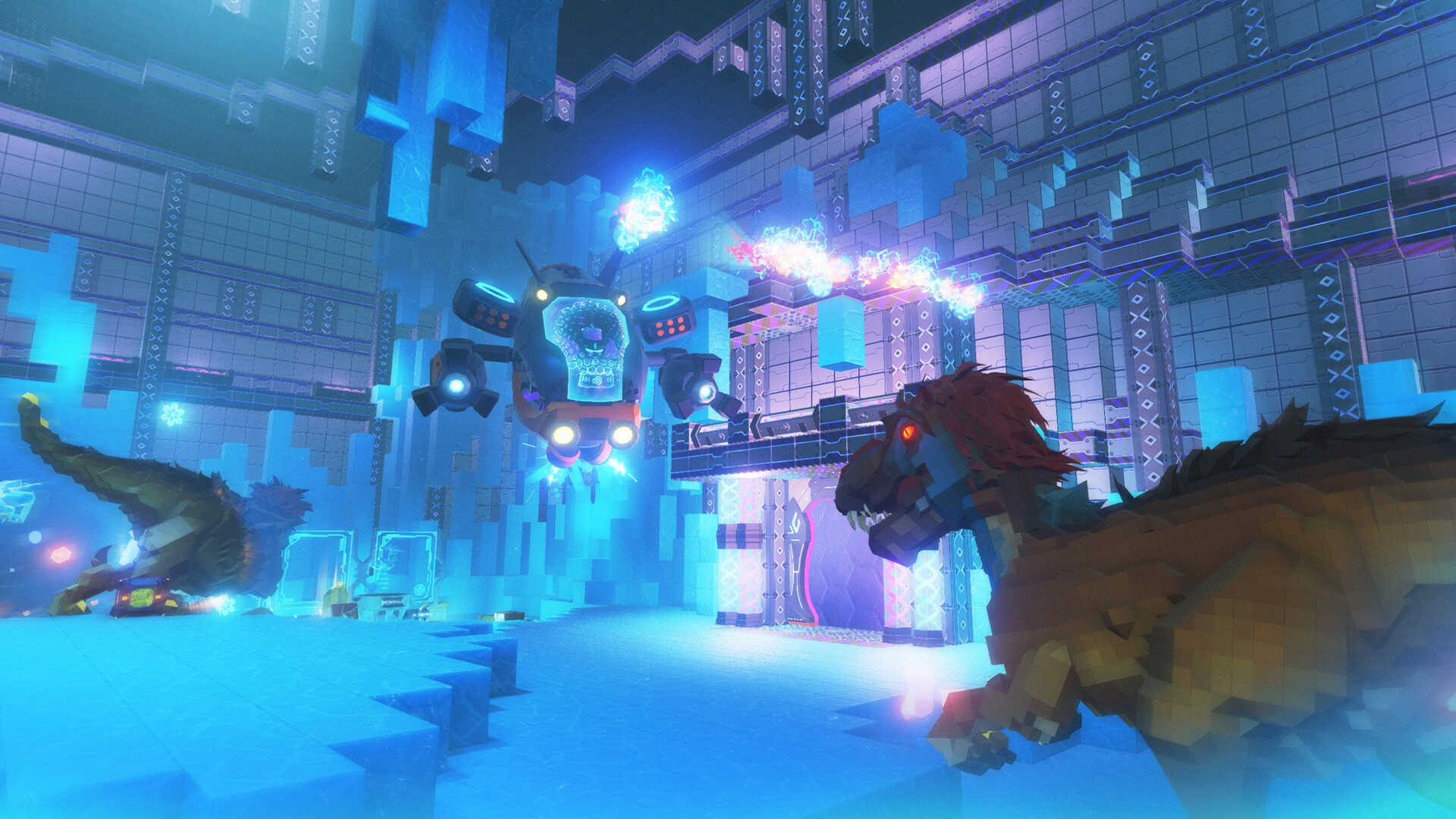
Perhaps that friction is easier to forgive because PixARK remains such a visually peculiar thing. Its world has always looked as though someone took the idea of a survival game and rebuilt it out of children’s building blocks, and Terracrypt embraces that strange contradiction rather than attempting to smooth it away. Underground, the blockiness becomes almost architectural. Great chambers rise in rigid steps. Rock faces resemble enormous unfinished sculptures. Ruins look as though they have been excavated from a world that was itself assembled piece by piece. It should feel artificial, because it is artificial, and yet there are moments when the simplicity of those shapes produces something unexpectedly atmospheric.

There is something especially effective about the way Terracrypt plays darkness against that toy-like aesthetic. The surface world of PixARK is expansive and immediate: sky above, ground beneath, distant mountains calling you towards them. Below ground, the horizon contracts. The walls are always close, the ceiling is always somewhere above, and the light falls away into places you cannot quite see. The effect is not frightening in the traditional sense, but it creates a quiet uncertainty. You begin to notice the absence of things. There is no distant landscape to orient yourself against, only the tunnel you are standing in and the possibility of another one beyond it. For a game made from cubes, Terracrypt occasionally finds an impressive sense of the unknown.

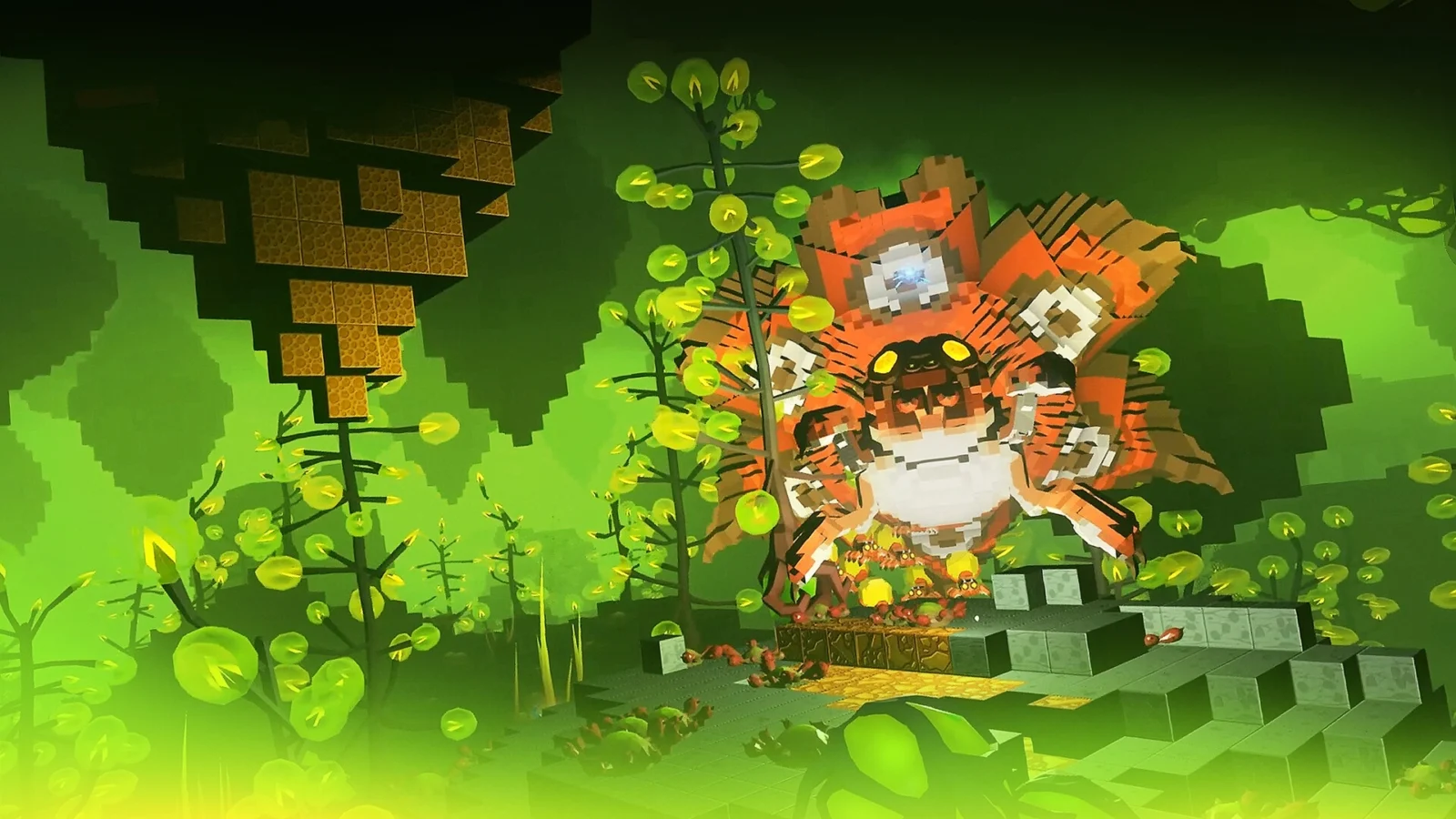
Its biomes and creatures help sustain that feeling of discovery, giving each descent another visual language and preventing the underground from becoming a single long excavation. Settlements appear like small islands of purpose in the darkness, while unfamiliar creatures make the spaces around them feel occupied rather than merely generated. The presentation is still rough around the edges, and Terracrypt cannot entirely escape the awkwardness that has always accompanied PixARK’s ambition. But there is an odd charm in those imperfections. This is not a world that has been sculpted until every surface is seamless. It feels built. You can almost imagine the hands that placed each block, then another, then another, until suddenly there was a cavern beneath your feet and a whole civilisation hidden inside it. The joins remain visible, but perhaps that is why the place has character.

Verdict

Terracrypt does not transform PixARK into something it was never meant to be. Instead, it takes one of the game’s simplest pleasures — the urge to dig — and follows it to its natural conclusion. What it finds down there is uneven: the survival mechanics can still become cumbersome, the story sometimes struggles to rise above its systems, and the roughness of the underlying game remains firmly in view. But there is a particular satisfaction in having somewhere to descend towards, in watching the world close around you as curiosity gradually replaces convenience. Terracrypt understands something fundamental about these games: sometimes the most compelling destination is not the horizon, but the hole you haven’t finished digging yet.

Related Articles

PC

1666: Amsterdam Early Access Review—A Promising Ghost Still Finding Its Shape

There are games that arrive late, and then there are games that...

Finding Polka Review—A Little Game About Taking The Long Way Home

There is something wonderfully disarming about a game that asks so little...

Life is Strange Retrospective Review—The Things We Cannot Rewind

There is a particular sadness to returning to Life is Strange. Not...

Anomaly President Early Access Review—Democracy by Day, Vigilantism by Night

There is something wonderfully disarming about Anomaly President. On paper, it sounds...