PCSteam Deck

Roguecraft DX Review—Learning to Read the Dark

There is something wonderfully direct about Roguecraft DX. In an era when roguelikes can feel like sprawling machines of progression, this is a game that gets much of its pleasure from the simple act of opening a door and wondering what might be waiting behind it. Its corridors are narrow, its rooms neatly arranged, its monsters waiting patiently for you to make a mistake. Rather than losing yourself in a vast world, you are drawn onwards through a succession of small decisions: whether to fight or flee, whether to risk another room, whether that potion is worth drinking now or saving for later. It is a modest premise, but one that proves surprisingly effective.

Release Date: September 10th 2026
Developer: Badger Punch Games
Publisher: Thalamus Digital
Price: £10.75 / $16.13 USD
Reviewed On: PC / Steam Deck
* Access Provided For Review *

More Details

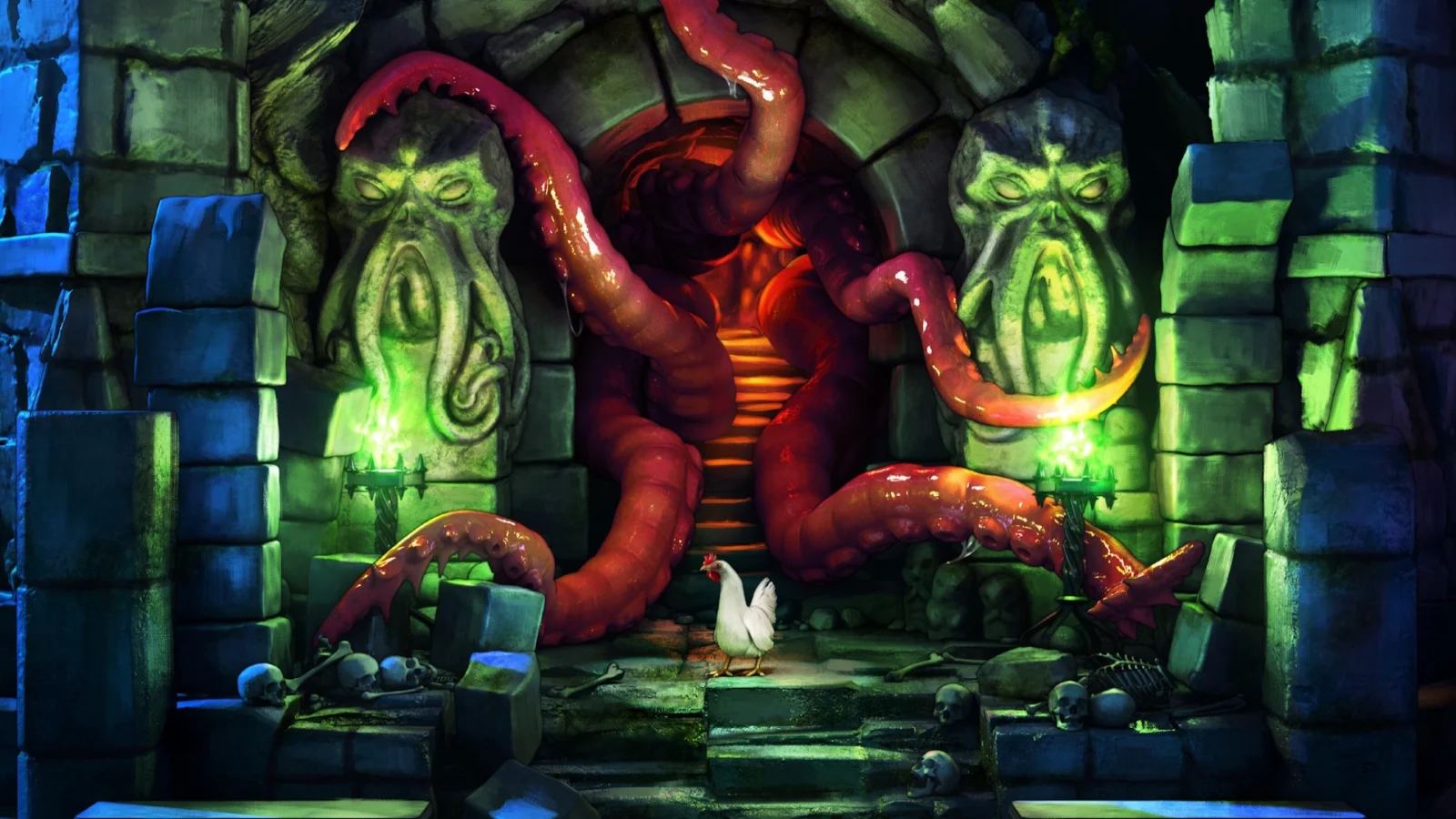
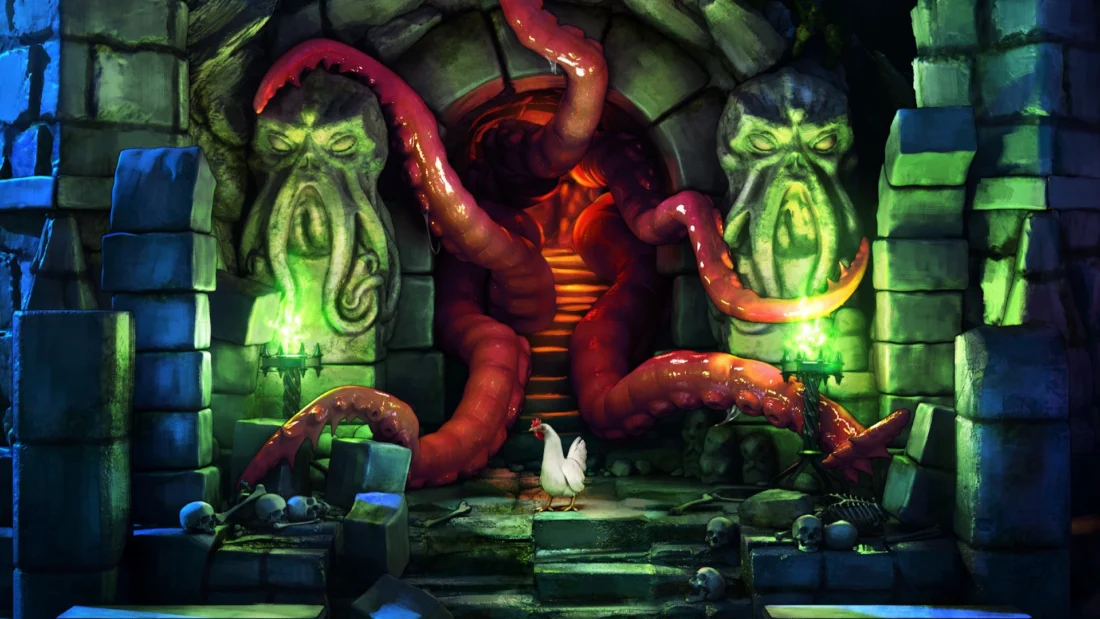
Three adventurers descend into the Dungeons of Mordecoom, where monsters, treasure and the occasional absurdity await, but Roguecraft DX isn’t particularly interested in turning its premise into an elaborate narrative. Lovecraftian imagery provides the atmosphere rather than the plot, while the real stories are the small ones generated by each attempt. A room that looked harmless becomes a trap. A potion becomes a gamble. A badger, inexplicably imprisoned in the dungeon, becomes an unlikely source of salvation. These moments give the adventure its personality, and while there isn’t much here to carry you from one level to the next beyond the promise of reaching the bottom, the game’s oddball humour keeps the journey from becoming entirely dour.

Beneath those rooms, the real pleasure lies in what happens when you start paying attention to the spaces between them. Everything unfolds one turn at a time, with enemies responding to your movements, and the dungeon gradually becomes less a place to explore than a puzzle to navigate. The important question isn’t simply whether you can kill something, but where you will be standing afterwards, what else can reach you, and whether you’ve left yourself somewhere to retreat. A seemingly insignificant step can transform a manageable encounter into a dangerous one, giving even the simplest battles a welcome sense of consequence.

Movement becomes almost as important as combat itself. The Warrior, Rogue and Wizard each alter the rhythm of a run, but all three depend on understanding their surroundings and making the most of their particular strengths. The Warrior can withstand more punishment, the Rogue rewards positioning and opportunism, while the Wizard offers greater offensive potential at the expense of safety. Their differences aren’t especially deep, but they are meaningful enough to make switching between characters worthwhile, particularly when one approach has repeatedly sent you back to the beginning.

With each failed expedition, knowledge becomes your most valuable form of progression. Unlike roguelikes built around permanent upgrades and increasingly elaborate character builds, Roguecraft DX largely asks you to improve yourself rather than your character. You remember which enemies are worth engaging, when it is safer to retreat, how much health you can afford to lose and which seemingly harmless decision caused everything to fall apart three rooms later. There is satisfaction in recognising those patterns, although the feeling can diminish once you’ve become familiar with the game’s collection of encounters. The 15-level Classic campaign provides a clear destination, while Endless Dungeon offers somewhere to keep testing yourself afterwards, but the underlying experience remains much the same.

Repetition is perhaps the biggest obstacle to the game’s momentum. Early runs have a pleasing sense of discovery as you learn how everything fits together, but later attempts can lose some of that spark when the basic routines become familiar. There isn’t a huge range of builds to experiment with or a deep meta-progression system constantly tempting you back. Instead, Roguecraft DX relies on the appeal of improving your own play, and whether that remains compelling will depend largely on how much enjoyment you get from repeating its fundamental loop. For a game that can be played in relatively short sessions, however, that isn’t always a serious problem; a failed run is easy enough to shrug off and replace with another.

Beyond the main campaign, the additional modes give that familiar loop a little more room to breathe. Endless Dungeon extends the formula beyond the main adventure, while Chicken Run embraces the game’s sillier side by turning one of its dungeon inhabitants into a playable character. The caged badger is similarly ridiculous, but these touches reveal a lighter personality beneath the game’s gloomy dungeon-crawling exterior. Roguecraft DX can take its combat seriously without taking itself entirely seriously, and that balance gives its world considerably more charm than the premise alone might suggest.

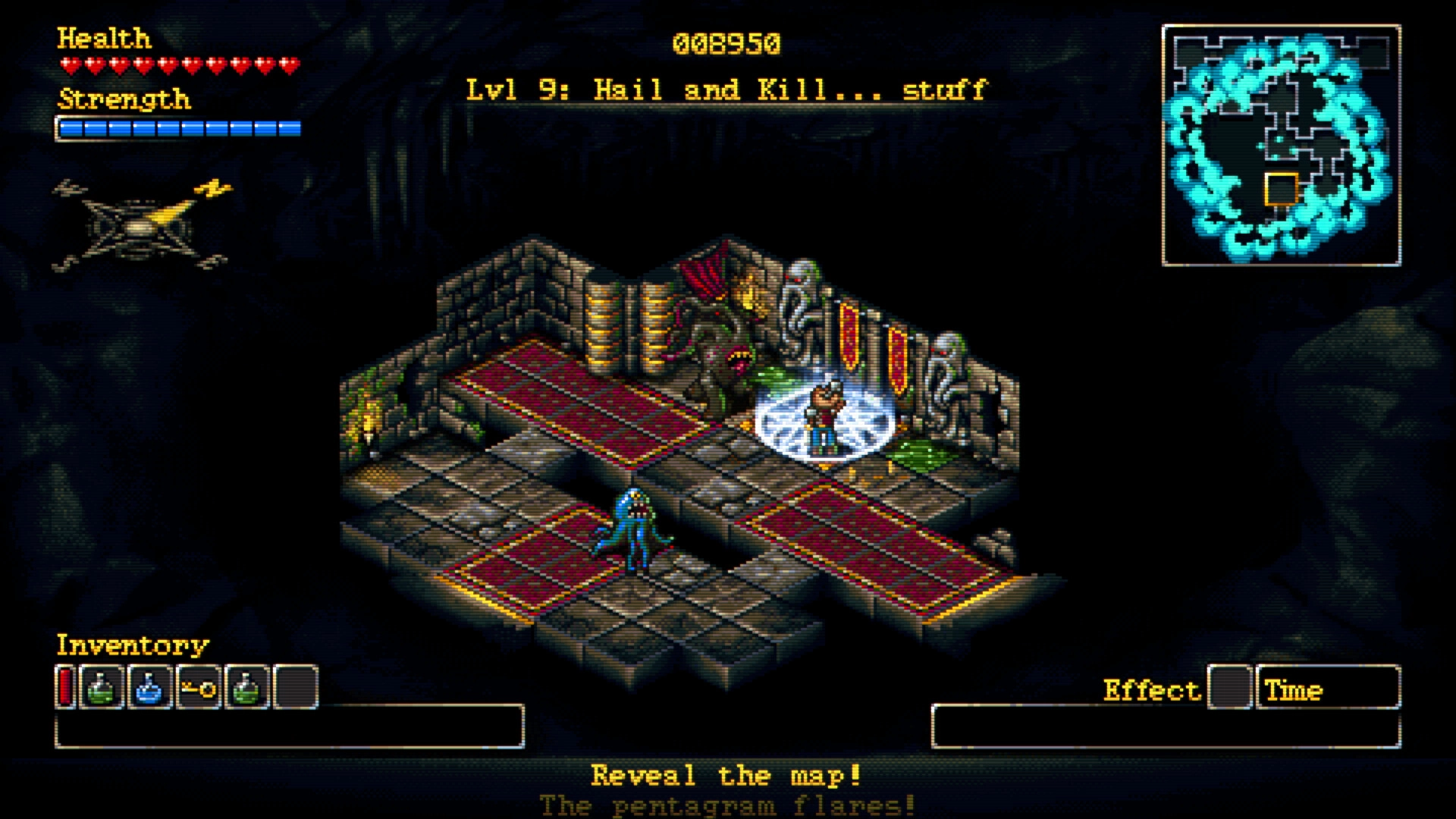
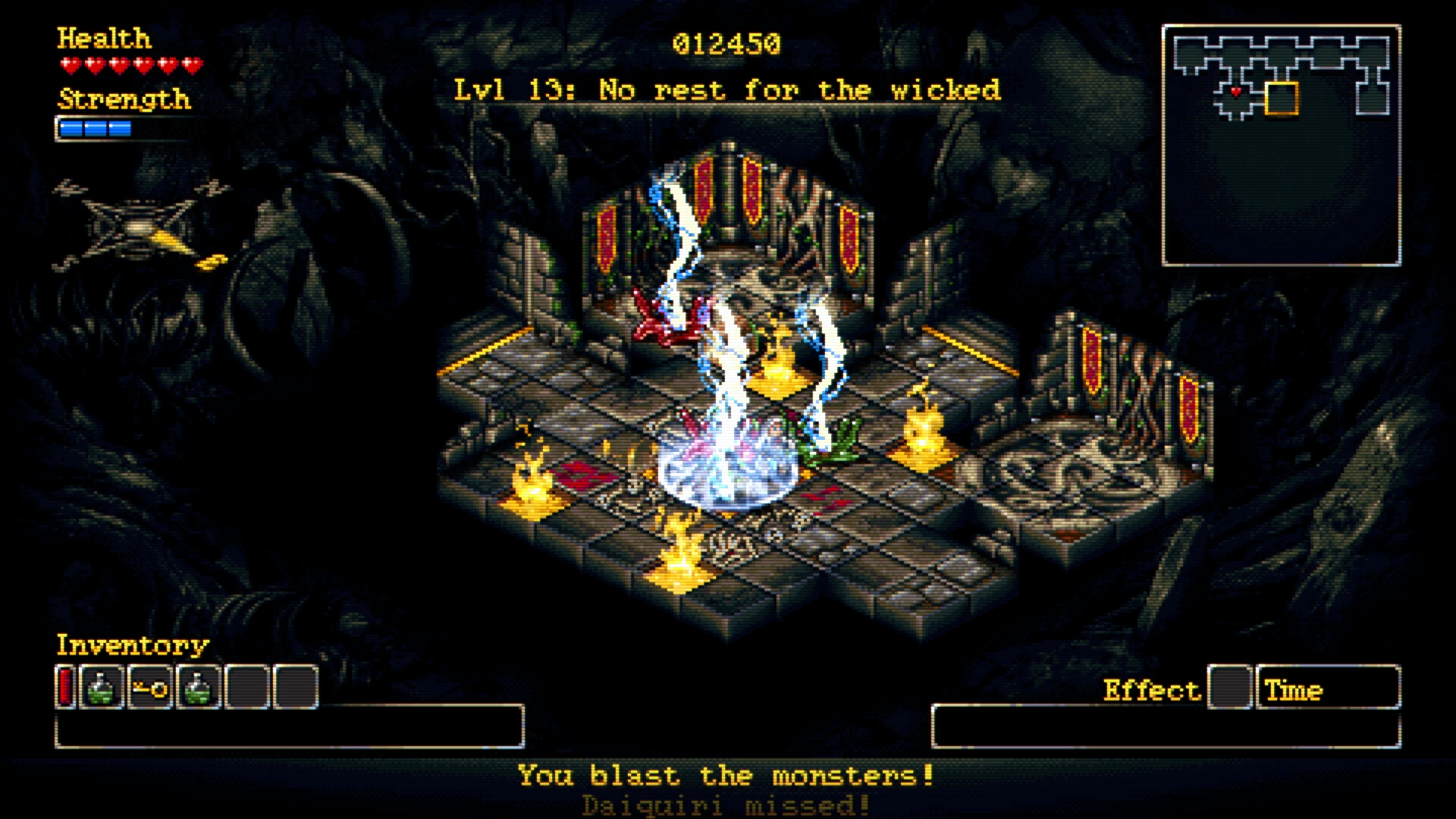
Visually, the game leans heavily into its Amiga heritage, with isometric pixel art that gives the dungeon a distinct sense of character. Characters and enemies are chunky and immediately readable, while the environments use simple shapes and strong silhouettes to make each room easy to understand at a glance. There are some lovely little touches in the animation and environmental detail, too, which help prevent the retro aesthetic from feeling purely functional. It isn’t the sort of presentation that overwhelms you, but it does a good job of making the dungeon feel like a coherent place rather than a collection of randomly generated rooms.

Alongside those visuals, the sound provides enough atmosphere and feedback to give combat some satisfying weight. Attacks have a pleasing physicality, while the soundtrack helps maintain the game’s mixture of fantasy adventure and playful oddness. It doesn’t always make the dungeon particularly memorable on its own, but combined with the visuals it gives Roguecraft DX a strong identity. The whole presentation feels carefully tuned to its retro inspiration without becoming dependent on nostalgia alone.

What ultimately makes the game worthwhile is the way its smallest decisions can occasionally acquire disproportionate importance. A single square of movement can change an encounter. Choosing to fight rather than flee can leave you vulnerable several turns later. Saving a potion for later can suddenly prove to have been the wrong decision. These moments don’t happen constantly, but when they do, they capture exactly what makes turn-based dungeon crawling so enduring. Roguecraft DX doesn’t need enormous systems to create tension; sometimes it just needs to put an enemy in the wrong place.

7
Verdict
Summary

At times, the game feels as though it has reached the limits of its own ideas, and its repetition can make later runs less compelling than the first few. Yet there is a pleasing honesty to what it offers. Roguecraft DX isn't trying to become the next endlessly expanding roguelike obsession. It is a compact dungeon crawler built around movement, positioning and the small satisfaction of learning from a mistake. Its best moments come when a room that once seemed impossible suddenly makes sense, when you realise you've learned not just how to survive but how to read the dungeon. That feeling doesn't last forever, but while it does, Roguecraft DX is an engaging reminder of why the simple act of taking one more step into the dark can still be enough.


Related Articles

Onimusha: Way of the Sword Review—Twenty Years Later, The Sword Is Still Sharp

There is a particular kind of excitement that comes from seeing an...

Gunman Contracts – Stand Alone Early Access Review—A Contract Worth Taking

I have a soft spot for Gunman Contracts. I spent a lot...

PixARK: Terracrypt Expansion Review—There Are Worlds Beneath Our Feet

There is a particular kind of pleasure in digging downwards. Perhaps it...

PC

1666: Amsterdam Early Access Review—A Promising Ghost Still Finding Its Shape

There are games that arrive late, and then there are games that...