PlayStation

Disney/Pixar Toy Story: Retro Roundup! Review—Preserved, Not Perfect

There is something peculiar about returning to the toys of your childhood, only to discover that time has been rather less kind to them than memory would have you believe. Games based on animated films have always occupied an awkward space between commercial obligation and genuine affection, their release dates dictated by cinema schedules and their ambitions often constrained by the hardware of the day. Yet the best of them possessed a particular sort of magic, finding ways to make familiar worlds feel enormous and ordinary objects extraordinary. Disney/Pixar Toy Story: Retro Roundup! gathers together a sizeable chunk of that history, bringing back a collection of adventures from an era when Pixar was still discovering what its worlds might look like beyond the cinema screen. It is an affectionate and thoughtfully assembled package, even if revisiting these old playthings reveals a few cracks beneath the paint.

Release Date: October 15th 2026
Developer: Digital Eclipse
Publisher: FAtari
Price: TBC
Reviewed On: PlayStation 5
* Access Provided For Review *

More Details

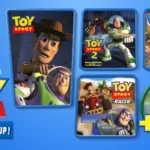
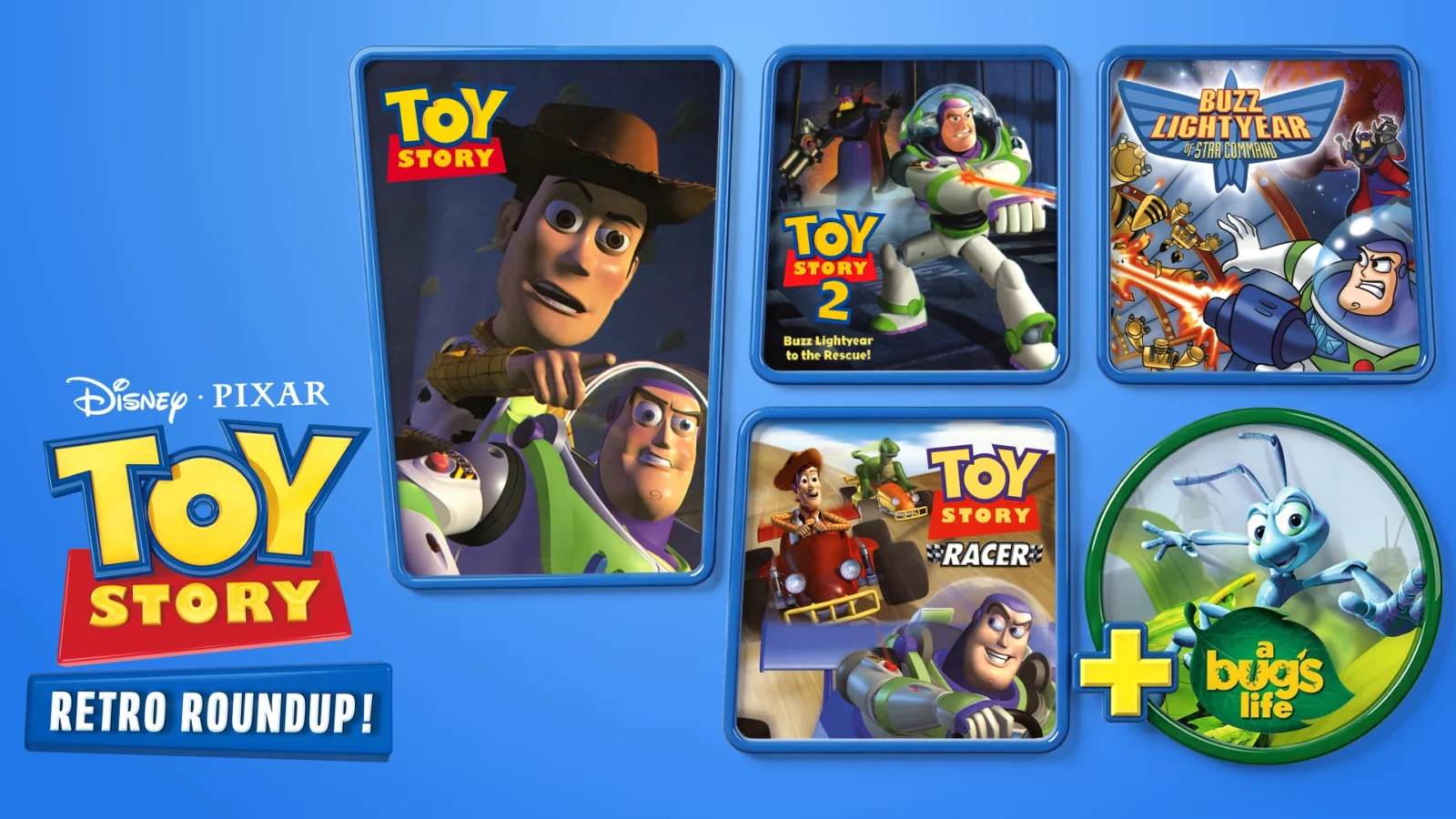
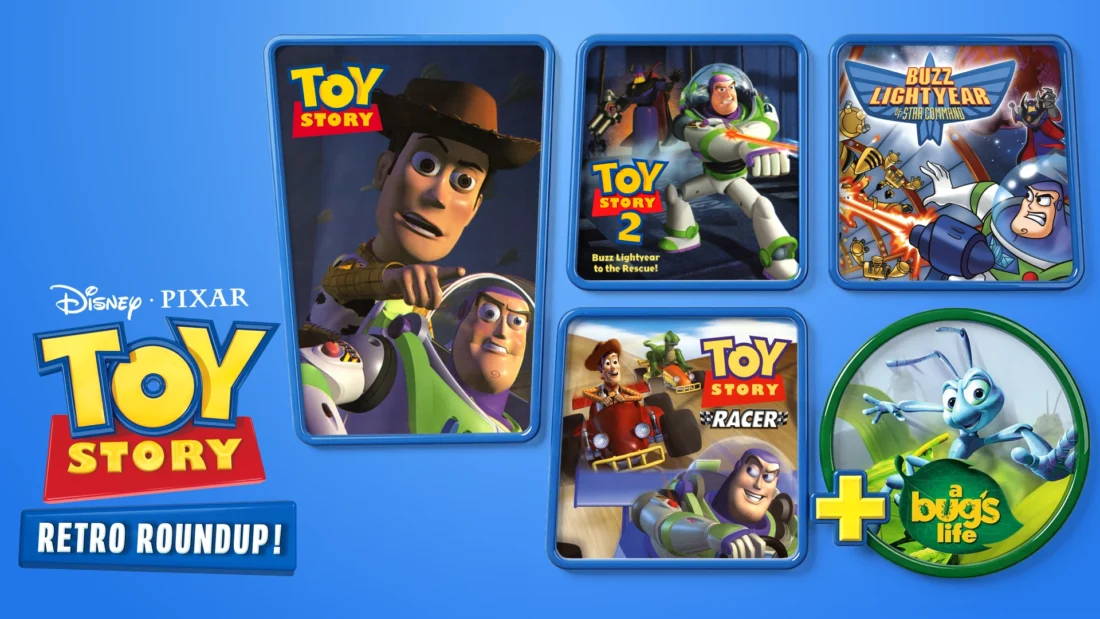
The collection spans six games across eleven console and handheld versions, encompassing the original Toy Story, Toy Story 2: Buzz Lightyear to the Rescue!, Buzz Lightyear of Star Command, Toy Story Racer and the rather unexpected inclusion of A Bug’s Life. Together, they offer a fascinating snapshot of licensed games at a time when developers were attempting to translate the language of animated films into something interactive. The results are inevitably uneven, but there is a genuine pleasure in seeing how differently these worlds were interpreted. Some games attempt to recreate the films’ adventures, while others take their characters and settings as the starting point for something altogether stranger. There is a sense of possibility here, of developers trying to make the impossible tangible with the limited tools available to them.

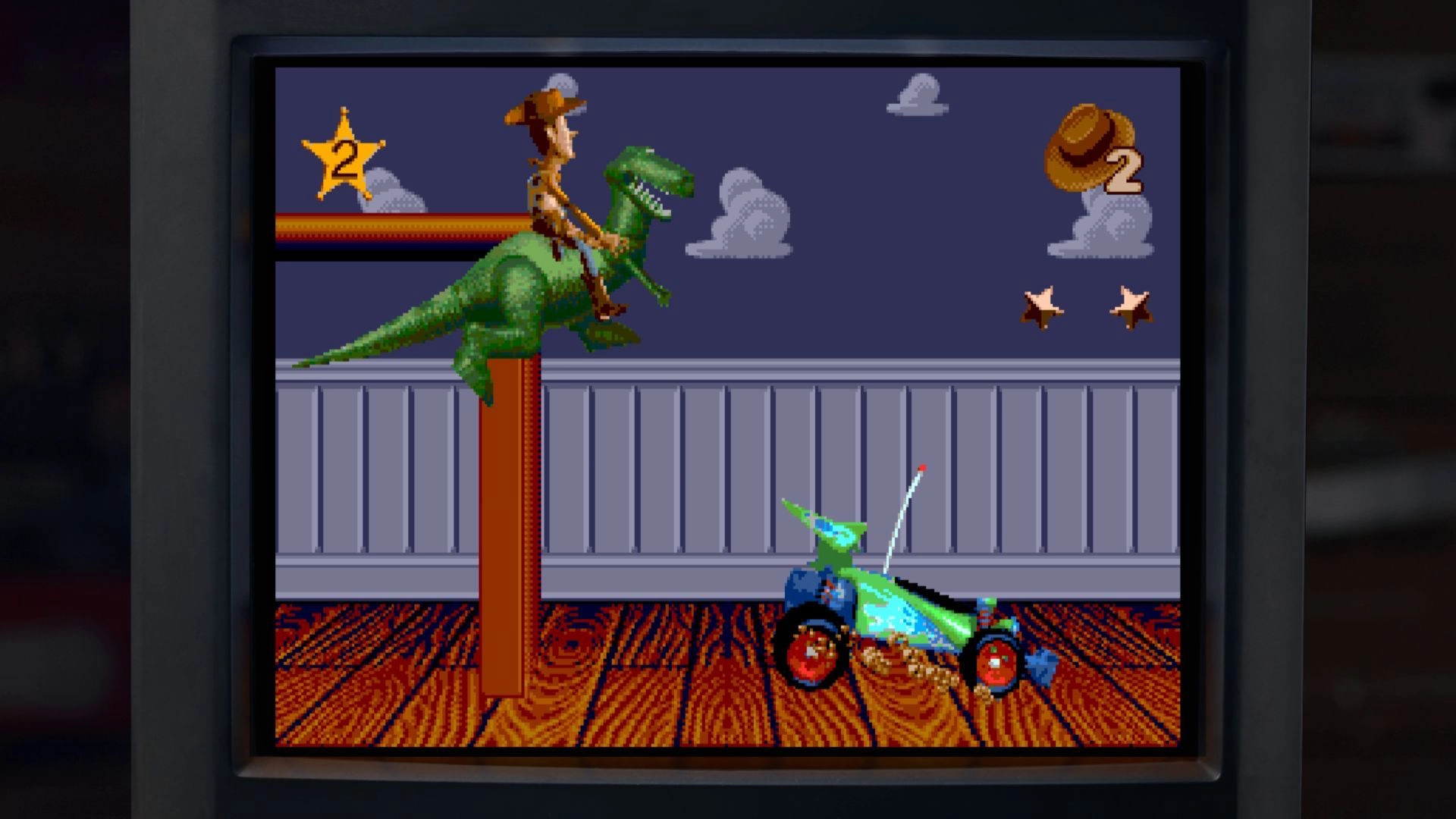
That ambition is perhaps most apparent in the original Toy Story, whose attempts to translate Pixar’s computer-generated imagery into a playable 16-bit adventure remain impressive in their own peculiar way. Woody’s world is full of recognisable characters and familiar situations, yet the act of navigating it can be considerably less charming than simply watching it unfold. Platforming feels imprecise, difficulty can be unforgiving, and the novelty of its visual presentation cannot always disguise the frustrations beneath. There is historical interest in seeing what Traveller’s Tales achieved with the hardware, but admiration for the effort only carries the experience so far. Nostalgia may soften the edges of an old game, though it cannot entirely smooth them away.

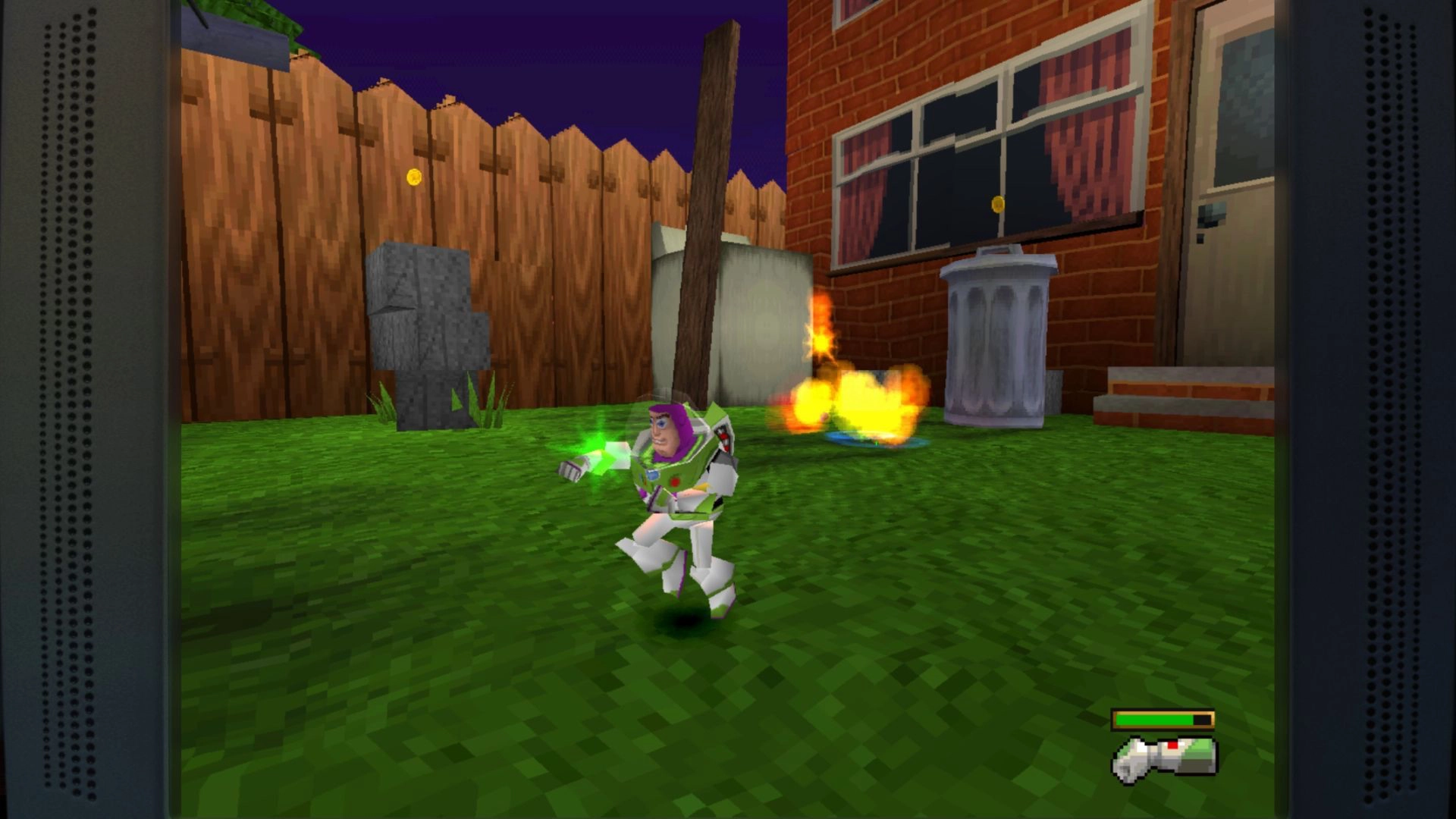
By comparison, Toy Story 2: Buzz Lightyear to the Rescue! feels like a more confident expression of what these adaptations could become. Its third-dimensional environments transform Andy’s bedroom and backyard into sprawling playgrounds, where furniture becomes architecture and everyday household objects take on an almost monumental scale. Playing as Buzz gives these spaces a satisfying physicality, with exploration and platforming built around the delightful idea that the world is much bigger when you are a toy. There is a generosity to its level design, too, encouraging you to poke around corners and investigate spaces that might otherwise be passed by. It remains one of the collection’s strongest inclusions, although its camera and movement can occasionally feel at odds with the precision its challenges demand.

Elsewhere, the selection becomes more of a mixed bag. Toy Story Racer offers a different sort of appeal, trading platforming for colourful competition, while Buzz Lightyear of Star Command struggles to sustain the same level of interest throughout. A Bug’s Life, meanwhile, is an intriguing companion piece rather than a Toy Story adventure, its miniature perspective providing another opportunity to turn familiar domestic spaces into places of surprising scale. The handheld versions are valuable additions for their historical completeness, although their limitations are more conspicuous today. Not every game has aged gracefully, and the collection’s breadth sometimes feels less like a carefully balanced selection of classics than a box tipped out to reveal everything that happened to be inside.

Fortunately, Digital Eclipse understands that preserving old games requires more than simply making them available on modern hardware. Rewind functions and cheat options help take the sting out of awkward jumps and punishing encounters, while other conveniences make it easier to return to a game without having to endure every frustration along the way. These additions are particularly welcome when revisiting titles whose difficulty was as much a product of their era as their design. They do not transform clumsy controls into elegant ones, nor do they make every level suddenly compelling, but they offer a little room to breathe. Crucially, the original experiences remain intact, allowing players to decide how much assistance they want rather than having history quietly rewritten for them.

More substantial still is the material gathered around the games themselves. Archival artwork, manuals, photographs, development documents and interviews provide a glimpse into the people and processes behind these productions, giving the collection a purpose beyond the simple pleasures of revisiting old software. This is where Retro Roundup! begins to feel like something more meaningful: not merely a collection of licensed games, but a record of a particular moment in the relationship between film and videogames. The extras help explain the ambition behind these projects, and why even the less successful experiments deserve to be remembered. There is an understated value in being able to look beyond the finished product and see the creative work that went into bringing these digital toys to life.

Taken together, the presentation is less about making the past look new than allowing it to be seen more clearly. The games retain their original visual identities, with modern options helping them sit more comfortably on contemporary displays without erasing the limitations that shaped them. Some rough edges remain, as they should, and the collection is at its best when it recognises that preservation is not the same thing as reinvention. Its more dated elements can be difficult to ignore, but the accompanying material gives them context, turning moments of frustration into opportunities to appreciate just how much the medium has changed. It is a lovingly curated toybox, even if not everything inside is equally fun to play with.

6
Verdict
Summary

Ultimately, Toy Story: Retro Roundup! is at its most rewarding when it invites us to look beyond childhood affection and consider the games themselves, with all their ingenuity, awkwardness and inconsistency. Toy Story 2 remains a particular highlight, while the supporting titles provide a broader sense of the era and the different ways developers approached the challenge of adapting beloved animated worlds. There are stretches where the collection's historical importance outweighs its immediate entertainment, and no amount of rewind functionality can make every relic feel newly discovered. Yet Digital Eclipse's preservation work and generous archival extras lend the package a warmth that extends beyond nostalgia. These games may no longer possess quite the same magic they once did, but there is still something worth finding among the old toys — even if a few are better remembered than played.


Related Articles

Disney/Pixar Toy Story 3 Complete Edition Review—The Past Is a Playground

There is a sadness to Toy Story 3 that has little to...

Voltaire: The Vegan Vampire Review—An Odd Little Harvest

There is something immediately appealing about a game that seems to have...

Dream Cage Review—Trapped Between Sleep and Waking

There is something uniquely unsettling about the idea of being trapped inside...

BrokenLore: DON’T LIE Review—The Shape of Something Memorable

I remember finishing the BrokenLore: DON’T LIE demo during Steam Next Fest...