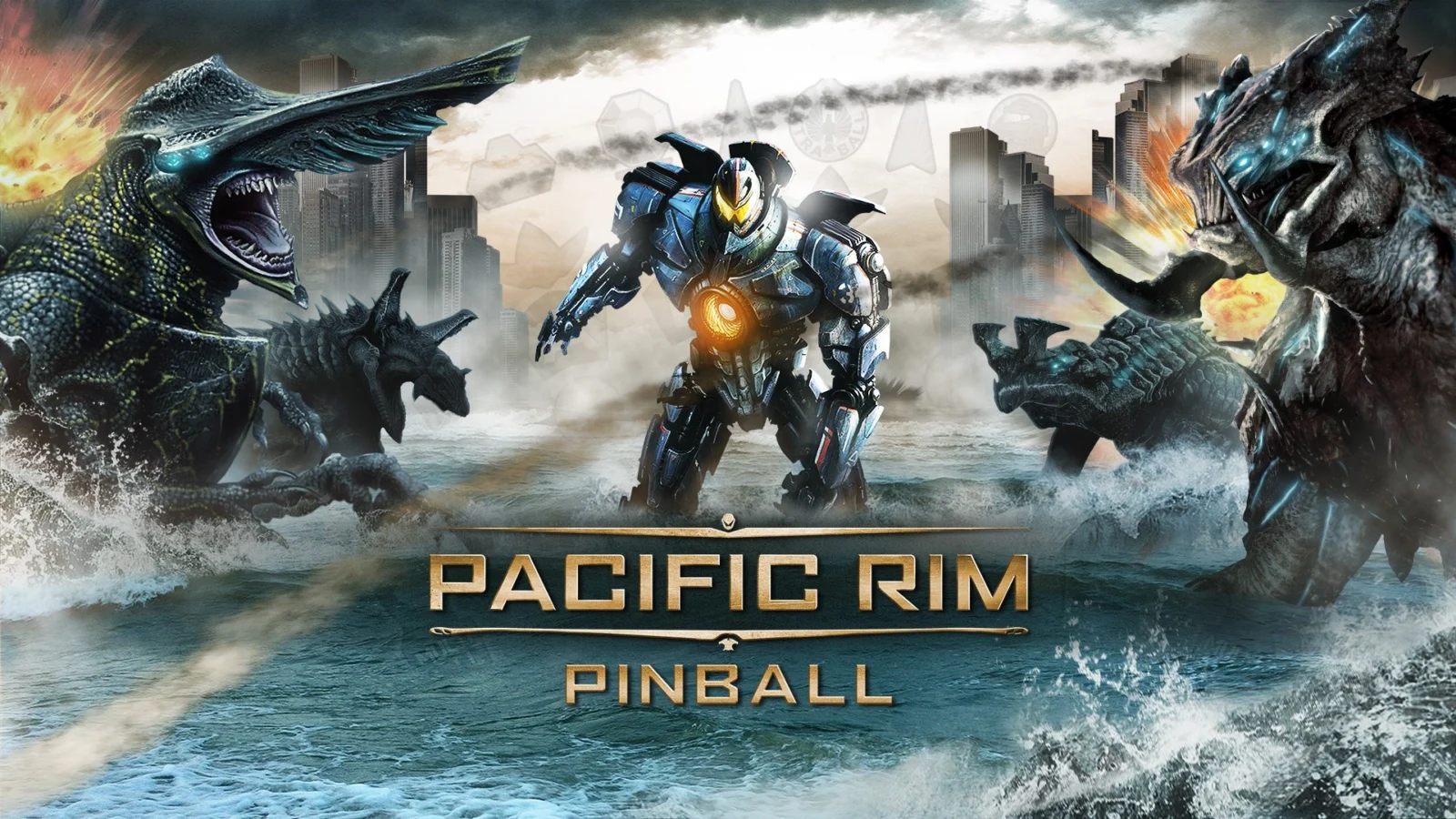
There’s an easy temptation with a licence like Pacific Rim to let spectacle do most of the heavy lifting. Giant robots, towering Kaiju and city-levelling destruction seem tailor-made for the excesses of digital pinball. Zen Studios resists that urge more often than not. Instead, this is a table built around rhythm and precision, with its smartest idea arriving immediately through the Neural Handshake mechanic. The lower flippers represent Raleigh and Mako’s connection, with a lit flipper alternating after each successful shot. Following that rhythm becomes second nature after a few games, adding an extra layer of decision-making without ever slowing the pace.
The licence is used with a similarly light touch elsewhere. Battles against Leatherback and Otachi provide the table’s obvious set pieces, but they remain firmly in service of the pinball rather than interrupting it. Drifting with the Kaiju by working the bumpers is a pleasing thematic flourish, while the captive balls tucked behind the side targets gradually build towards increasingly rewarding multiballs. As each additional ball increases the value of jackpots and eventually doubles every score on the table, the risk-reward balance shifts in satisfying ways. It never feels especially complicated, but it rarely feels shallow either.
There’s a reassuring clarity to the ruleset that makes Pacific Rim easy to settle into. Spelling D-R-I-F-T steadily builds your multiplier, spelling P-A-C-I-F-I-C unlocks a welcome selection of random rewards, and consecutive skill shots offer the prospect of an extra ball for those with steady hands. Even longer-term objectives, such as landing a hundred Synchronous Shots, feel like natural milestones rather than arbitrary checklist items. It all encourages improvement through familiarity, rewarding repeat plays without demanding encyclopaedic knowledge of the table’s systems.
That steady progression culminates in a Wizard Mode that feels earned rather than obligatory. A sixty-second scramble to overload Gipsy Danger’s reactor by locking balls into the Core Lane brings together everything the table has been asking of you, before capping the run with a generous multiplier across your final score. It’s an appropriately dramatic finish, although the table as a whole remains surprisingly restrained. The Kaiju may be enormous, but the layout itself favours clean shooting over chaos, making this one of Zen’s more approachable licensed tables.
Pacific Rim isn’t trying to reinvent digital pinball, and it doesn’t need to. What it offers instead is a thoughtfully constructed table that understands when to lean into its licence and when to let good shot design do the talking. The thematic touches rarely overwhelm the action, progression is satisfying without becoming convoluted, and there’s enough scoring depth to keep players chasing “just one more game”. It may lack the complexity of Zen’s very best originals, but it’s an accomplished adaptation that captures the spirit of the film while standing comfortably on its own as a thoroughly enjoyable pinball table.
Zen Studios' Goat Simulator Pinball successfully translates the wonderfully chaotic spirit of...
July 16, 2026The Arcade2TV-XR significantly enhances the virtual pinball experience by adding a physical...
June 3, 2026In recent years, we've had the chance to don the capes of...
April 30, 2026When Skytail was revealed, the game's art style immediately captivated me and...
April 14, 2026