


Steam Deck/ROG AllyXbox

Halo: Campaign Evolved Review—A Classic Reborn for a New Generation

Some games become landmarks. Others become places you return to, not simply because they’re good, but because they remind you why you fell in love with games in the first place. Halo: Combat Evolved has always been one of those games for me. I’ve played through its campaign more times than I can remember, watched every reveal with cautious optimism and, like many fans, wondered whether a full remake could ever capture the same sense of wonder that stepping onto Halo did back in 2001. After spending time with Halo: Campaign Evolved, it’s clear Halo Studios understood that challenge. This isn’t interested in replacing a classic. It’s interested in reminding you why it became one.

Uncovering Halo's Truth

The story itself remains refreshingly restrained. Master Chief still arrives on the mysterious ringworld after humanity’s war with the Covenant takes a disastrous turn, but the campaign never rushes to explain itself. Halo has always trusted players to absorb its world through exploration rather than exposition, and that confidence survives intact. The mystery unfolds naturally, each mission peeling back another layer without sacrificing the quiet sense of isolation that made the original so memorable. Even if you already know every twist by heart, the pacing still has a remarkable ability to pull you forward.

Evolution Without Compromise

Where many remakes risk sanding away the personality of their source material, Halo: Campaign Evolved understands that restraint can be just as valuable as reinvention. Sprinting, Smart-Link aiming and regenerating health all feel like features the series has gradually earned over the past two decades rather than unnecessary attempts to modernise for modernity’s sake. Better still, many of these changes remain optional, allowing veterans to retain much of the original rhythm if they choose.

Combat still revolves around the elegant push and pull that has always defined Halo. Shields drop, grenades scatter enemies from cover and encounters reward improvisation over memorisation. Storing equipment such as Overshields and Active Camouflage for later use subtly changes decision-making without disrupting the familiar flow, while regenerating health removes some of the downtime that occasionally slowed the original. The fundamentals remain untouched; they’ve simply become a little more flexible.

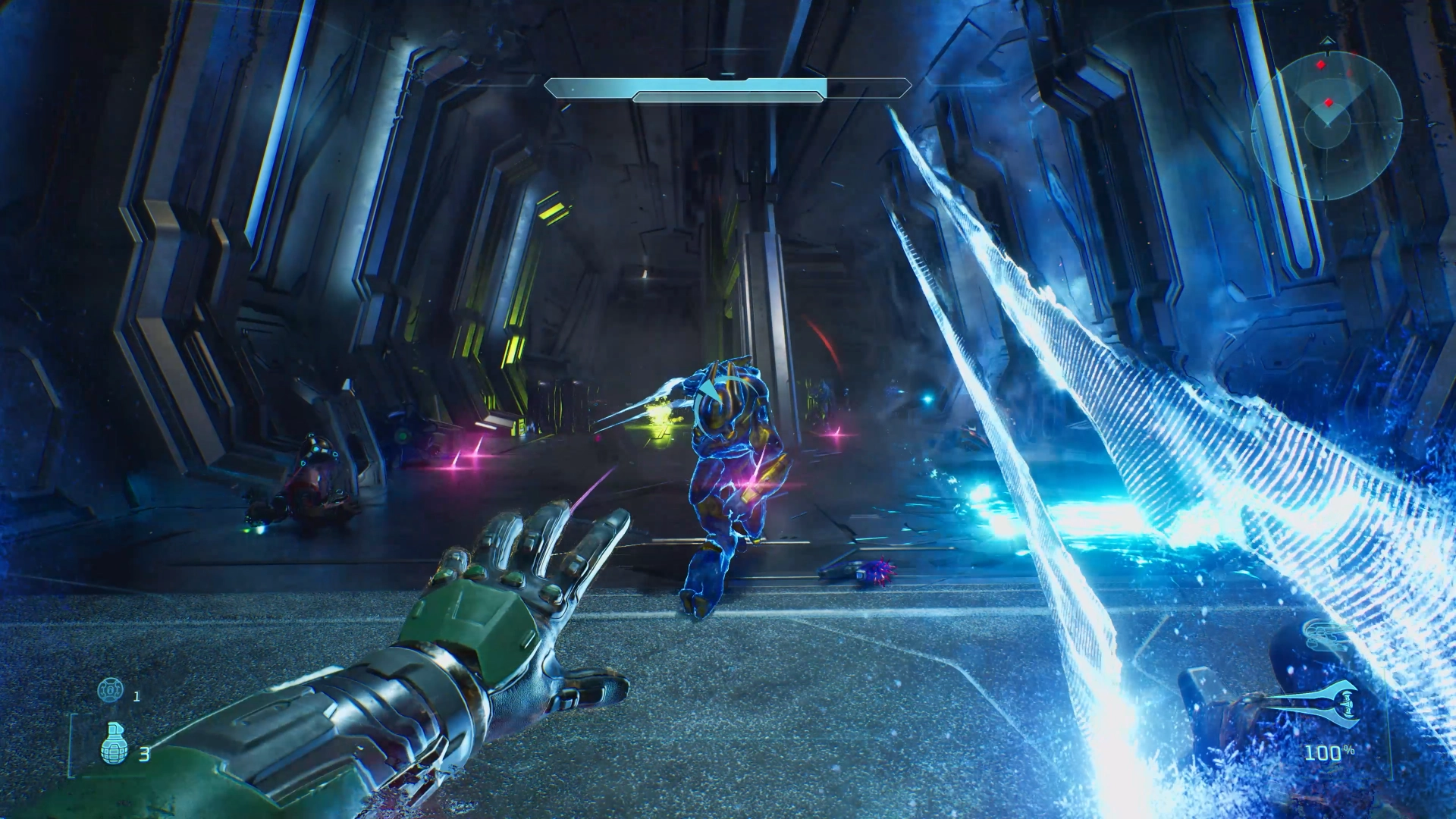
The expanded sandbox is perhaps the remake’s smartest addition. Weapons from across Halo’s history slot into encounters with surprising ease, rarely feeling as though they’ve been added simply because they could be. The Energy Sword brings welcome aggression to close-quarters combat, the Battle Rifle offers greater versatility at range, while hijacking Covenant vehicles or finally climbing into a Wraith creates moments that feel so natural it’s surprising they weren’t always there. None of it overshadows Bungie’s original design. Instead, it builds upon it.

The four new prequel missions follow a similar philosophy. Rather than existing purely to pad out the campaign, they strengthen its opening act by giving greater context to humanity’s desperate situation before the Pillar of Autumn reaches Halo. For newcomers they’re a smoother introduction, while longtime fans are rewarded with fresh perspectives on familiar events. It’s the sort of addition that feels justified rather than obligatory.

Co-operative play has rarely felt stronger. Four-player online cross-play opens the campaign to far more players than ever before, while local split-screen survives on console for those who still believe Halo is best enjoyed shoulder to shoulder. Once the credits roll, Campaign Remix mode and an impressive collection of Skulls encourage experimentation in ways that keep even familiar encounters feeling unpredictable. It’s difficult to think of another remake that invites repeat playthroughs with quite so much enthusiasm.

A Stunning Rebirth

Visually, the leap is extraordinary. Rather than recreating the original environments piece by piece, Halo Studios has rebuilt them with the confidence that modern hardware allows. Familiar valleys stretch further into the distance, forests feel dense enough to disappear into and Forerunner architecture finally possesses the impossible scale it always suggested. It’s recognisably Halo, but closer to the version many players imagined while staring at a CRT television twenty-five years ago.

Lighting does much of the heavy lifting. Lumen’s global illumination gives every location a convincing physical presence, whether sunlight pours through towering canyons or eerie blue light spills across impossibly ancient corridors. Explosions briefly transform entire firefights, plasma fire dances across metallic walls and even quiet moments of exploration benefit from an atmosphere the original hardware simply couldn’t produce. There were several occasions where I stopped moving altogether, not because the game demanded it, but because I wanted to appreciate somewhere I’d already visited dozens of times.

The new cinematics strike a careful balance between spectacle and familiarity. Performances feel more expressive without becoming melodramatic, and transitions into gameplay are almost seamless. Nothing feels rewritten for the sake of it; instead, existing scenes are allowed to breathe through better animation, stronger framing and far more convincing performances. It understands that nostalgia doesn’t mean preserving every limitation.

The same philosophy extends to the audio. Halo’s unmistakable score remains every bit as powerful as ever, now benefiting from richer orchestration and dynamic layering that swells naturally alongside the action. Weapons carry greater weight, environments echo convincingly according to their surroundings and spatial audio makes firefights noticeably easier to read. Alongside new dialogue and ambient chatter, it creates a world that feels fuller without ever becoming noisier.

More Details

9
Verdict
Summary

Halo: Campaign Evolved succeeds because it never mistakes nostalgia for preservation. It understands that the original doesn't need replacing, only reinterpreting with the benefit of twenty-five years of technological progress and design hindsight. Every meaningful addition, whether mechanical or visual, feels considered rather than obligatory, expanding Bungie's foundation instead of competing with it. As someone who grew up with Combat Evolved, there's something quietly special about standing on the ringworld again and seeing it realised with a level of fidelity I couldn't have imagined as a teenager. It feels familiar, yet somehow new all over again—and that's perhaps the greatest compliment any remake can earn.


Related Articles

Fading Echo Review—Inventive Ideas Shine Through the Imperfections

There is something immediately compelling about Fading Echo. Not because it promises...

Denshattack! Review—An Electrifying Arcade Triumph

The easiest way to describe Denshattack! is as Tony Hawk's Pro Skater...

Terrifier: The ARTcade Game Review—A Bloody Tribute That Lacks Lasting Impact

As a fan of the Terrifier films, Terrifier: The ARTcade Game immediately...

Cinderia Early Access Review—An Ambitious Challenger Among Modern Roguelike Greats

Entering the roguelike genre in 2026 presents a significant challenge. With iconic...