


ROG Xbox AllyXBOX

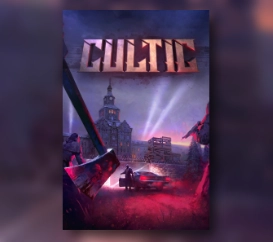
CULTIC Review—Built On The Past, Not Buried By It

There’s a particular kind of nostalgia reserved for the shooters that emerged from the mid-’90s, their worlds stitched together from jagged pixels, improbable architecture and a confidence that often mattered more than realism. They’re games I grew up with, less polished than many of today’s blockbusters but no less capable of leaving a lasting impression. In an era where revisiting the past has become almost as common as inventing something new, CULTIC arrives not as a museum piece content to imitate old ideas, but as a chance to discover what happens when that familiar language is spoken with a modern voice. The question isn’t whether the past can be recreated, but whether it still has something new to say.

Release Date: July 23rd 2026
Developer: Jasozz Games
Publisher: Atari, Infogrames, 3D Realms
Price: £16.74/ $19.99 USD
Reviewed On: XBOX Series S
* Access Provided For Review *

More Details

Crossing Into Madness

CULTIC opens with the kind of grim inevitability that horror stories wear so well. What begins as a pursuit of a murderous cult soon spirals into something far stranger, blurring the line between superstition and something far more tangible. Rather than delivering its tale through lengthy exposition, the game trusts its decaying churches, forgotten homesteads and blood-soaked ruins to do much of the talking, leaving scraps of lore and unsettling details to linger long after you’ve moved on. It’s a story less concerned with surprising twists than with cultivating an oppressive sense of dread, where every step deeper into the wilderness feels like crossing another threshold into madness.

The Old Ways Still Bite

There’s an unmistakable confidence to the way CULTIC handles itself. It borrows liberally from the shooters that inspired it, but never mistakes imitation for identity. Every encounter feels less like a shooting gallery and more like a desperate scramble for survival, where movement is every bit as important as marksmanship. You can charge headlong into a firefight, sliding beneath bullets before returning fire with a shotgun, or inch cautiously around corners, listening for footsteps and using cover to thin the odds. Neither approach is treated as the correct one, and that’s where much of the game’s appeal lies. Enemies hit hard, you fall just as quickly, and every exchange carries a tension that many modern shooters sacrifice in favour of spectacle. Even the brief flourish of slow motion after a perfectly placed headshot feels less like indulgence than a fleeting reward for keeping your composure.

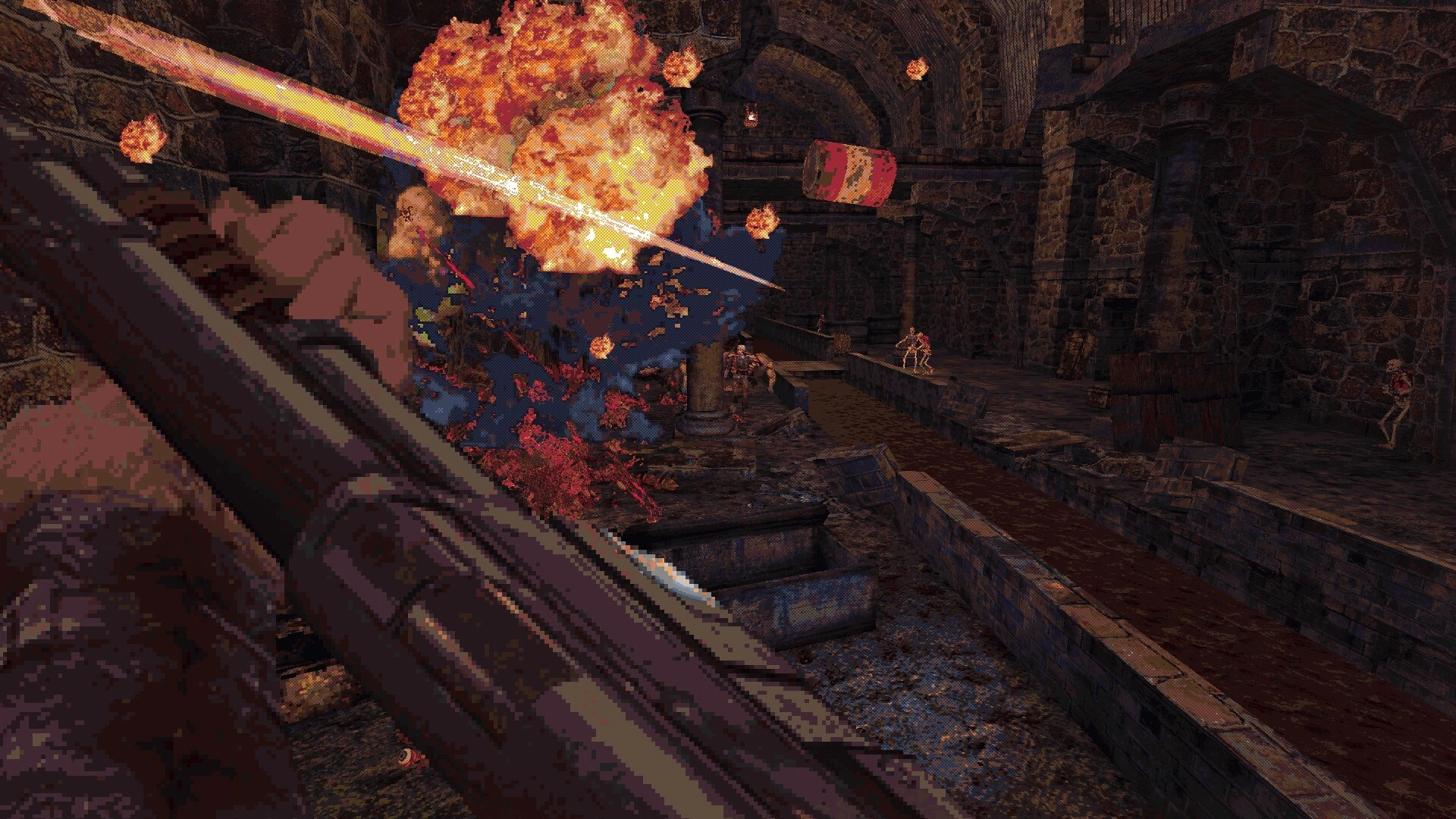
That sense of physicality extends to almost everything around you. Bullets travel through the world rather than striking targets instantly, demanding a little more thought at longer ranges, while the environments themselves become willing accomplices in the violence. Chairs can be hurled into the fray to stagger cultists, explosive barrels can transform cramped rooms into death traps, and narrow corridors become natural choke points where overwhelming odds suddenly feel manageable. The standout, though, is dynamite. What initially appears to be a simple explosive gradually reveals itself as one of the most versatile tools in the arsenal, whether you’re lighting and throwing bundles into crowds, unwrapping them to widen the blast radius or tossing them unlit before detonating them with a well-timed shot. It’s a wonderfully expressive mechanic that rewards experimentation without ever feeling cumbersome.

Exploration proves just as rewarding as combat. Levels are built with a surprising sense of place, favouring believable buildings, twisting backroads and forgotten compounds over abstract arenas stitched together for convenience. Hidden pathways, tucked-away weapon parts and scraps of environmental storytelling constantly tempt you to wander off the critical path, and doing so is rarely wasted effort. Weapon upgrades found at workbenches meaningfully alter how firearms perform, from expanding magazines and increasing stopping power to introducing alternate firing modes, while hidden Imbued Remains permanently increase your health, encouraging thorough exploration without making it feel mandatory. It’s progression woven naturally into the world rather than handed out as a checklist, and it suits the game’s old-school sensibilities remarkably well.

Yet for all its strengths, CULTIC occasionally leans a little too heavily on the games that inspired it. Objective hunting can interrupt the otherwise relentless pace, with some larger maps asking you to retrace your steps in search of keys or crucial items that aren’t always immediately obvious. Survival Mode offers a satisfying endurance test for those chasing higher scores, but it never quite captures the careful pacing and atmosphere of the story campaign, where exploration and combat exist in a more compelling balance. Even so, moment to moment, CULTIC rarely loses its grip. It understands that memorable shooters aren’t built on constant escalation, but on giving players the freedom to create stories of their own from the weapons in their hands and the spaces they’re asked to survive.

Old Pixels, New Shadows

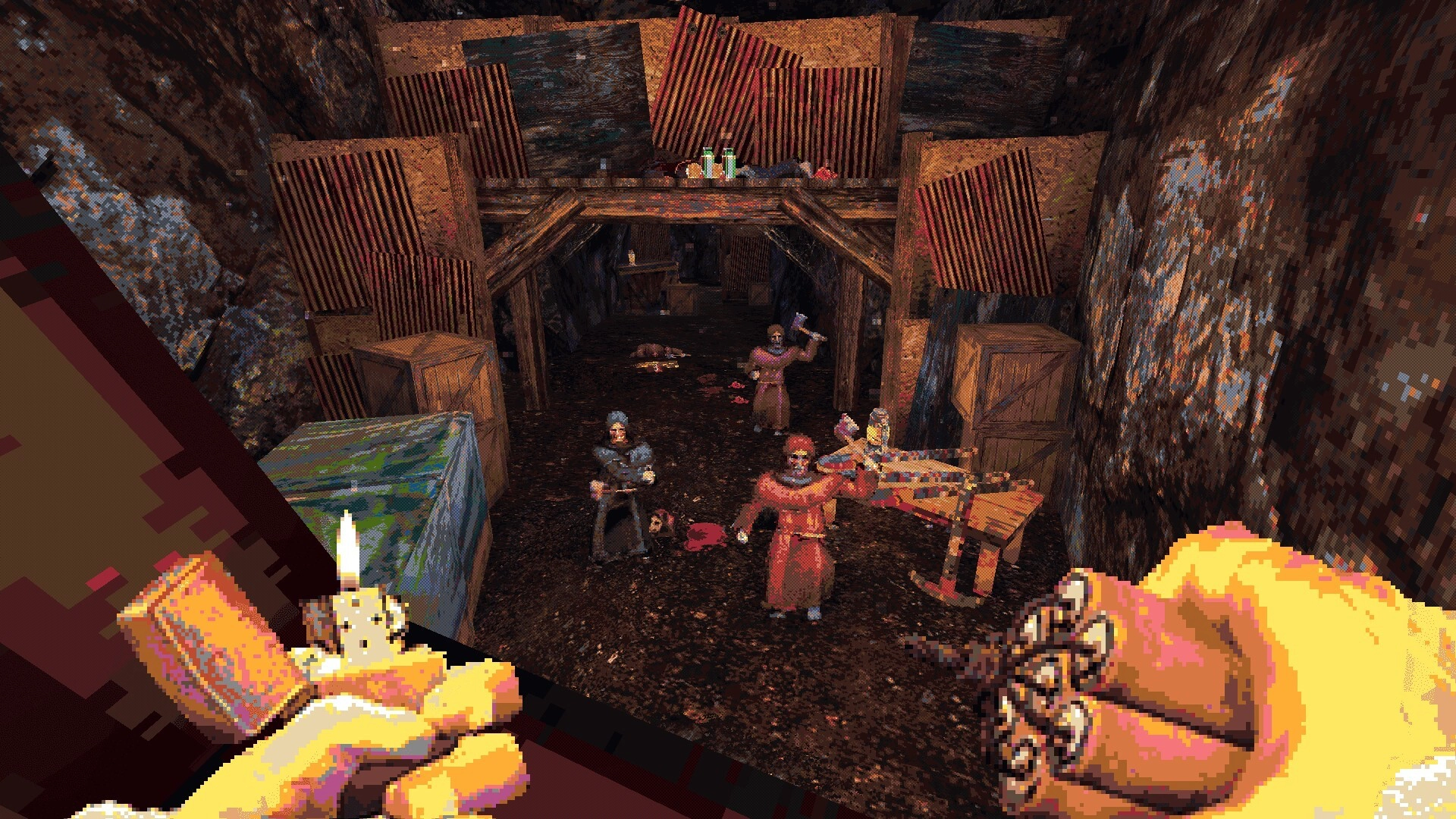
For all its deliberate nostalgia, CULTIC never feels trapped in the past. Its chunky pixels and low-poly geometry immediately evoke the era of Blood and other mid-’90s shooters, yet the illusion is constantly undercut by modern flourishes hiding beneath the surface. Dynamic lighting casts long, uneasy shadows through abandoned farmhouses and forgotten churches, while physics lend weight to collapsing scenery and flying debris. It’s a clever sleight of hand, embracing the rough edges of a bygone aesthetic without inheriting the technical limitations that defined it. Even the assortment of visual filters, allowing players to tinker with colour palettes and pixel density, feels less like a novelty and more like an invitation to tailor the experience to whichever version of nostalgia they remember best.

Violence, unsurprisingly, becomes part of the visual language. Enemies don’t simply fall; they collapse into showers of voxel-like gore, with explosions and well-placed shots reducing bodies to grisly fragments that linger across the battlefield. There’s an undeniable theatricality to it all, echoing the gleeful excess of the shooters that inspired it, yet it’s grounded by an attention to detail that keeps it from becoming cartoonish. The retro presentation occasionally leaves distant enemies blending into the scenery, particularly in darker environments, but more often than not the game’s restrained colour palette works in its favour, making every flash of gunfire and crimson spray all the more striking against the muted backdrop.

The soundscape proves just as effective at sustaining the mood. Weapons crack with a satisfying heft, punctuated by the unmistakable metallic crunch that rewards a clean headshot, while the game’s fleeting slow-motion moments deepen and distort every gunshot into something almost dreamlike. Away from combat, an unsettling wash of synth-driven ambience hangs over each location, interrupted by distant chanting, muffled footsteps and the nervous shouts of cultists somewhere beyond your line of sight. Positional audio quietly does much of the heavy lifting here, transforming ordinary corridors into spaces filled with uncertainty. It’s an understated achievement that doesn’t constantly demand attention, but without it, much of CULTIC’s oppressive atmosphere would quickly lose its hold.

7
Verdict
Summary

CULTIC succeeds because it understands that nostalgia is most powerful when it's allowed to evolve rather than simply repeat itself. Beneath its blood-soaked retro exterior lies a shooter that's thoughtful in its design, rewarding curiosity as much as quick reflexes and trusting atmosphere to carry as much weight as action. While its reverence for the past occasionally leaves it clinging to some of the frustrations that came with it, those rough edges do little to diminish the personality that shines through. It's a confident revival of a long-dormant style, one that proves there is still plenty of life left in the boomer shooter—provided it's willing to bring something of its own to the resurrection.


Related Articles

Halo: Campaign Evolved Review—A Classic Reborn for a New Generation

Some games become landmarks. Others become places you return to, not simply...

It Reaches Review—A Psychological Horror That Slowly Loses Momentum

As body cam-inspired horror games continue to gain traction, It Reaches emerges...

Duck Side Of The Moon Review—A Calm Journey That Rarely Evolves

Since I delved into handheld gaming, my interest has shifted towards cozy...

Ground Zero Review — A Love Letter to Classic Survival Horror

Having been raised on the classic Resident Evil and Silent Hill games,...