I came back to Lone Echo in 2026 for a slightly dispiriting reason: I was looking for the sort of high-end VR experience that used to make putting on a headset feel like an event. There was a time when Oculus seemed determined to knock this particular challenge out of the park, using PC VR as a place for developers to build experiences that simply weren’t possible anywhere else. Lone Echo was one of the clearest examples of that ambition, a game built around the strange physical possibilities of being somewhere that doesn’t exist. Oculus has since stepped away from that side of VR, leaving its PC ambitions behind in favour of a very different future. With the high-end releases of 2026 feeling increasingly scarce, revisiting Lone Echo has been less about nostalgia than curiosity: what happens when you return to one of the games that once made the future of VR feel so close you could almost reach out and touch it?

Release Date: July 20th 2017
Developer: Ready At Dawn
Publisher: Oculus Studios
Price: £14.99/ $19.99 USD
Reviewed On: Meta Quest 3 with Link Cable
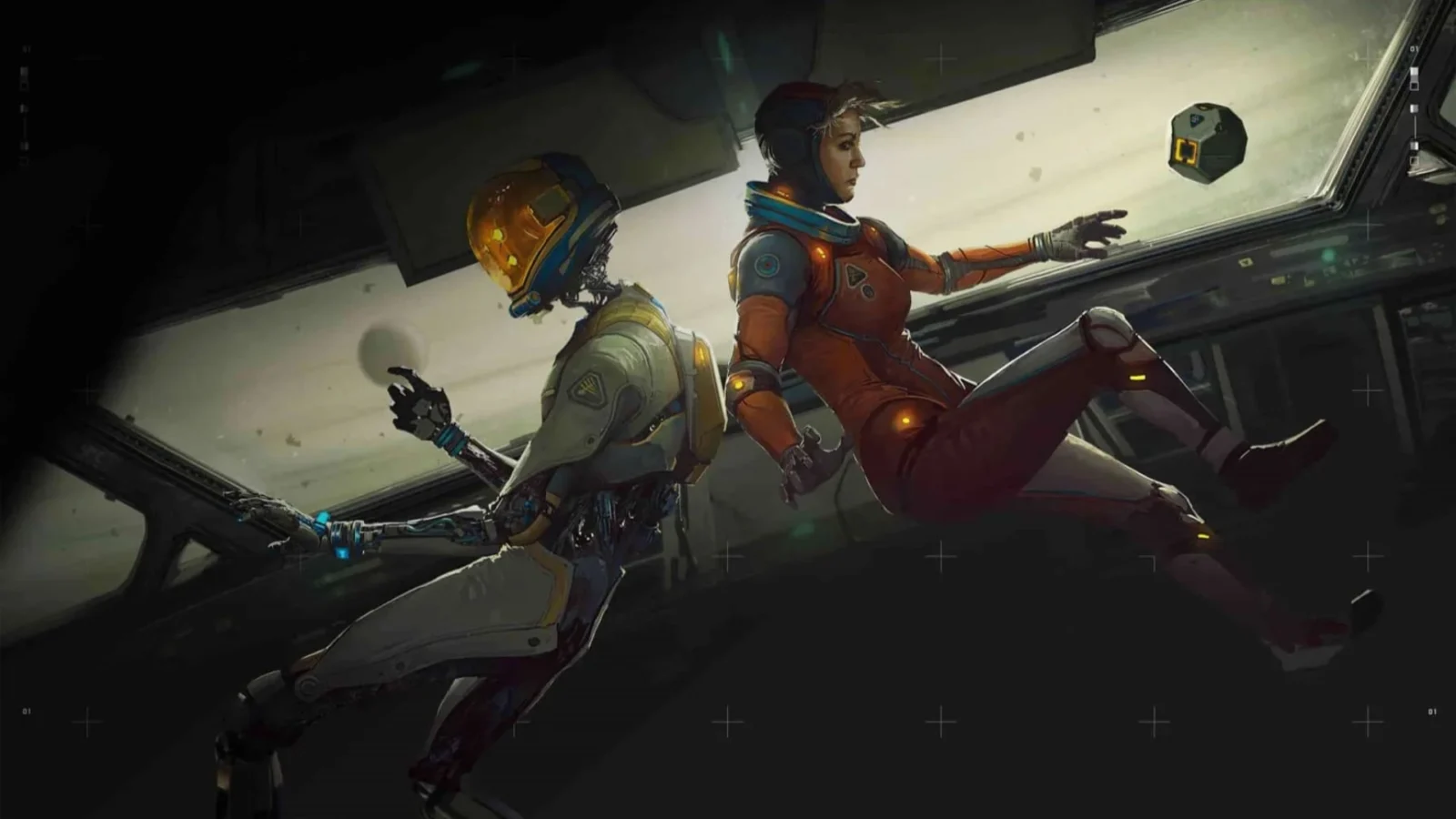
The story begins aboard the Kronos II mining facility, where you inhabit Jack, an android working alongside Captain Olivia Rhodes. When an unexplained anomaly disrupts the station, the two are drawn into an increasingly mysterious situation that gradually expands beyond the mundane routines of maintaining a space installation. Yet Lone Echo is less interested in the grand spectacle of space than you might expect. Its science fiction is intimate, built around the relationship between Jack and Olivia and the strange intimacy of being an artificial being tasked with helping a human survive. Olivia is particularly effective, brought to life through expressive animation and a performance that gives the game’s quieter conversations an unusual warmth. The story itself is familiar in its themes of humanity, artificial intelligence and isolation, but Lone Echo understands that VR gives those ideas a physical dimension. You aren’t merely watching Jack exist in this world; you are looking through his eyes, moving his hands and gradually learning what it means to inhabit his mechanical body.
Movement is where that learning truly begins. There is no floor to walk across, no conventional sprint button, and very little sense that the usual rules of a first-person game should apply. Instead, you grab the environment and pull yourself through it, pushing away from surfaces to drift towards your destination. Small thrusters let you correct your course, while your hands become both tools and anchors. It sounds simple, but the effect is transformative. After enough time, movement stops feeling like a game mechanic and starts feeling like a physical intuition. Eventually, you realise you are no longer thinking about which button moves you forward because you have begun to understand the station in terms of momentum, surfaces and distance. Lone Echo doesn’t disguise the fact that you are wearing a headset. It builds its entire world around that fact.
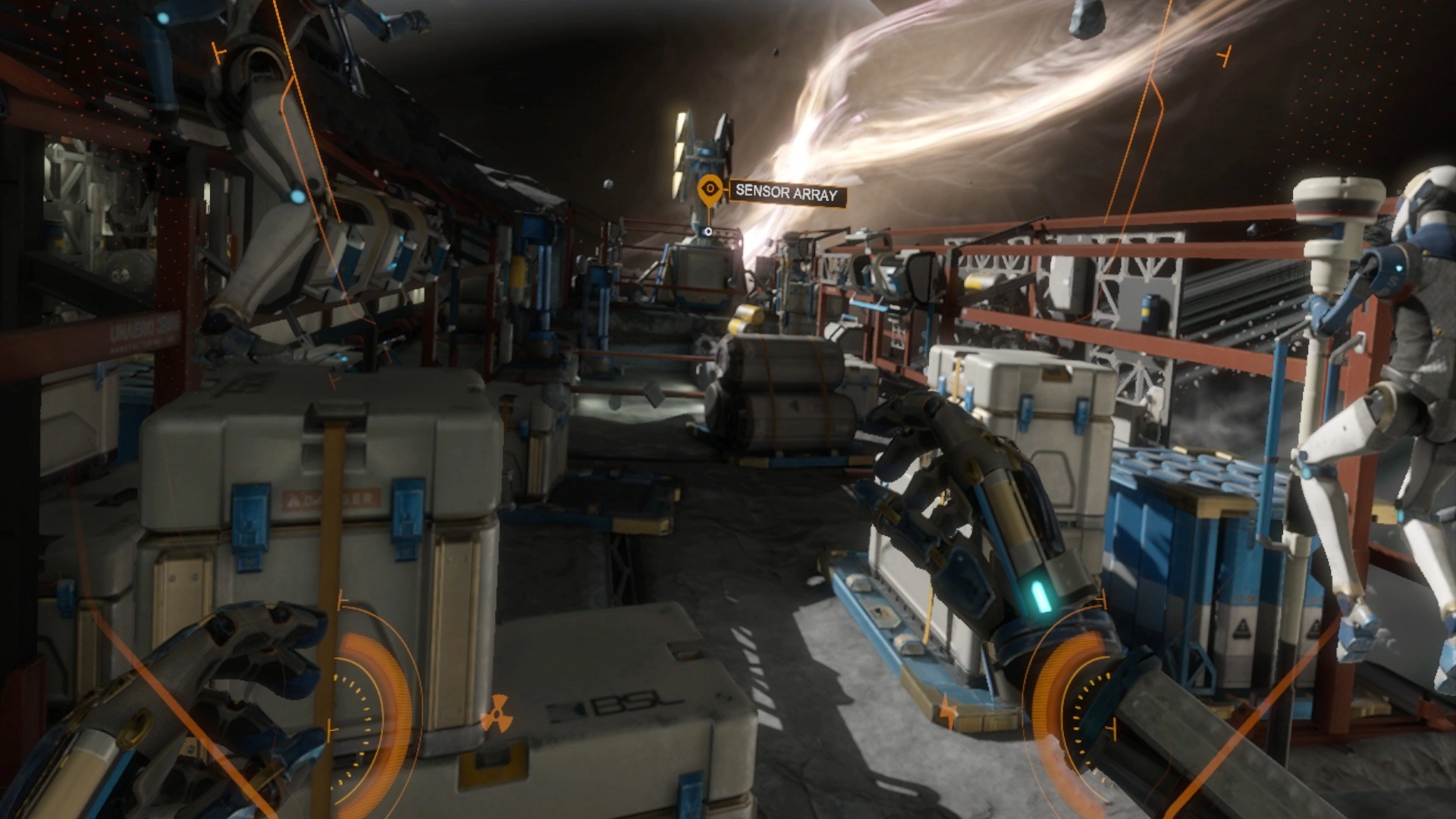
That philosophy extends into almost everything you do. Consoles aren’t activated by walking up and pressing a button; objects are picked up, examined and manipulated with your hands. Repairs become little mechanical rituals. You reach into machinery, connect components, scan surfaces and move equipment around the station. Even Jack’s hands themselves are carefully considered, with visible mechanical joints and tiny details that make them feel like part of a body rather than generic VR controllers. None of these activities would necessarily be remarkable outside VR. Inside it, they become the point. Reaching towards a piece of equipment, pulling it closer and turning it over in your hands can feel strangely meaningful, even when the task itself amounts to little more than following a sequence of instructions. The game understands that the smallest interaction can become meaningful when your own hands are involved.
That commitment to physicality does come with a cost, particularly when revisiting the game years later. Lone Echo is deliberately slow, and some of its tasks are mundane by design. There are moments when you are repairing machinery, carrying objects or travelling between locations and wondering whether the game might be confusing immersion with repetition. It lacks the constant escalation that conventional science-fiction adventures often depend upon, preferring instead to let you exist inside its setting. In retrospect, that patience is one of its more interesting qualities. The fantasy of living in space isn’t necessarily about explosions or grand discoveries. Sometimes it is about floating through a corridor, grabbing a handhold and looking out into an impossibly large darkness.
Its more dramatic moments consequently feel less important than they might in another game, but the slower rhythm gives the adventure a distinctive character. Lone Echo is at its best when it allows you to simply be Jack, rather than constantly reminding you that you are the player progressing through a game. The station becomes familiar through repetition. You begin to recognise its corridors and machinery, to understand where you are by instinct rather than by map. The result is an unusual kind of immersion, one built not from spectacle but familiarity. After spending enough time aboard the Kronos II, the act of pushing away from a wall and watching yourself drift towards another becomes as natural as walking through a corridor in an ordinary game.
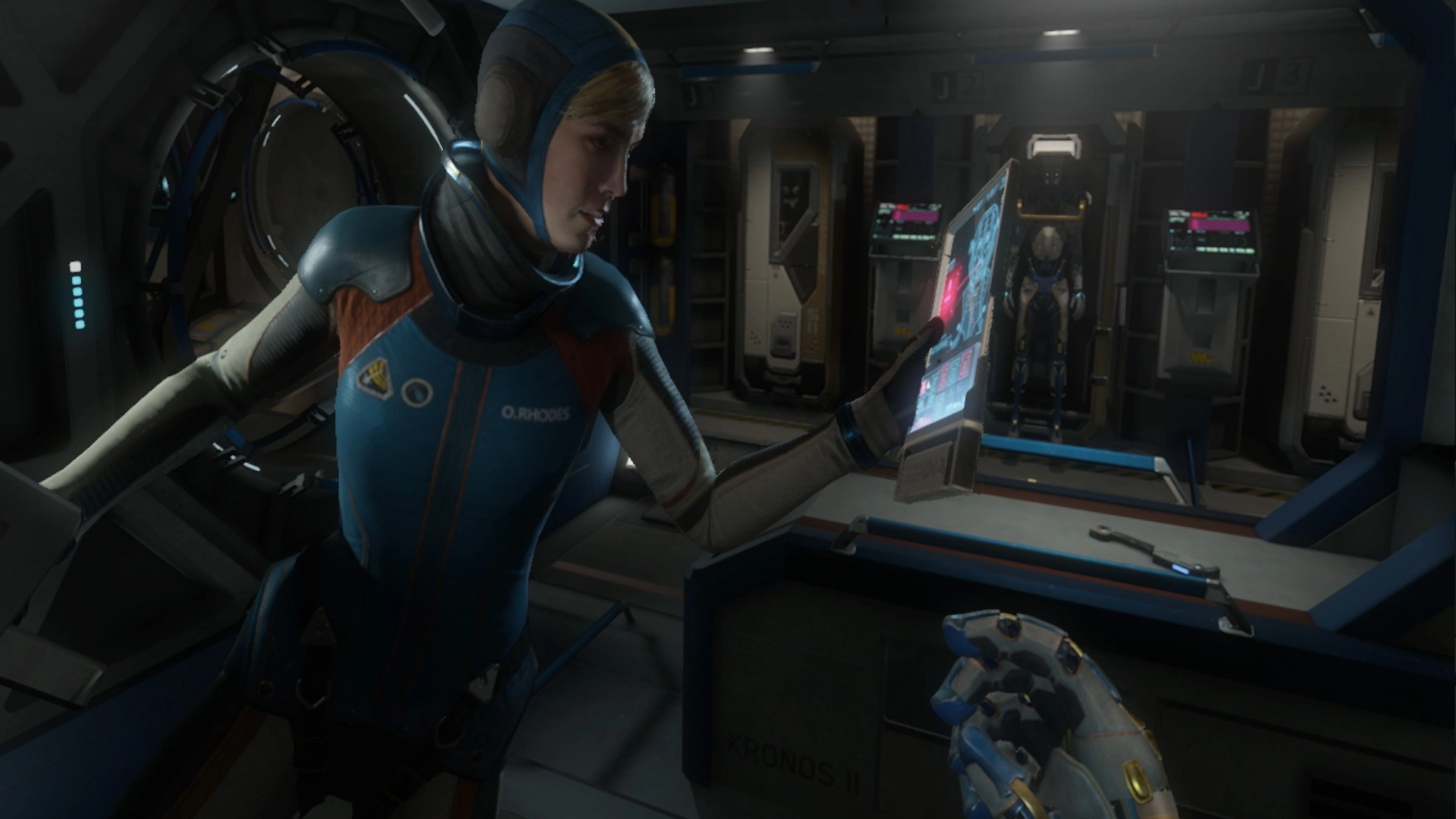
The world around you is carefully constructed enough to make that familiarity convincing. Visually, Lone Echo remains striking. The Kronos II is all polished surfaces, industrial machinery and enormous windows looking out into the void, while the wider environments have a convincing sense of scale that remains impressive even years later. The station feels lived in rather than assembled purely as a collection of VR playgrounds. Much of that comes from the small details: the textures of Jack’s hands, the machinery humming around you, the subtle animation of characters and the sense that every surface has a physical presence. For a game so dependent on convincing you that you are somewhere else, those details matter enormously.
Sound design is just as important to that atmosphere. Space itself is silent, of course, but Lone Echo fills that silence with the gentle mechanical noises of a working station: machinery, interfaces, movement and the small sounds of Jack’s own body. Olivia’s voice provides a human counterpoint to all that machinery, making even ordinary conversations feel strangely comforting when surrounded by so much emptiness. The music knows when to step back, allowing the environment to carry much of the mood. It is an understated presentation, but that restraint is precisely what makes the larger moments land. When the game eventually asks you to look out into the darkness beyond the station, there is very little it needs to do. The scale speaks for itself.
Comfort
| Posture | Supported |
|---|---|
| Standing mode | Yes |
| Seated Mode | Yes |
| Artificial Crouch | N/A |
| Real Crouch | N/A |
| Movement | Supported |
| Smooth Locomotion | Physical Movement |
| - Adjustable Speed | N/A |
| Teleport | No |
| Blinders/Vignette | No |
| - Adjustable Strength | N/A |
| Head-based | Physical Movement |
| Controller-based | Physical Movement |
| Dominant Hand Switcher | Physical Movement |
| Turning | Supported |
| Smooth Turning | Yes |
| - Adjustable Speed | Yes |
| Snap Turning | Yes |
| - Adjustable increments | N/A |
| Input | Supported |
| Tracked Controllers | Yes |
| Hand Tracking | No |
| Gamepad | No |
Verdict
There are VR games that demonstrate a technology, and there are games that make you briefly forget the technology is there at all. Lone Echo belongs firmly in the latter category. Its age shows in places, particularly in some of its slower stretches and occasional awkward interactions, but those imperfections feel increasingly insignificant beside the strength of its central idea. Almost a decade on, its movement, physical interaction and sense of presence remain remarkably convincing, and revisiting it only reinforces how much it got right the first time. To me, Lone Echo still stands out as one of the best games available in VR, if not the best, after all these years. In an era when Oculus has moved away from the kind of ambitious PC VR experiences that once defined its platform, there is something bittersweet about returning to it. Lone Echo feels like a signal still travelling through the darkness: a beautiful reminder of what PC VR was capable of when developers were given the freedom to dream beyond the limits of a screen. Years later, the signal hasn’t faded. If anything, the silence around it has only made it clearer — and somewhere out there, Jack is still floating among the stars, waiting for someone to come back.