


Steam Deck

Denshattack! Review—An Electrifying Arcade Triumph

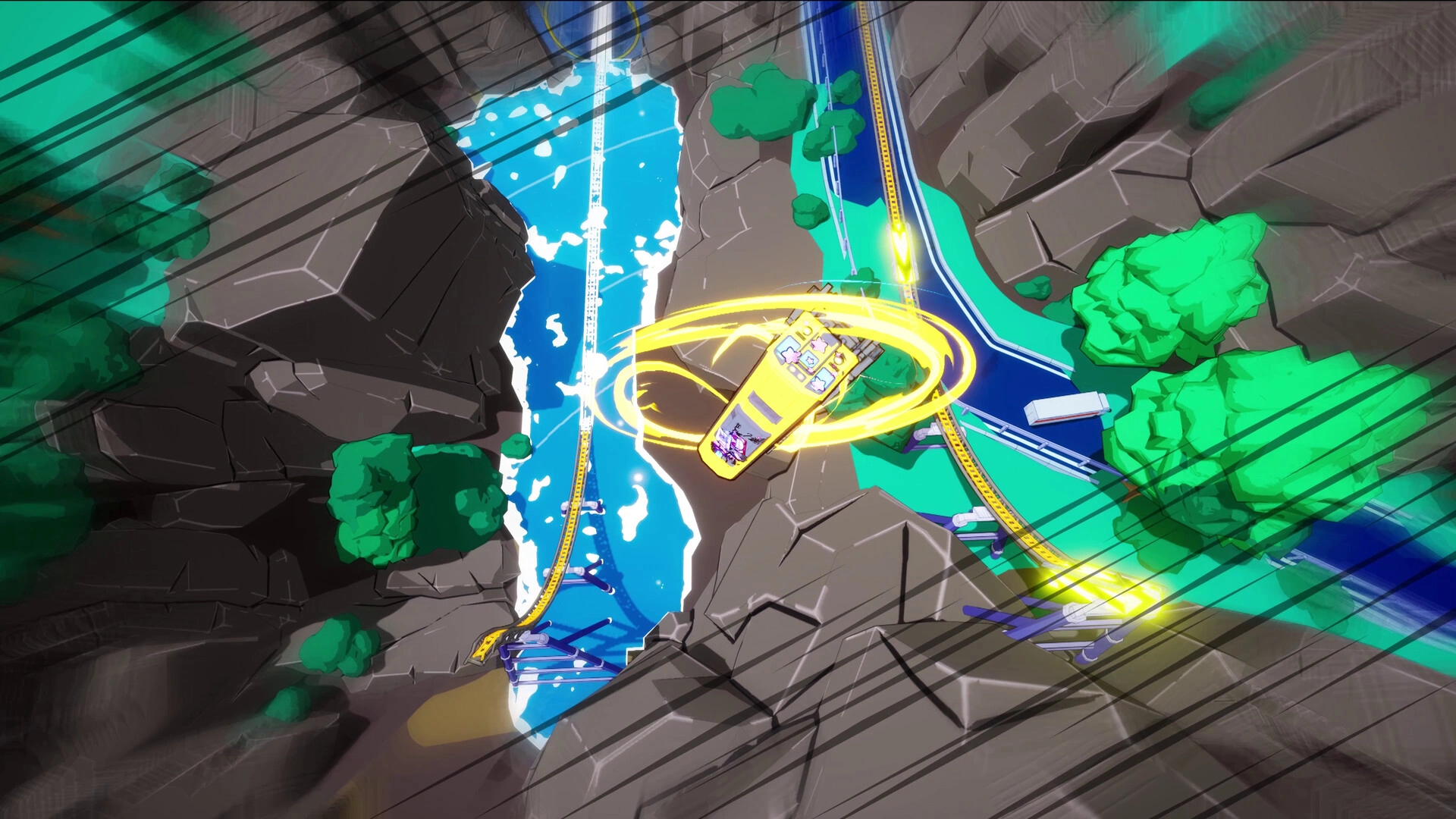
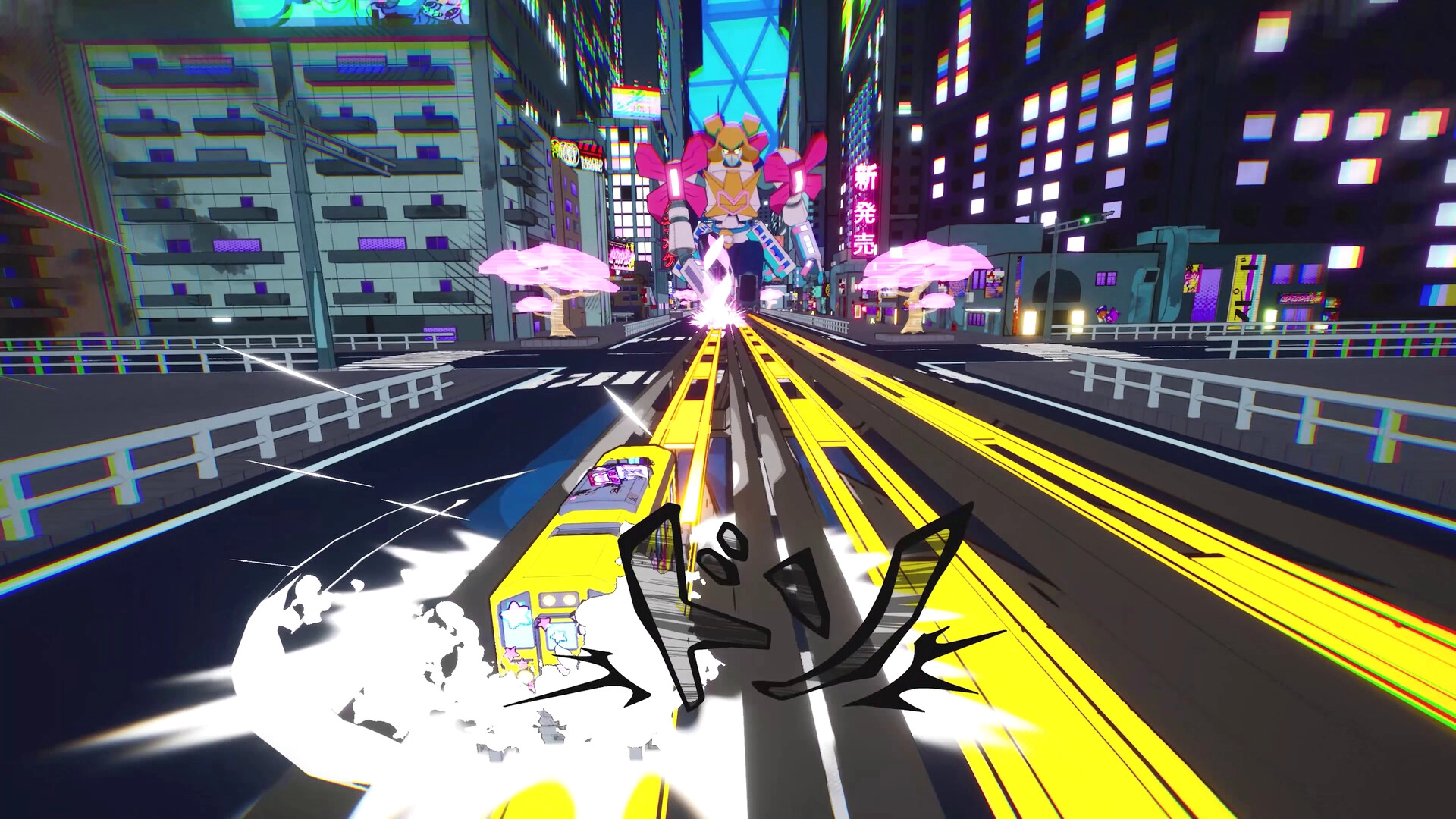
The easiest way to describe Denshattack! is as Tony Hawk’s Pro Skater by way of Jet Set Radio, filtered through the irrepressible optimism of Sega’s Dreamcast years. It’s also a description that sounds almost too neat, as though someone had stitched together a handful of nostalgic touchstones and hoped recognition alone would carry the experience. A gravity-defying commuter train performing kickflips through a flooded, neon-soaked Japan is exactly the sort of idea that risks becoming little more than a joke stretched to game length. Instead, what emerges is something far rarer: a game that understands precisely why those influences continue to resonate while confidently establishing an identity entirely its own.

Brilliantly Off The Rails

The story wisely embraces that eccentricity. Set in a future where the railway network has become the beating heart of society, you play as Emi, a ramen delivery driver whose ambitions gradually pull her into increasingly bizarre rivalries and surreal encounters. The narrative rarely asks to be taken seriously, but nor is it simply random for the sake of it. Its colourful cast and escalating absurdity provide just enough motivation to keep the journey moving, while allowing the arcade spectacle to remain firmly centre stage.

Flow State Achieved

The brilliance of Denshattack! lies not in the novelty of controlling a train, but in how completely that absurd premise disappears once you’re in motion. Automatic acceleration shifts your attention away from speed itself and towards rhythm, positioning every stage as a continuous sequence of split-second decisions. Jumps naturally flow into tricks, tricks into landings, and landings into yet more opportunities to maintain momentum. Before long, you’re no longer thinking about the mechanics individually, only about preserving an almost musical cadence through increasingly elaborate courses.

That rhythm extends across every aspect of movement. Switching between parallel rails feels wonderfully immediate, constantly tempting you towards riskier routes or hidden shortcuts, while drifting transforms corners into opportunities rather than interruptions. The train carries an impressive sense of weight without ever feeling cumbersome, somehow balancing heft and agility in a way that shouldn’t quite work but consistently does. The result is a movement system that rewards confidence without becoming intimidating, encouraging players to push a little further with every run.

Where many arcade games settle for flashy spectacle, Denshattack! finds its lasting appeal through mastery. Maintaining lengthy combos demands careful management of manuals, while the most lucrative tricks require inputs that borrow as much from fighting games as they do skateboarding. It’s an inspired decision that continually raises the ceiling without making the fundamentals inaccessible. Hidden Rainbow Tracks, meanwhile, reward experimentation with spectacular shortcuts and score multipliers, ensuring that replaying a level is driven as much by curiosity as by the pursuit of perfection.

That same philosophy informs the structure surrounding each stage. The Dare objectives encourage exploration without undermining the game’s relentless pace, and Ground Smashes create satisfying moments of controlled destruction while serving genuine navigational purpose. Even the wonderfully ridiculous boss encounters feel like natural extensions of everything learned beforehand, asking players to apply their understanding of momentum and movement rather than suddenly switching genres. Throughout it all, the thoughtfully arranged control scheme quietly proves itself one of the game’s greatest strengths, allowing every mechanic to coexist without overwhelming the player. By the end, the sheer number of interacting systems feels remarkably effortless.

Dreamcast Spirit Lives

If the gameplay channels Sega’s arcade legacy, the presentation proudly wears it on its sleeve. Thick outlines, saturated colours and bold cel-shading immediately evoke the Dreamcast era without slipping into simple imitation. Rather than chasing realism, Denshattack! embraces exaggeration at every opportunity, presenting its flooded vision of Japan as an explosion of colour rather than a vision of despair. It’s a world that feels playful, expressive and unmistakably handcrafted, where every environment reinforces the game’s infectious sense of momentum.

That confidence extends well beyond the world itself. Menus bounce with personality, transitions snap elegantly into place and the entire interface carries a distinctly Y2K sensibility, recalling the swagger of Jet Set Radio while borrowing the slick visual language popularised by Persona 5. During play, manga-inspired speed lines, impact lettering and dramatic camera angles transform successful tricks into miniature set pieces, lending every spectacular moment the feeling of a perfectly framed comic panel.

The soundtrack proves an equally inspired companion. With contributions from composers including Tee Lopes, Shoji Meguro and Richard Jacques, alongside an eclectic mix of breakbeat, hip-hop and punk, the music captures the same sense of boundless energy that defines the visuals. Better still, it responds dynamically to your performance, swelling alongside growing combo multipliers until sight and sound become inseparable. Few modern arcade games understand the relationship between music and momentum quite so well.

The smaller touches prove just as impressive. Grinding rails produces satisfyingly heavy metallic shrieks, landings crash with convincing force and both English and Japanese voice tracks add warmth to the game’s eccentric cast. Particularly welcome is the thoughtful accessibility work, with crucial audio information mirrored visually to ensure that no essential gameplay element depends solely on sound. It’s a subtle but significant inclusion that reflects the care evident throughout the entire production.

More Details

10
Verdict
Summary

Originality is often celebrated in theory but rarely realised with this much confidence. Denshattack! borrows recognisable ideas, certainly, yet never feels content to exist in their shadow. Instead, it reshapes them into something unmistakably its own, combining exhilarating movement, layered systems, unforgettable presentation and infectious personality into an arcade experience that constantly rewards curiosity and mastery in equal measure. It doesn't merely evoke the spirit of Sega's creative peak—it captures the sense of fearless experimentation that made that era so memorable in the first place.


Related Articles

Fading Echo Review—Inventive Ideas Shine Through the Imperfections

There is something immediately compelling about Fading Echo. Not because it promises...

Terrifier: The ARTcade Game Review—A Bloody Tribute That Lacks Lasting Impact

As a fan of the Terrifier films, Terrifier: The ARTcade Game immediately...

Cinderia Early Access Review—An Ambitious Challenger Among Modern Roguelike Greats

Entering the roguelike genre in 2026 presents a significant challenge. With iconic...

Deer & Boy Review—Where Emotion Speaks Louder Than Words

My initial impression of Deer & Boy at Steam Next Fest was...