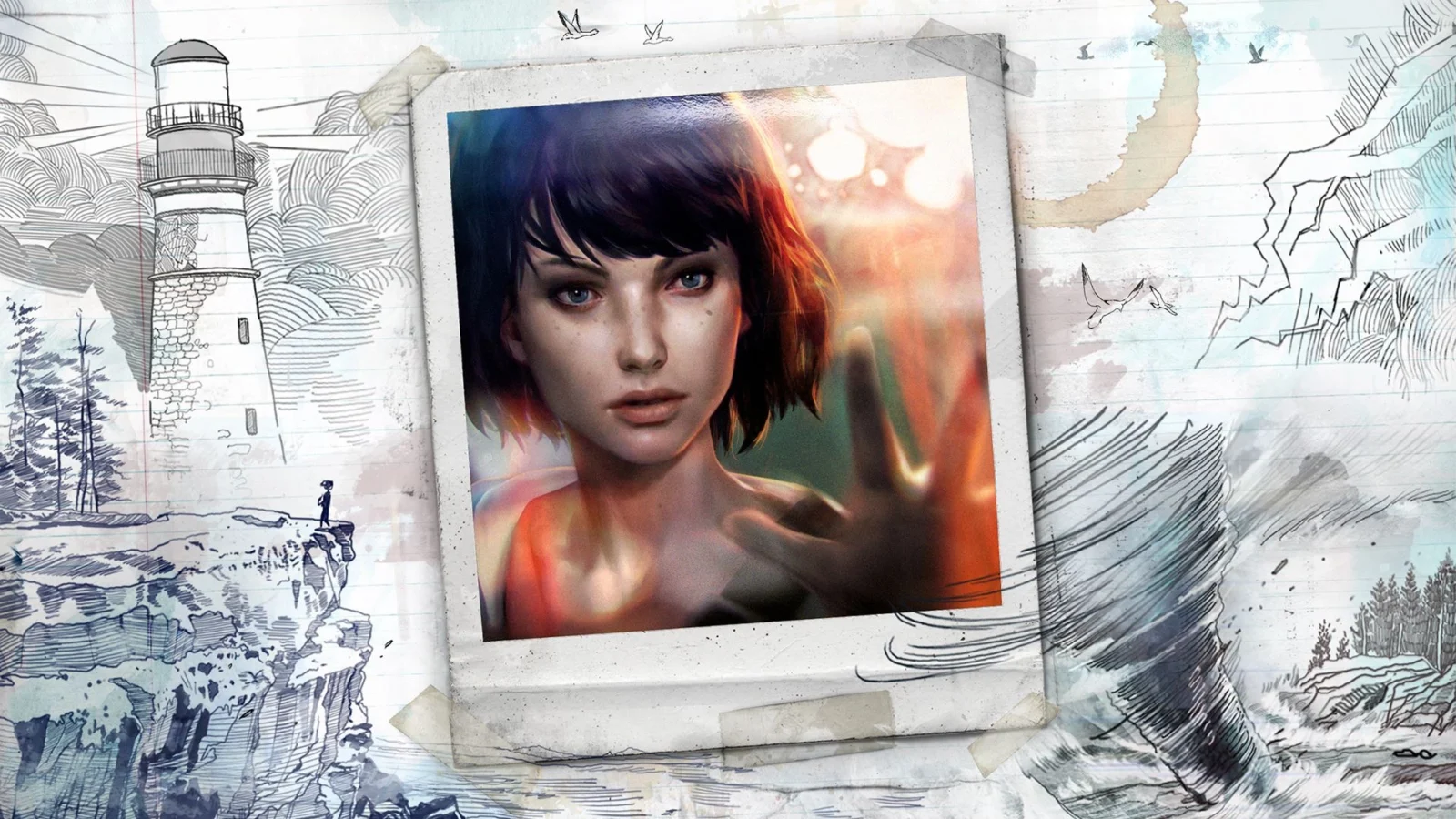
There is a particular sadness to returning to Life is Strange. Not because Arcadia Bay is necessarily a sad place, though it has never been short of rain, regret and the occasional approaching apocalypse, but because the game itself has become a kind of time capsule. First released in 2015, it belongs to a moment when episodic adventures still felt like small pieces of television delivered to your console, when a song playing over a quiet walk through a fictional town could feel like the most important thing in the world. Coming back to it now, through the slightly strange prism of the Remastered edition, means encountering both the game and the person you were when you first played it. Some things seem smaller than you remember; others have somehow grown larger with time. And somewhere between those two sensations lies the enduring appeal of Life is Strange: a game about looking backwards that has itself become something worth looking back on.
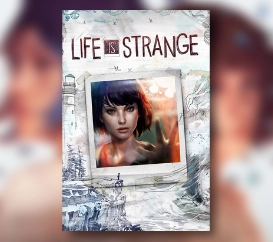
Release Date: Jan 30th 2015 (O), Feb 1st 2022 (R)
Developer: DONTNOD (O), Deck Nine (R)
Publisher: Square Enix
Price: £15.99 (O), £33.99 (R)
Reviewed On: PC
* Access Provided For Review *
There are games that age like photographs and games that age like memories. Life is Strange belongs to the latter. Returning to Arcadia Bay years after Max Caulfield first walked its rain-soaked streets feels less like revisiting a place than opening a drawer you had forgotten was still there, full of old photographs, unfinished conversations and things you once thought were enormously important. Max’s return to Blackwell Academy brings her back into the life of Chloe Price, her childhood friend turned distant stranger, just as a series of increasingly strange events begins to gather around them: a missing student, a mysterious vision, a storm waiting somewhere on the horizon. Its story is sometimes awkward in ways that are difficult to ignore now, particularly in dialogue that occasionally mistakes teenage melodrama for profundity, but there is an honesty beneath that awkwardness. Life is Strange understands adolescence as a period in which everything feels unbearably immediate: friendships become lifelines, mistakes become catastrophes and the future is something frightening precisely because it has not happened yet. Its supernatural premise gives Max the ability to rewrite moments, but the story’s real subject is the impossibility of rewriting a life. Time can be bent, conversations can be reconsidered, but consequences have a way of following you into the next room.
The mechanics of Life is Strange have always been deceptively modest. There are no elaborate systems competing for attention, no combat to interrupt the quiet, and little in the way of traditional adventure-game complexity. Instead, you walk. You look. You listen. You talk to people and inspect the mundane debris of their lives: photographs, books, phones, posters, discarded objects and notes left behind in places where nobody expects them to be read. It is an old-fashioned way of building a world, almost deliberately so, but it gives Arcadia Bay an unusual intimacy. The town becomes something you learn rather than something you merely pass through. Max’s rewind ability transforms these ordinary interactions into small experiments in cause and effect, allowing you to test conversations, alter responses and discover information that would otherwise remain hidden. It is a simple idea, but simplicity can be powerful when it gives the player permission to be curious.
The rewind mechanic is also where Life is Strange begins to reveal its most interesting contradiction. The game gives you the power to take back your mistakes while simultaneously telling you that choices have consequences. At first, rewinding feels liberating. You can say the wrong thing, watch the conversation unfold, step backwards through time and try again. It turns dialogue into something almost playful, as though Max has been handed the ability to see behind the curtain of ordinary social interaction. Gradually, though, that power becomes less comforting. There are decisions that cannot be cleanly undone, situations that become more complicated the more you interfere with them, and moments where the fantasy of control begins to feel like precisely that: a fantasy. The most memorable choices are therefore rarely the ones with the clearest mechanical consequences. They are the ones that make you stop and wonder what you would actually say if there were no rewind button.

This makes the game’s slower passages more important than they might initially appear. Life is Strange is remarkably comfortable with letting you do very little. You walk through the school corridors. You sit in a room. You explore Chloe’s house. You listen to someone talk while the afternoon light settles over the scenery. There are puzzles, but they rarely demand much intellectual gymnastics, and some sequences can feel padded when viewed through the eyes of a modern player accustomed to games that constantly reward forward momentum. Yet there is a strange confidence in that slowness. The game understands that adolescence is not experienced as a succession of plot points. Much of it is waiting, wandering and filling time with people who might or might not remain in your life. The apparently inconsequential moments are therefore some of its most important. They give the dramatic events somewhere to land.
The episodic structure has aged in fascinating ways, too. What once felt like the natural rhythm of a story released piece by piece can now feel deliberately old-fashioned, particularly when played as a complete journey. The cliffhangers, revelations and carefully timed emotional beats reveal the influence of television, while the occasional abrupt ending can make individual episodes feel more like chapters than fully formed acts. But that structure also gives the story room to breathe. Life is Strange takes its time allowing relationships to accumulate history, letting tiny decisions gather in the background until they begin to feel heavier than they first appeared. It is not a particularly deep mechanical experience, nor was it ever intended to be. Its real system is memory: what you noticed, who you trusted, what you changed and, eventually, what you wished you hadn’t.
The remaster introduces an interesting problem for a game so dependent on memory. Its improved character models, facial animation, lighting and environmental detail make Arcadia Bay more technically accomplished, but technical improvement is not always the same thing as artistic improvement. The original Life is Strange possessed a slightly strange visual quality, caught somewhere between stylised realism and the limitations of its technology. Faces could be stiff, expressions could be peculiar and environments could look a little rough around the edges, but those imperfections became part of the texture of the experience. The remaster gives Max and Chloe more expressive faces and a greater sense of physical presence, allowing quieter scenes to communicate more naturally. At the same time, some of the old dreamlike quality has been polished away. It is the peculiar problem of remastering something whose imperfections have become inseparable from the memory of it: make it cleaner and you risk making it less familiar.
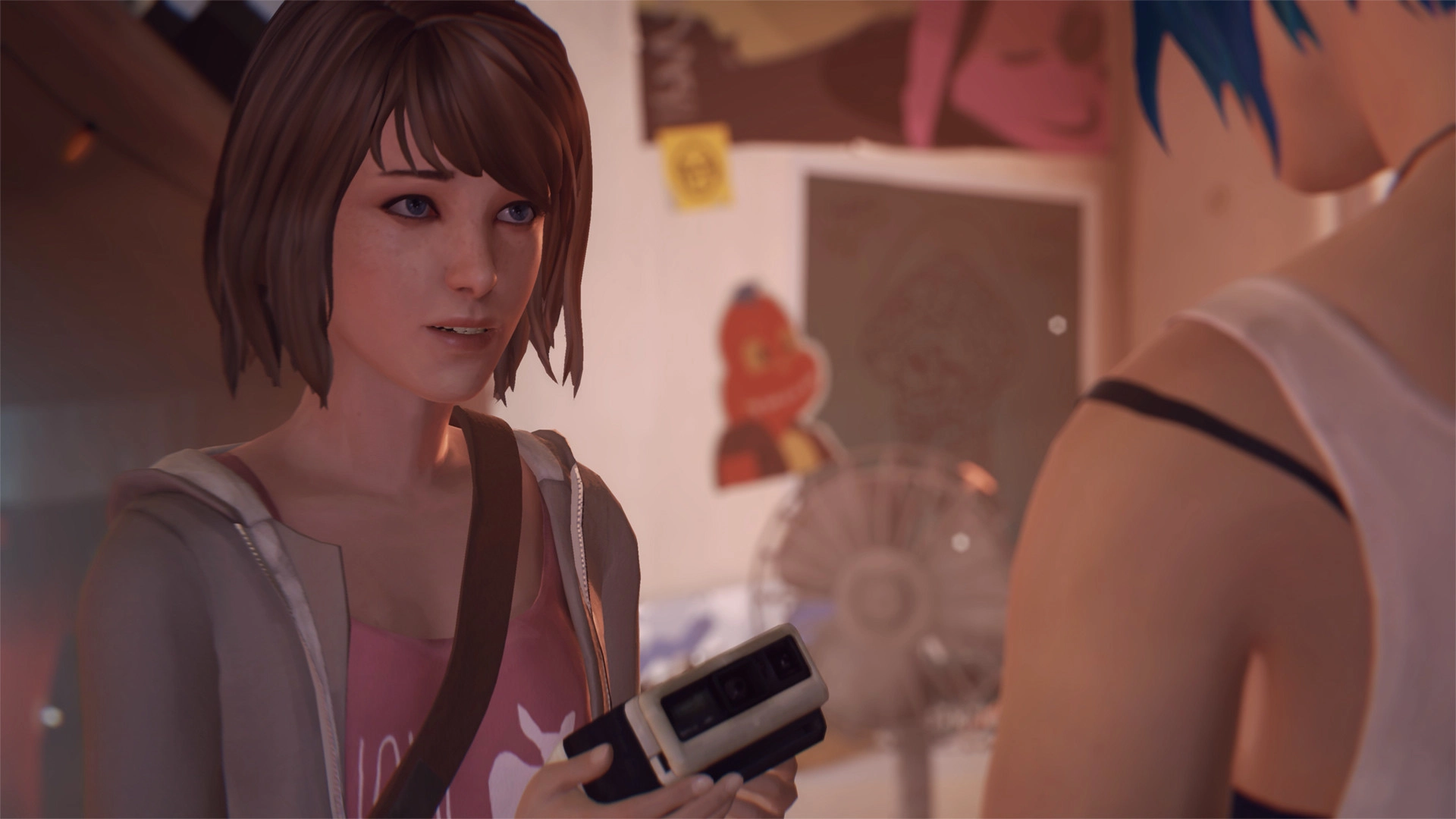
Arcadia Bay itself survives the transition rather better. The town remains a collection of beautiful and slightly miserable places, all autumn leaves, damp pavements, ageing buildings and distant ocean air. Blackwell Academy has the particular atmosphere of a place that wants to look timeless while being inhabited by people desperate to escape their own adolescence. Chloe’s home feels different again, less like a videogame location than a physical accumulation of history, filled with the traces of people who have lived there and the absence of someone who no longer does. The remaster’s additional detail helps these spaces breathe, but it is still the underlying composition that matters most. Life is Strange has always been good at making somewhere feel meaningful simply by allowing you to stand there long enough to notice it.
Then there is the music, which remains the thread binding much of the experience together. The songs arrive with an almost uncanny sense of timing, turning bedrooms, corridors, beaches and empty roads into places suspended somewhere between the present and recollection. The soundtrack’s indie melancholy could easily have become a period piece, a sonic capsule of the mid-2010s, yet much of it still works because the game uses music as emotional punctuation rather than background noise. There are scenes where the dialogue falls away and a song takes over, allowing the player to sit with a moment rather than immediately moving beyond it. That restraint feels increasingly unusual. The remaster may sharpen the pixels and improve the faces, but it is the sound of Arcadia Bay — the music, the rain, the distant hum of a town continuing without you — that ultimately makes returning to it feel like returning somewhere you once knew.
Verdict
Revisiting Life is Strange is an exercise in remembering why something mattered rather than deciding whether it was ever perfect. The years have exposed its awkward dialogue, simple puzzles and occasionally overworked melodrama, while the remaster itself is an imperfect attempt to reconcile an old visual identity with modern expectations. Yet those flaws are surrounded by something more difficult to manufacture: sincerity. Life is Strange believes that small choices matter, that places can become inseparable from the people we associate with them, and that growing older means accepting that some moments cannot be recovered no matter how desperately we wish they could be. Its greatest trick is therefore not Max’s ability to rewind time, but the way the game makes you wish you could. Years later, Arcadia Bay still feels like somewhere caught at the edge of memory — a place you can revisit, walk through, listen to, and briefly inhabit again, even while knowing that the version of yourself who first arrived there has already moved on.