
Listen to The VRverse Podcast

Advertisement

SUMMERHOUSE Review—Creativity Without Limits, Comfort Without Pressure
- May 19, 2026
- 6:00 pm
I discovered SUMMERHOUSE when it launched on the Nintendo Switch, and after delving into its features, it struck me as an ideal game for those cozy nights spent gaming on the couch. The game’s emphasis on simplicity and its ability to create a warm, inviting environment suggested a soothing experience meant to help players relax. This led me to wonder if crafting my own small neighbourhoods in SUMMERHOUSE would truly match that comforting first impression.
Building Comfort, Brick by Brick
SUMMERHOUSE offers a refreshing take on gameplay by eliminating conventional objectives in favour of unbridled creativity. Without missions, time constraints, or resource management, players can immerse themselves in a stress-free environment where the focus is solely on building. The game is designed to be immediately approachable, requiring no prior knowledge beyond the simple act of placing and experimenting with various objects. Instead of steering players toward a predetermined goal, it invites them to create spaces that are visually appealing or personally satisfying.
At its heart, the gameplay centres on the placement and arrangement of building components to craft houses and neighbourhood. Players have the freedom to choose from walls, roofs, windows, doors, and decorative items, mixing and matching them as they see fit. The intuitive controls enhance the experience, making even the simplest tasks, like stacking or modifying structures, feel enjoyable and effortless.
One of the standout features of the game is its emphasis on experimentation. Combining different objects often yields surprising results, with new details and decorative elements emerging organically. Players are encouraged to explore unconventional combinations rather than adhere to rigid guidelines, fostering a sense of discovery in each building session. The game subtly promotes creativity, allowing players to uncover possibilities without overt instructions.
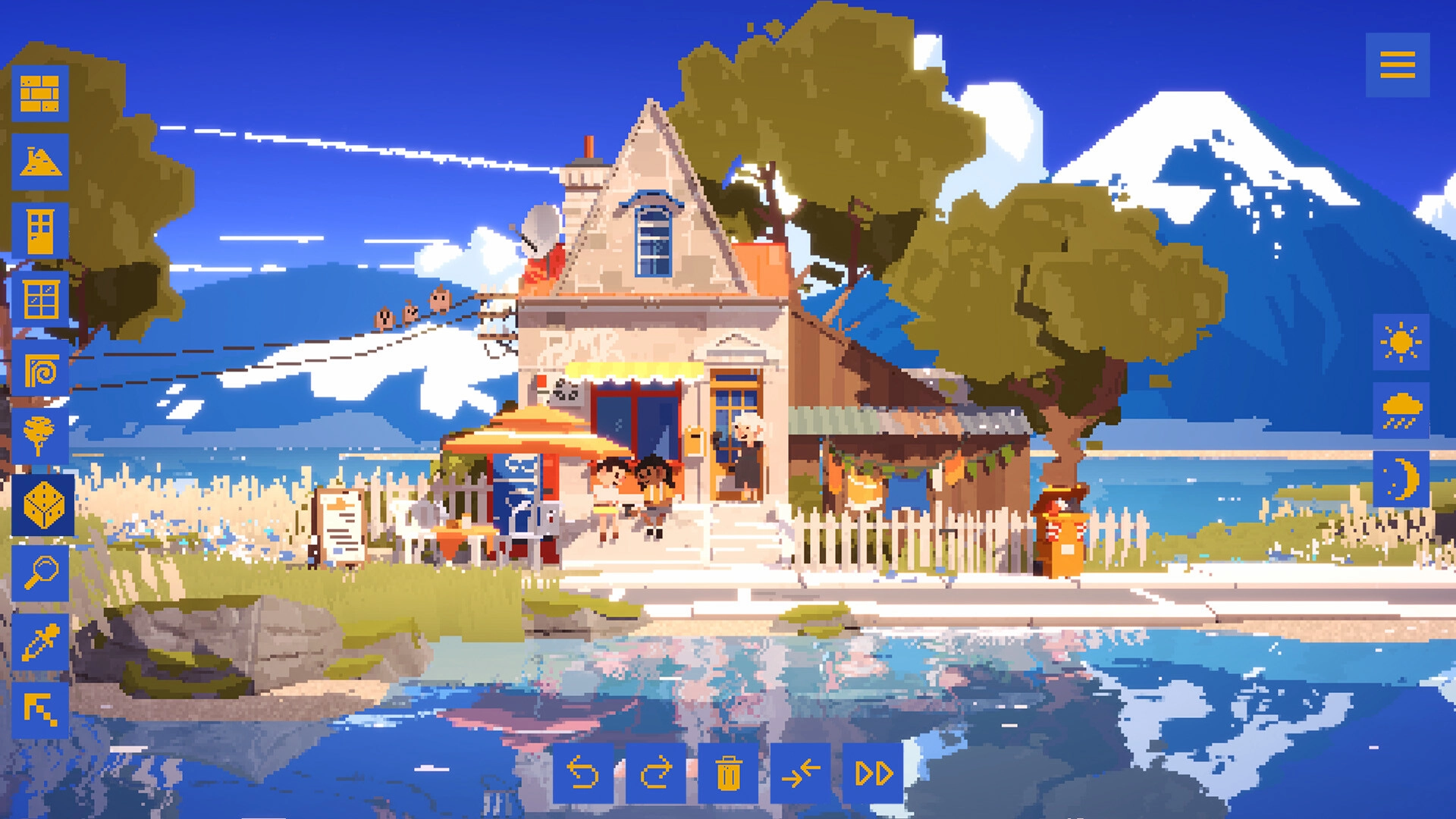
The gameplay is deliberately designed to be slow and tranquil, setting it apart from many building games that emphasise rapid expansion or progression. Players have the freedom to take their time, whether they choose to meticulously fine-tune a single structure or expand their creations with entire streets. This lack of urgency fosters a more laid-back atmosphere, transforming gameplay into a creative endeavour rather than a competitive challenge.
What truly distinguishes SUMMERHOUSE is its ability to remain captivating despite its straightforward mechanics. While it offers fewer features than larger simulation or construction games, the emphasis on creativity and experimentation ensures that players find joy in the process. The game effectively demonstrates that engaging gameplay doesn’t always require complex objectives; the sheer act of building and creating can be fulfilling in its own right.
Cozy Sights and Sounds
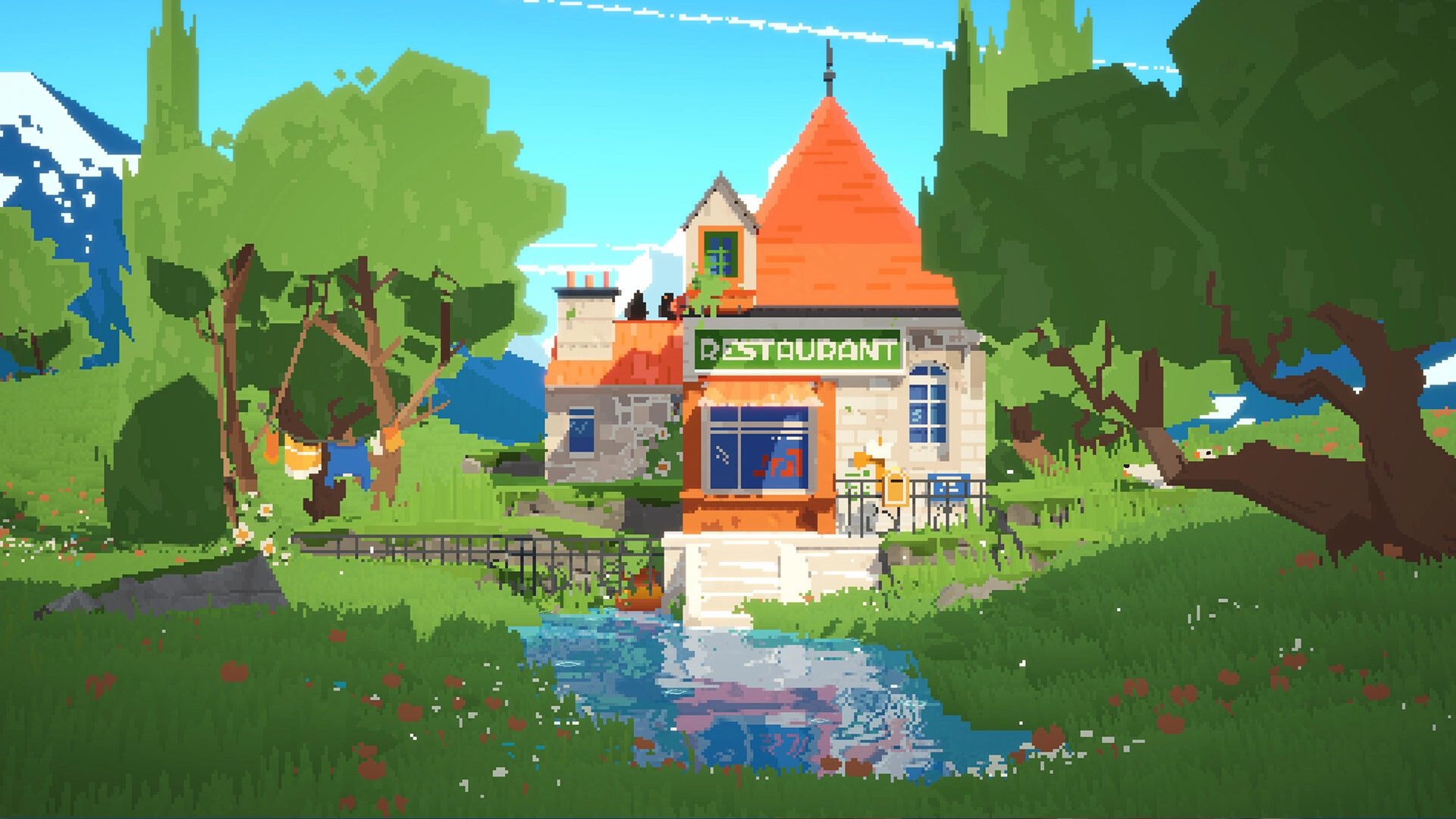
The visuals feature a charming pixel-art aesthetic that instantly evokes feelings of comfort and nostalgia. By utilising warm colours and simplistic designs instead of realistic graphics, the presentation perfectly complements the game’s overall tone. Each environment carries a welcoming and tranquil atmosphere, creating a relaxing mood from the moment building begins.
Attention to detail is another area where the presentation stands out. Although buildings and surroundings may appear simple at first glance, additional decorative elements gradually emerge and bring each creation to life. These subtle touches help neighbourhoods feel more distinctive, encouraging experimentation while ensuring the minimalist approach never feels empty.
Another strength comes from its clean and user-friendly interface during gameplay. Building tools and menus remain straightforward, avoiding the risk of overwhelming players with excessive information. By prioritising creativity and experimentation, the simple layout allows players to focus on building rather than navigating complex systems, reinforcing the game’s relaxing nature.
Audio design further enhances the overall experience by maintaining the calm and peaceful atmosphere. Instead of relying on dramatic music or powerful sound effects, gentle background sounds and subtle audio cues are used throughout. A tranquil soundtrack complements the gameplay, and together the visuals and audio create a cozy environment where atmosphere becomes one of the game’s defining strengths.
Verdict
SSUMMERHOUSE offers a warm and soothing experience that priorities creativity in its design, allowing players to build and explore freely without the constraints of traditional goals. The gameplay is straightforward yet enjoyable, complemented by delightful pixel-art graphics, an intuitive interface, and serene audio, which together foster a friendly environment throughout the game. Although its minimalist design may not satisfy those seeking extensive progression systems, its affordable price makes it a compelling choice for players in search of a relaxing and imaginative experience that delivers great value.

Release Date: May 15th 2026
Developer: Friedemann
Publisher: Future Friends Games
Price: £3.99 / $4.99 USD
Reviewed On: Nintendo Switch 2
* Access Provided For Review *

Advertisment

Advertisment

Advertisment

Advertisment

Advertisment
Copyright / Virtual Grip (formally The VR Realm) / 2016 -