
Listen to The VRverse Podcast

Advertisement

Skytail Review—Combat Shines, But Skytail Lacks Meaningful Companion Connection
- April 14, 2026
- 5:00 pm
When Skytail was revealed, the game’s art style immediately captivated me and highlighted Coatsink’s signature style. Coatsink has been active in the virtual reality space for quite some time, exploring various genres, and Skytail appeared to offer something fresh once more – with this thought in mind, I was eager to explore Skytail.
Gesture Combat Takes Flight
Skytail begins in a serene setting, where it describes your tranquil life travelling between small floating islands on the back of Skytail – a large bird-like companion reminiscent of Trico from The Last Guardian (a character I adore). However, the tranquillity is shattered when thieves steal her eggs, disrupting the peace you’ve always known and prompting you to embark on a quest to rescue Skytail’s eggs.
This journey involves moving from one island to another, but the once safe and clear paths are now filled with corrupted foes. Naturally, the only way to navigate through them is to confront and defeat them, which is where the main gameplay mechanics come into play. You will initially face basic enemies attempting to hinder your progress, but at each island you visit, you will acquire new abilities to aid you in combat, required for new enemy types that are added – all your attacks are executed through gesture-based telekinetic powers, while Skytail handles the flying to your next location.
As you progress in Skytail, new abilities and enemy types are introduced, keeping the wave-based combat fresh and engaging, despite the rinse-and-repeat gameplay loop. However, as you become accustomed to your new skills and the various enemy types, you begin to mix and create your own projectiles, reflect enemy projectiles, smash foes together to break shields, and squeeze them until they explode. This makes the combat feel surprisingly visceral for a game that appears so cozy. Since all actions are gesture-based, it was crucial for these gestures to be intuitive and effective. The basic gestures—grab, move, release, and throw—function smoothly, and these are the primary actions you’ll frequently use.
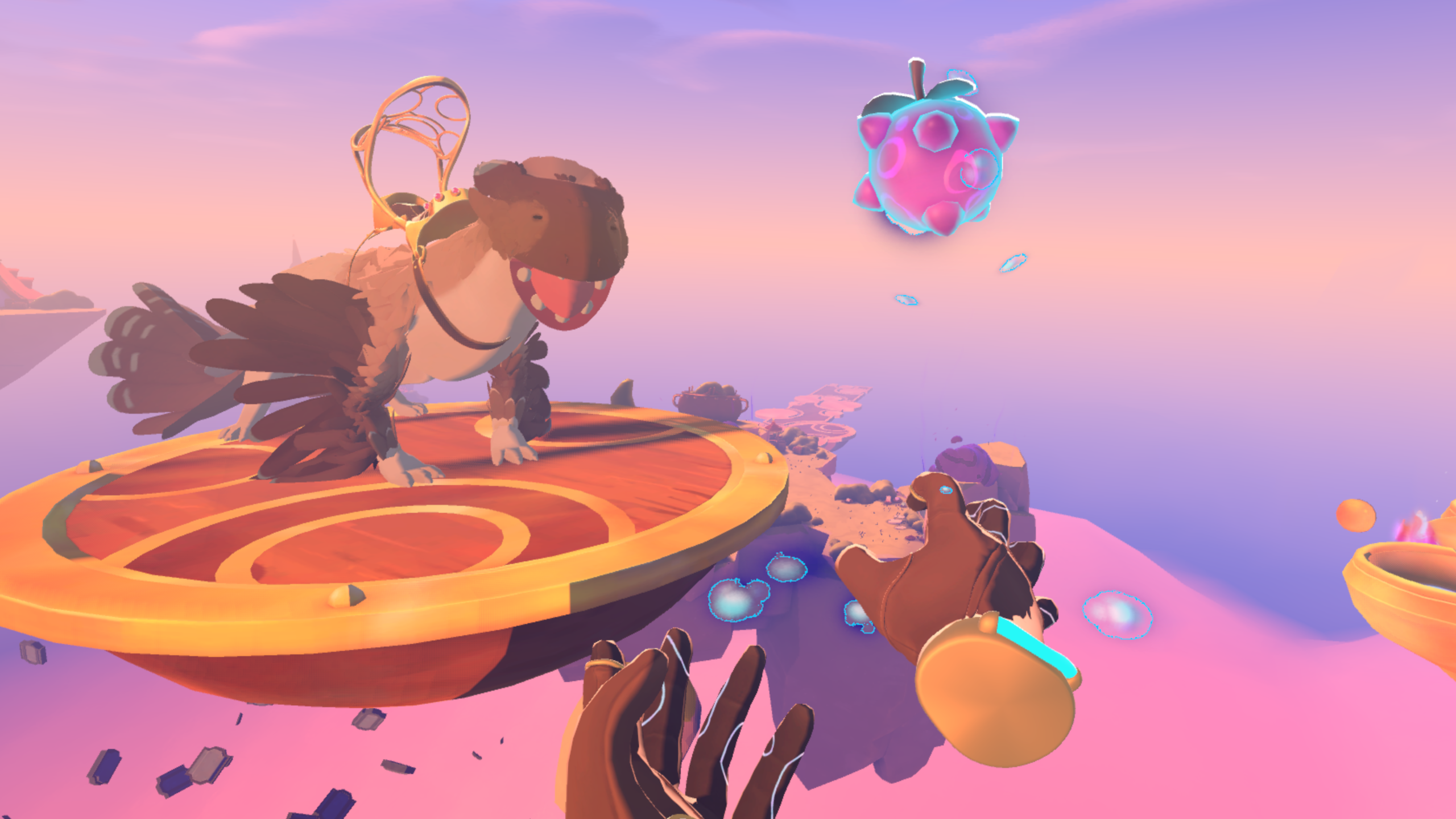
Nonetheless, as you progress and unlock more powerful moves, you encounter some complex gestures that don’t respond as well as the simpler ones. These advanced moves require greater precision to execute, which can lead to delays in unleashing them. This delay can sometimes result in taking damage, which feels frustratingly out of your control, especially when facing more intricate enemies. Consequently, aside from your shield gesture, you’ll likely stick to the main gestures that quickly become second nature.
Amidst the battles, you’ll land on the small floating islands, but they seem to serve merely as a brief respite for your arms, given that the combat relies on gestures. This makes these locations feel somewhat underwhelming; aside from learning new skills, there’s not much to engage with. Your main task will be to locate the infectious goo left behind by foes and eliminate it using your grab gesture, which will then clear the island – each one containing only a few spots of this goo to deal with. I really wish these islands offered more interactivity and perhaps included a few minor quests to tackle before you take off again.
Beautiful World, Missed Connection
Skytails setting primarily features lively open skies adorned with small floating islands. This beautifully complements Coatsink’s signature bright and bold block colours. It not only enhances the visual appeal of the game but also ensures smooth performance on the Meta Quest 3. The team is dedicated to incorporating finer details where they count, such as the feathers of Skytail, which add depth to your companion while remaining consistent with the overall aesthetics of the Skytail world.
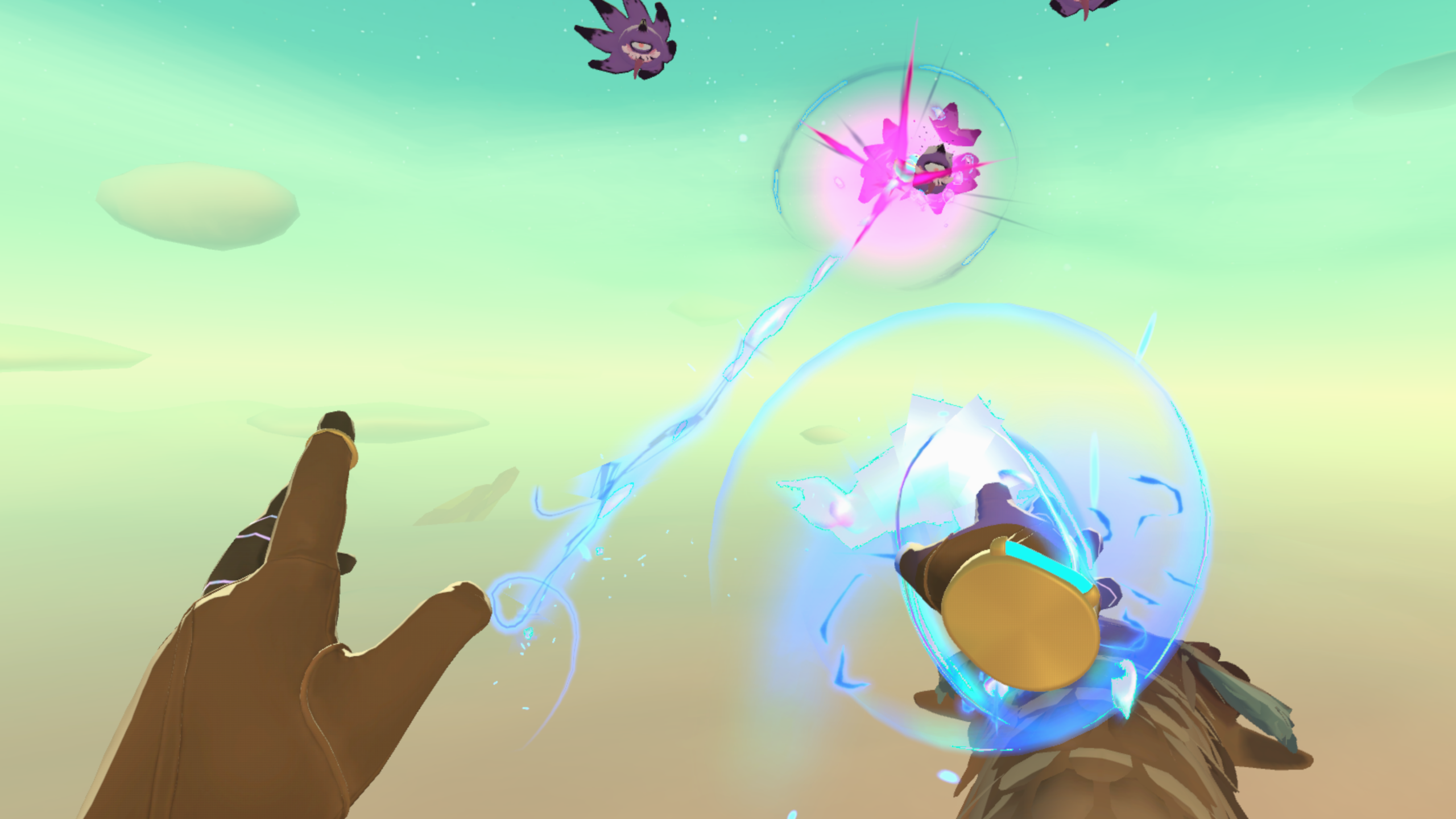
This minor additional focus on the depth of Skytail unfortunately highlights the game’s most significant flaw. As mentioned earlier, Skytail’s appearance reminded me of Trico from The Last Guardian, a game that aimed to allow interaction with your large-feathered friend beyond the main gameplay – but this is almost non-existent in Skytail. Aside from preparing her some food at each island before soaring off to the next, there’s little else to engage with Skytail, which definitely feels like a missed opportunity. This issue becomes even more apparent during flight and combat, as Skytail only looks forward, meaning you mostly see the back of her head and neck throughout the game, unless you glance sideways to catch a glimpse of her flapping wings. At no point does she turn back to check on you or make any sounds – even though when your foes appear her ears tuck into the side of her head, suggesting she is scared or nervous. In games like this, forming a bond with your companion is essential, with Moss being a prime example of how crucial it is to connect with your companion in virtual reality.
The game’s audio effectively immerses you in Skytail, with sound cues that perfectly align with your telekinetic abilities, such as the squishing noise when you crush your foes, the infectious gooey sounds from the islands, or the delightful munch when Skytail enjoys the food you’ve made. This is complemented by ambient sounds while on the island or during flight, with serene and relaxed music during your island pit stops, and more intense tunes when you’re in combat. Overall, this combination works excellently for what Skytail seeks to achieve.
Comfort
| Posture | Supported |
|---|---|
| Standing mode | Yes |
| Seated Mode | Yes (Recommended) |
| Artificial Crouch | N/A |
| Real Crouch | N/A |
| Movement | Supported |
| Smooth Locomotion | Yes |
| - Adjustable Speed | Yes |
| Teleport | Yes |
| Blinders/Vignette | Yes |
| - Adjustable Strength | Yes |
| Head-based | Yes |
| Controller-based | No |
| Dominant Hand Switcher | No |
| Turning | Supported |
| Smooth Turning | Yes |
| - Adjustable Speed | Yes |
| Snap Turning | Yes |
| - Adjustable increments | Yes |
| Input | Supported |
| Tracked Controllers | Yes |
| Hand Tracking | No |
| Gamepad | No |
Verdict

In Skytail, the core gameplay loop truly shines through its gesture-based combat, which adapts seamlessly to virtual reality. As you advance, more gestures, attacks, and various enemy types are introduced, keeping the experience feeling fresh. However, as additional gestures are incorporated, they tend to become more complex, leading me to often overlook the more powerful options since they didn’t feel as responsive as the basic ones that are ingrained in my muscle memory. The most significant missed opportunity lies in not fostering a deeper bond with Skytail; despite having this adorable companion by your side, there is minimal interactivity with her, aside from the occasional need to feed her a few items when you pause at an island during combat. In contrast, games like The Last Guardian allow you to develop a unique connection with Trico through various interactions, and even within the virtual reality spacw, the bond formed with Quill in Moss made her a standout character and reason to play the game. I would have loved to engage more with Skytail, as it feels like the connection I should have with her is lacking. Nevertheless, while Skytail may not enhance the connection I desire or revolutionise gesture-based combat, the combat it does provide is enjoyable and makes for a fun experience if that’s what you seek.
Release Date: March 26th 2026
Developer: Coatsink
Publisher: Coatsink
Price: £8.99 / US $11.99 USD
Reviewed On: Meta Quest 3
* Access Provided For Review *
Advertisment
Advertisment
Advertisment

Advertisment

Advertisment
Copyright / Virtual Grip (formally The VR Realm) / 2016 -