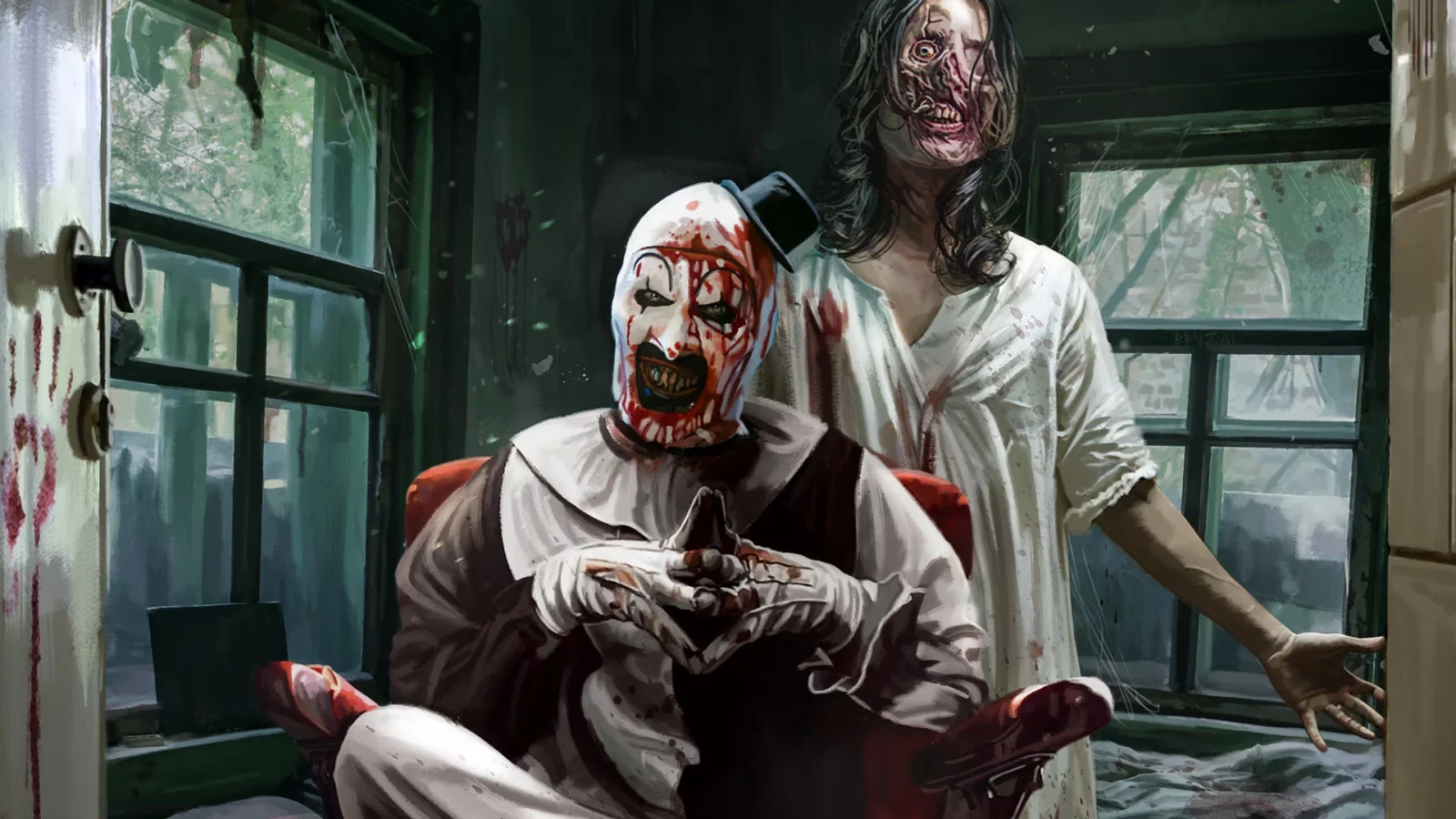
As a fan of the Terrifier films, Terrifier: The ARTcade Game immediately caught my attention. Art the Clown has become one of modern horror’s most recognisable figures, and the idea of adapting the franchise into a video game feels like a natural extension of its growing cult status. But from the outset, the choice to translate such a relentlessly grim and disturbing series into a bright, retro-inspired side-scrolling arcade game feels like an odd creative pivot. Rather than amplifying the tension and unease the films are known for, this approach leans in the opposite direction, raising early questions about whether the format can truly capture what makes the source material work—or whether it simply repackages it in nostalgic novelty.
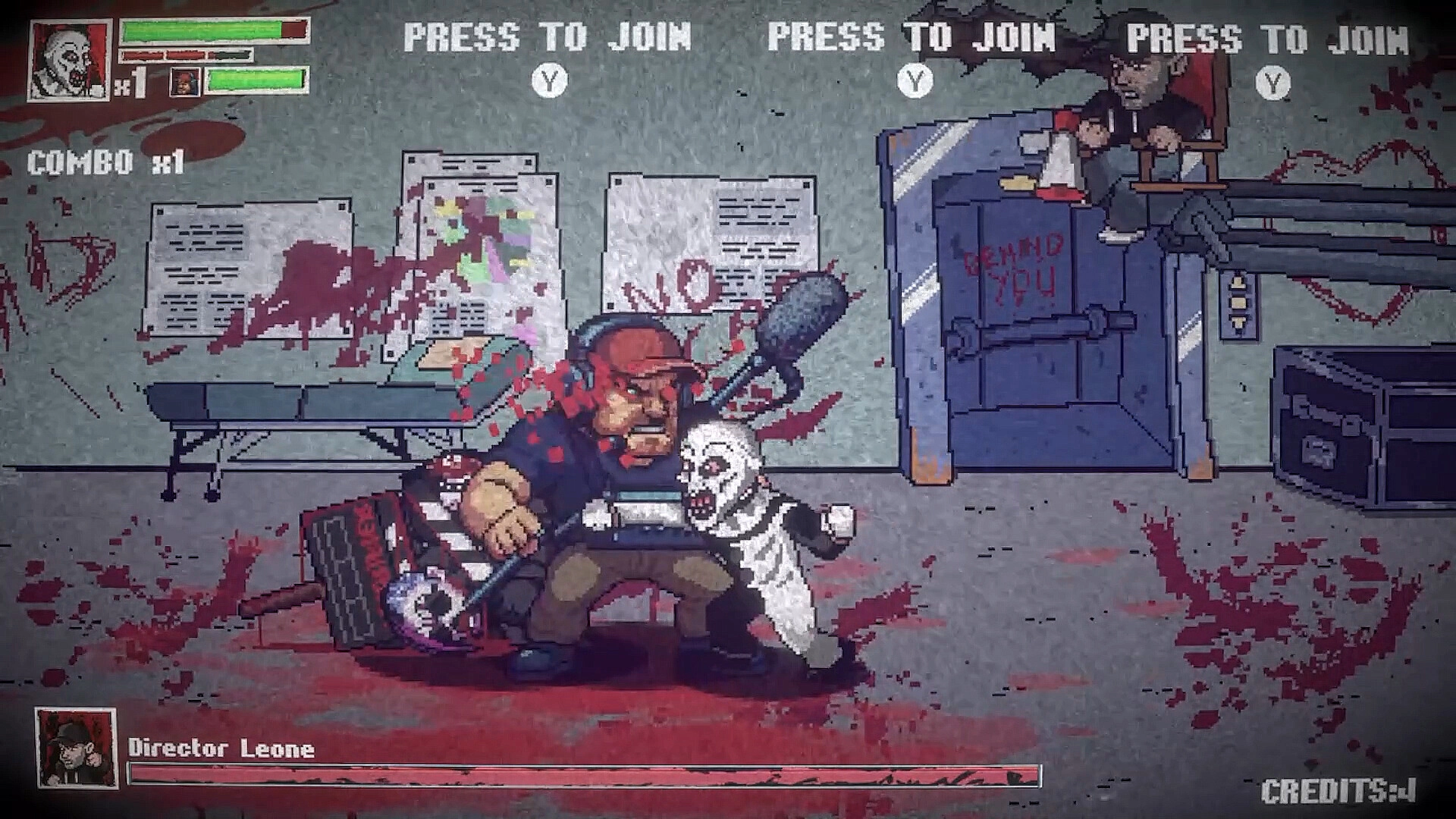
The game’s story mode exists largely as a framing device for its action, rather than a narrative driving force. The premise sees Art the Clown interrupting the production of a film based on his own killings, leading him through chaotic movie sets, studio backlots, and swarms of unfortunate cast and crew. It’s a knowingly tongue-in-cheek setup that embraces the franchise’s dark humour and self-aware tone, but it rarely develops beyond its initial hook. Each stage feels like an excuse to move from one wave of enemies to the next, with increasingly absurd environments stitched together by the thinnest narrative thread. While fans expecting deep lore or character development will find little to engage with, the game is clearly not aiming in that direction. Instead, the story stays firmly in the background, allowing the moment-to-moment action and exaggerated spectacle to take priority.
At its foundation, Terrifier: The ARTcade Game is a straightforward side-scrolling beat ‘em up that clearly draws inspiration from arcade staples of the ’80s and ’90s. Each character has access to a familiar toolkit—light and heavy attacks, jumps, grabs, throws, and a limited backward dodge—that makes the game immediately approachable. However, that accessibility comes at the cost of depth, with combat rarely evolving beyond basic button inputs. A run mechanic adds a touch of personality, particularly in Art’s bizarre animation of riding a tiny bicycle, but it does little to disrupt the overall repetition that sets in as the campaign progresses.
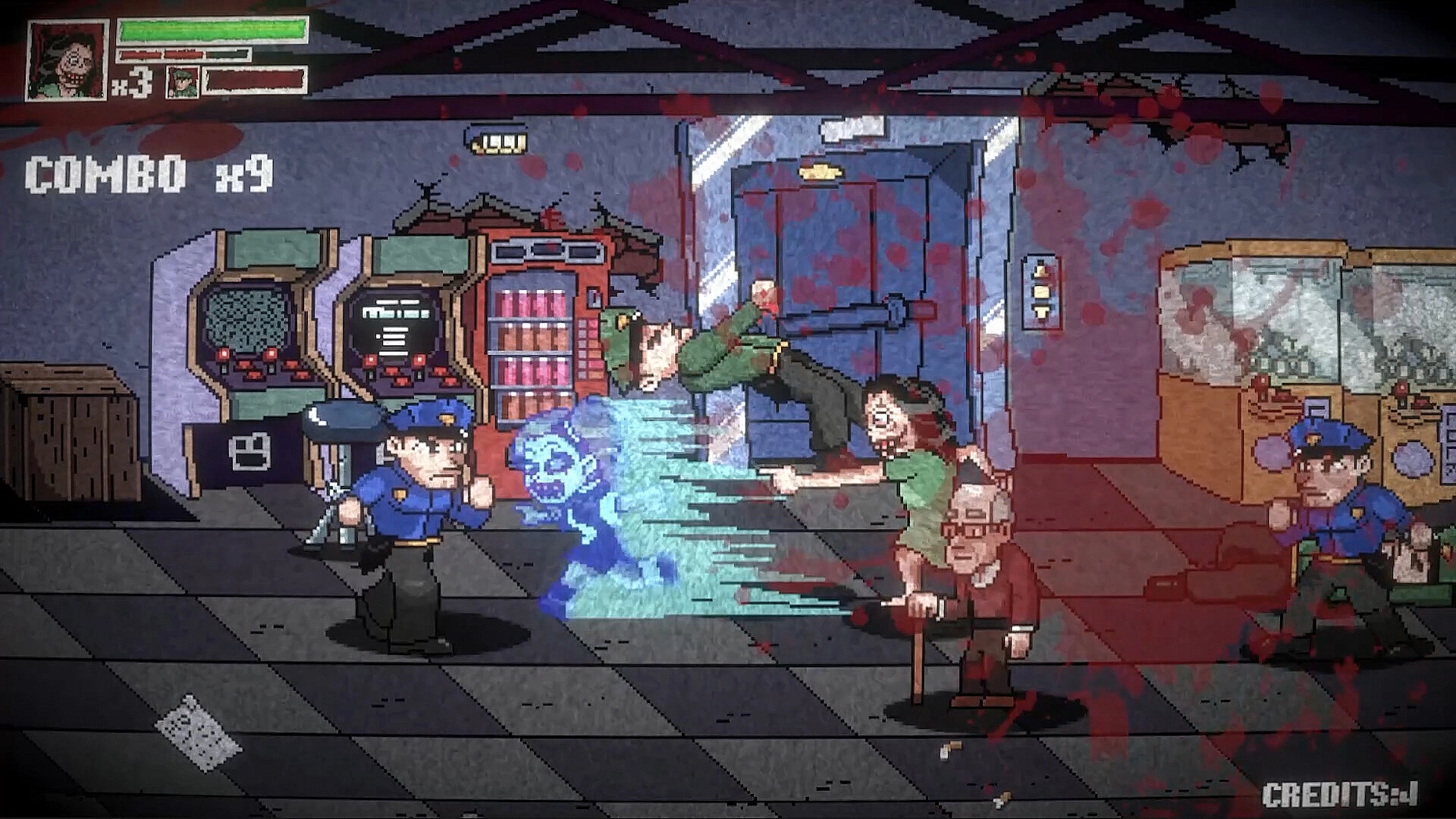
Combat’s main spectacle comes from its brutal execution system. Weakened enemies can be finished with character-specific kill animations, feeding into a super meter used for screen-clearing special attacks. Each playable character brings a distinct visual identity, from Art’s ground-spearing special to the Little Pale Girl’s spinning attack, Victoria Heyes’ ranged projectile, and Burke the Orderly’s steel-chair chaos. These abilities help differentiate the roster visually, but mechanically they feel far more similar than they first appear, limiting the sense of variety across playthroughs.
Stages are also peppered with temporary weapons and environmental tools—chainsaws, cleavers, bats, and other improvised instruments of chaos—that add short-lived bursts of variety. Health pickups hidden in breakables and collectible items encourage light exploration, but most encounters still resolve into clearing waves of interchangeable enemies before moving on. As the game progresses, enemy variety struggles to keep pace, and repetition becomes increasingly noticeable despite the constant visual violence on screen.
Beyond the campaign, the game offers a wide selection of additional modes including Arcade, Survival, Time Attack, Boss Rush, and local Versus. These options add welcome replay value and variety, with Boss Rush in particular leaning into parody and fan-service. While they extend the experience, they don’t fundamentally change the core loop, which remains largely the same across all modes.
Ultimately, the game captures the feel of a classic arcade cabinet more than it does anything uniquely its own. It’s at its best in short, cooperative bursts, where its accessibility, modes, and over-the-top violence combine into something briefly entertaining. But beneath the surface, repetition, limited depth, and modest mechanical evolution prevent it from sustaining momentum. It stands as a faithful homage to both arcade brawlers and its source material, even if it never fully transcends its novelty
Visually, the game makes a strong first impression with its chunky 16-bit pixel art style that successfully channels the feel of classic arcade games while maintaining modern animation fluidity. Character sprites are expressive, combat animations are smooth, and each fighter carries distinct visual personality. The game also fully embraces its horror roots, flooding the screen with exaggerated gore, neon splashes of blood, and cartoonishly grotesque details. It’s an effective fusion of retro aesthetics and horror excess, though the visual novelty begins to fade as environments and enemy types become increasingly familiar.
The stage design adds a clever twist by situating every level on the set of an in-universe Terrifier film production. Film crews scatter, props clutter the background, and studio elements reinforce the meta-Hollywood concept, giving each location a slightly more creative backdrop than a typical beat ‘em up. Players can also toggle between visual filters, including raw pixel output, CRT scanlines, and a VHS-style distortion effect. While these options enhance the retro presentation, they remain cosmetic rather than transformative, unable to mask the underlying lack of environmental variety.
Audio presentation follows a similarly nostalgic approach. The soundtrack, led by Cody Carpenter’s main theme and supported by Giuseppe Strano’s score, blends eerie synth textures with energetic chiptune-infused guitar work that fits the pace of combat well. Sound design leans into arcade authenticity, with heavy, exaggerated impact effects and squelching gore-driven audio cues reinforcing the game’s tone. However, despite strong individual tracks and fittingly outrageous track names, the looping nature of the music causes it to lose impact over longer sessions, leaving it less memorable than its presentation might suggest.
| Information | |
|---|---|
| Genre | Action, Indie |
| Players | One – Four Players |
| Download Size | 3GB |
| Steam Deck | |
| Compatibility | Playable |
| Positives | All functionality is accessible when using the default controller configuration. This game shows Steam Deck controller icons. In-game interface text is legible on Steam Deck. This game's default graphics configuration performs well on Steam Deck. |
| Negatives | This game supports Steam Deck's native display resolution but does not set it by default and may require you to configure the display resolution manually. |
Terrifier: The ARTcade Game successfully channels the chaotic, over-the-top spirit of the film series, reimagining Art the Clown’s brutal antics as a colourful side-scrolling beat ‘em up filled with gore, dark humour, and nostalgic arcade energy. Its immediately accessible combat, crowd-pleasing finishers, broad selection of modes, and striking pixel-art presentation make it easy to enjoy in short bursts—particularly in co-op or for fans of the franchise. However, once the initial novelty wears off, a more limited experience emerges beneath the surface. Repetitive encounters, shallow combat depth, and only modest differentiation between characters mean the action struggles to stay engaging over time, while the lightweight narrative does little more than stitch together each stage. A strong audiovisual identity and excellent soundtrack help elevate the presentation, but they can’t fully mask the lack of variety in moment-to-moment play. As a tribute to both classic arcade brawlers and the Terrifier licence, it largely succeeds in spirit, but ultimately feels closer to a well-crafted novelty than a genre standout with lasting staying power.

Release Date: November 21st 2025
Developer: Relevo
Publisher: Selecta Play
Price: £16.75/ $19.99 USD
Reviewed On: Steam Deck
* Access Provided For Review *