
Listen to The VRverse Podcast

Advertisement

LANESPLIT (VR) Review—An Upgrade That Feels Like a Step Back
- July 2, 2026
- 12:28 pm
After a successful launch of its flatscreen version that received a warm welcome on Steam, LANESPLIT quickly attracted a dedicated fanbase captivated by its sleek concept and fast-paced motorcycle gameplay. The game sparked significant enthusiasm among players, carving out a niche for itself as a standout indie title with a unique flair. With the introduction of virtual reality support, anticipation has surged for a version that immerses players in the exhilarating experience of riding. The critical question now is whether this shift to VR has successfully retained the excitement and positive reception of the original, or if the transition to a more immersive environment has revealed shortcomings that were less noticeable on a conventional display.
Outpaced by Its Premise
LANESPLIT centres its gameplay on a simple yet thrilling principle: higher speeds and greater risks yield bigger rewards. Players can boost their score multipliers by maintaining extreme velocities and executing close overtakes, which promotes a consistently aggressive style of play. While this concept effectively captures the excitement of navigating through traffic, the mechanics lack diversity, leading to a repetitive experience as the initial adrenaline fades.
The game features a strict penalty system that wipes out all accumulated points following collisions with vehicles, barriers, or road dividers. Instead of traditional crash animations, high-speed crashes result in a quick blackout effect before players are returned to the road, which keeps the pace brisk but diminishes the sense of consequence, making errors feel less tangible. The necessity to sustain high speeds for ongoing point accumulation further restricts players from exploring more relaxed or creative approaches to gameplay.
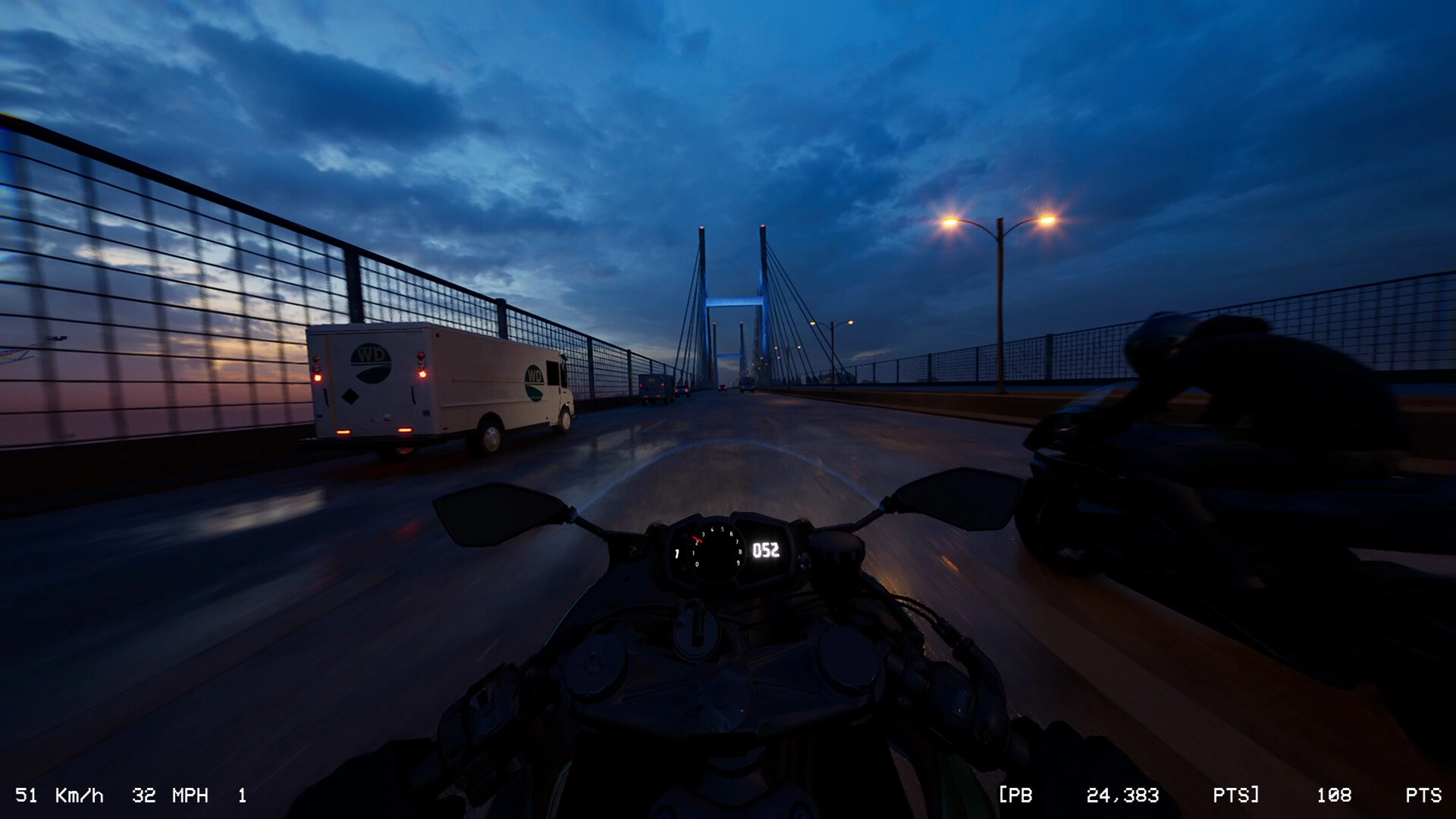
Prior to each run, players can modify traffic density and weather conditions to customise their experience, ranging from a serene Zen mode to the chaos of Rush Hour. Wet weather adds a layer of challenge with reduced traction in exchange for higher rewards. While these options introduce some flexibility and occasional difficulty, they do not significantly alter the fundamental gameplay loop, resulting in sessions that feel largely similar to one another.
Theres a variety of environments, including urban streets, highways, and snowy mountain paths, which aim to enhance the visual experience and keep players engaged. Players can unlock a range of bikes, from basic scooters to high-performance electric motorcycles, complete with customisable colour options. However, the differences between the vehicles often do not significantly impact gameplay, and the progression system fails to provide a satisfying sense of achievement. Consequently, while LANESPLIT offers an intriguing premise, it ultimately falls short in delivering the depth and variety needed for sustained player interest.
Speed Without Movement
The visual quality in LANESPLIT’s VR mode falls short of contemporary virtual reality standards. While the game features a range of settings, from bustling city streets to serene mountain landscapes, the overall image is disappointingly soft. Textures lack definition, distant views are heavily blurred, and the persistent lack of sharpness detracts from the appreciation of the game’s artistic vision. Instead of enhancing the immersive experience, these visual flaws serve as a constant reminder that players are engaging with a subpar version of the original flatscreen game.
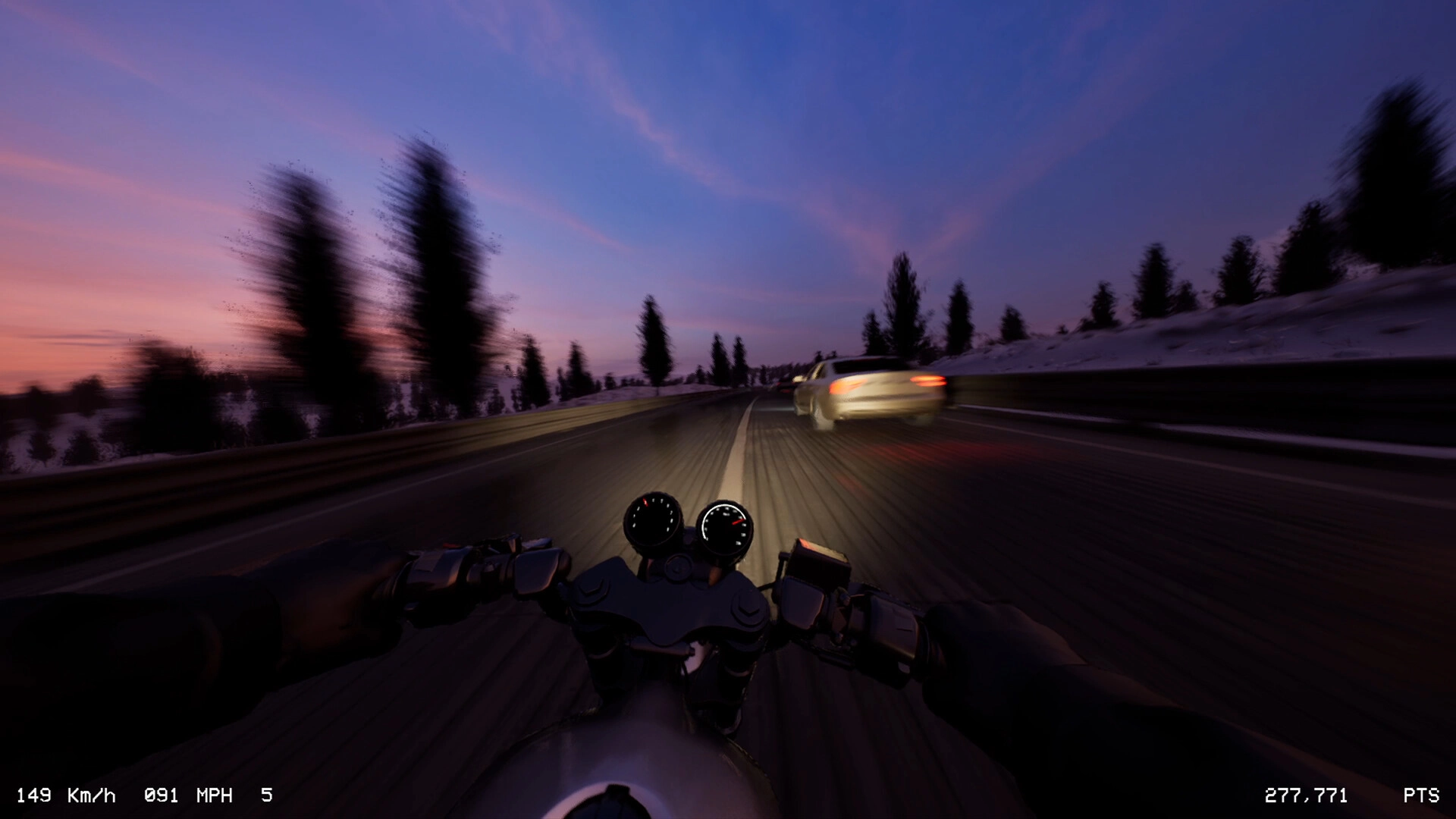
Even more concerning is the absence of the thrilling sensation of speed that characterises the original gameplay. On a traditional monitor, navigating through traffic is exhilarating, but in VR, that excitement is significantly muted. Vehicles often appear unnaturally still, creating the illusion that players are manoeuvring through static obstacles rather than interacting with dynamic traffic. This may be a conscious choice to minimise discomfort, especially in light of the lack of comfort settings, but it comes at a significant cost. By dulling the sense of movement, the game undermines the very momentum and risk that make it engaging, severely impacting immersion.
While the sound design does offer some redeeming qualities, with engine sounds and background music striving to energise the experience, strong audio cannot make up for the visual shortcomings that fail to convincingly portray motion. Without the exhilarating sense of speed found in the flatscreen version, the soundtrack often feels out of sync with the on-screen action. Consequently, the VR experience lacks the intensity, atmosphere, and immediate thrill that high-speed motorcycle gameplay promises, leaving the overall presentation feeling far less impactful than anticipated.
Comfort
| Posture | Supported |
|---|---|
| Standing mode | No |
| Seated Mode | Yes |
| Artificial Crouch | N/A |
| Real Crouch | N/A |
| Movement | Supported |
| Smooth Locomotion | Yes |
| - Adjustable Speed | Yes (Driving Speed) |
| Teleport | No |
| Blinders/Vignette | No |
| - Adjustable Strength | N/A |
| Head-based | N/A |
| Controller-based | N/A |
| Dominant Hand Switcher | N/A |
| Turning | Supported |
| Smooth Turning | Yes |
| - Adjustable Speed | No |
| Snap Turning | No |
| - Adjustable increments | N/A |
| Input | Supported |
| Tracked Controllers | No |
| Hand Tracking | No |
| Gamepad | Yes |
Verdict
LANESPLIT’s shift to virtual reality retains the strengths of its successful flatscreen version, yet this transition highlights the design’s shortcomings rather than improving them. While the simple risk-and-reward system offers brief thrills, the gameplay quickly becomes repetitive, with minimal progression and a lack of significant variety that diminishes long-term engagement. The VR experience suffers further, plagued by blurry visuals, a diminished sense of speed, and traffic that feels oddly static, severely undermining the immersion that the format should naturally provide. Although the audio design injects some energy, it fails to make up for an experience that struggles to replicate the excitement and dynamism of the original. Currently, the VR adaptation appears to be in need of more development, refinement, and a deeper understanding of what makes high-speed riding captivating in virtual reality. It raises the question of whether a delayed release or a complete re-evaluation of the VR concept might have better served both the game and its audience.

Release Date: June 23rd 2026 (VR Update)
Developer: FunkyMouse
Publisher: FunkyMouse
Price: £14.99/ $17.99 USD
Reviewed On: Meta Quest 3 w/ Link Cable
* Access Provided For Review *
Advertisment

Advertisment

Advertisment

Advertisment

Advertisment
Copyright / Virtual Grip (formally The VR Realm) / 2016 -