
Listen to The VRverse Podcast

Advertisement

Schrödinger's Call Review—A Call Worth Answering
- June 14, 2026
- 1:55 am
For many years, Japanese visual novels carved out a distinct niche in the gaming world, offering narratives that rival the emotional richness and intricacy of major blockbuster titles. However, as the gaming industry has shifted towards expansive open worlds, live-service models, and cinematic experiences, this genre has gradually faded from the mainstream limelight. Yet, now and then, a game emerges that rekindles the passion for visual novels among devoted fans. Schrödinger’s Call steps onto the scene with a captivating premise and a strong narrative confidence that instantly captures attention. The real challenge lies not in attracting the existing fanbase, but in showcasing enough innovation and emotional depth to remind a broader audience of the significance of visual novels in the gaming landscape.
The Weight of Every Word
Schrödinger’s Call offers a uniquely compelling narrative that intertwines existential themes with deeply personal storytelling. Set in a thought-provoking and somewhat eerie environment, the game centres on Mary, a mysterious protagonist whose interactions with a diverse array of troubled voices gradually unveil a reality caught between hope and despair. Instead of relying on dramatic plot twists or flashy moments, the narrative’s power lies in its intimate dialogues, well-crafted character development, and an enduring sense of curiosity. The game sensitively navigates themes of memory, regret, and human connection, resulting in an emotionally impactful experience that resonates long after the credits roll. Ultimately, it presents a reflective and immersive story that highlights one of the visual novel’s most significant strengths.
Connecting the Missing Pieces
In Schrödinger’s Call, gameplay centres on communication rather than traditional action, making conversations the core of your interaction. You invest your time in dialogues with callers, attentively absorbing their narratives and choosing responses that shape the course of each discussion. This straightforward concept becomes surprisingly captivating, as every exchange feels significant and meaningful. The game promotes active listening and careful decision-making, fostering a level of engagement that surpasses many conventional dialogue systems.
The allure of these interactions lies in the gradual revelation of information through careful exploration and observation. Progress hinges on synthesising details from earlier conversations, the overarching narrative, and subtle clues. To aid this process, Mary maintains an illustrated notebook that evolves throughout the journey, capturing key discoveries and character insights. This notebook transcends a mere quest log; it visually embodies your deepening comprehension of each case, facilitating connections between seemingly disparate pieces of information while emphasising the game’s investigative nature. Consequently, the gameplay loop remains consistently engaging, even with its minimalist approach.
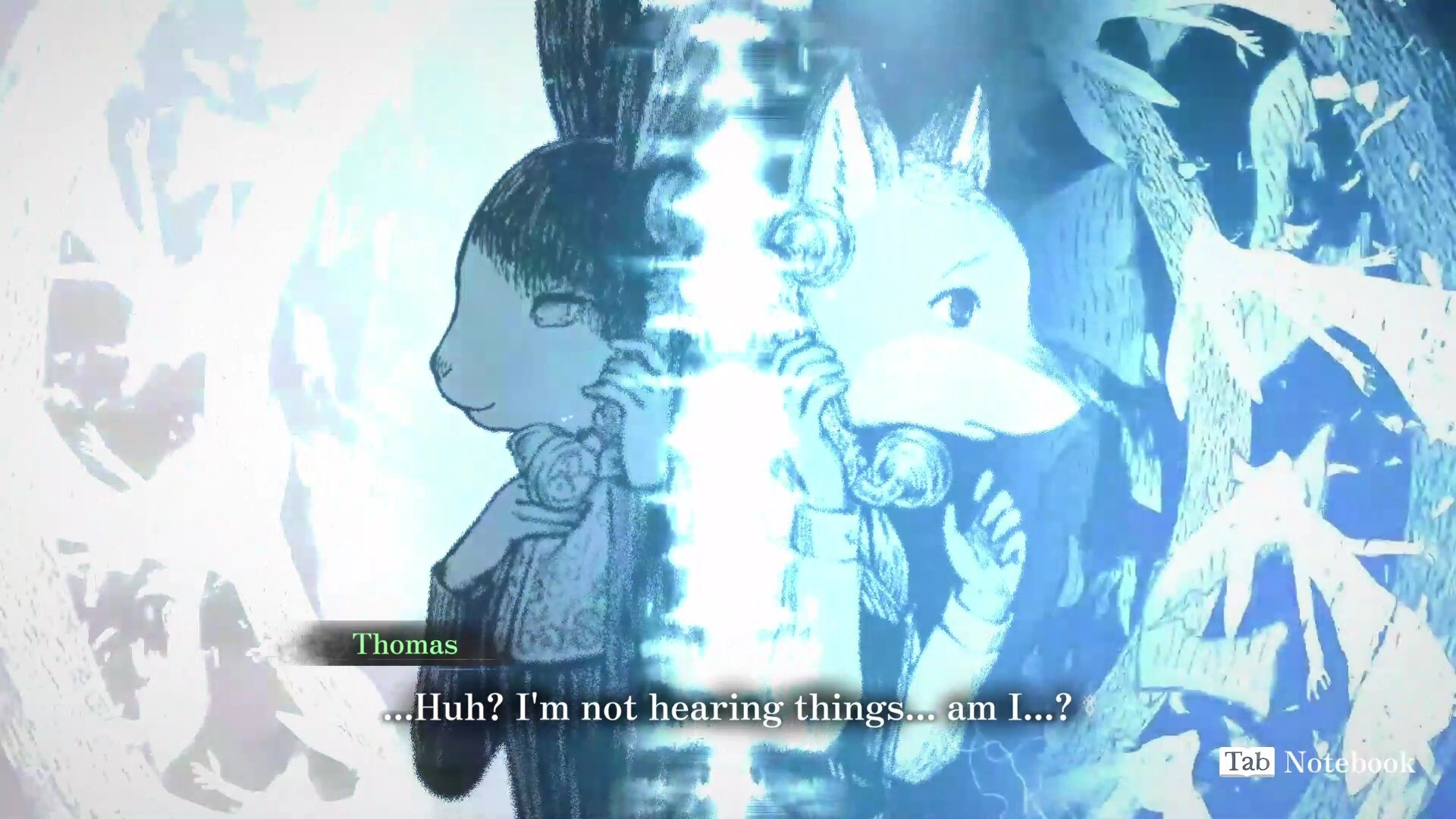
The pacing of the game stands out as a significant advantage, with new scenarios and characters introduced at a consistent pace that keeps the experience fresh and engaging. Each encounter brings unique emotional and thematic challenges, prompting you to adjust your strategies instead of relying on a single method. The notebook enhances this experience by offering a comprehensive overview of gathered clues and relationships, allowing you to enjoy the satisfaction of piecing together conclusions independently. This careful balance sustains the adventure’s momentum, while the user-friendly interface ensures that interactions are both accessible and rich in depth.
While the mechanics may seem simple, Schrödinger’s Call exemplifies how skilful execution can transform basic concepts into something truly memorable. Each gameplay element contributes to the overall experience, fostering a strong connection between your actions and the game’s overarching themes. By emphasising meaningful choices, active listening, thoughtful exploration, and the gradual accumulation of information through its notebook feature, the game provides a unique and consistently rewarding experience that distinguishes it from more traditional narrative adventures.
Illustrations Full of Feeling
Schrödinger’s Call sets itself apart with its captivating illustration style, masterfully blending unsettling visuals with an unexpected warmth and humanity. The character portraits are strikingly expressive yet not overly intricate, effectively conveying deep emotions through nuanced changes in expression and posture. The hand-drawn aesthetic lends the game a distinctive character, while the thoughtful use of color and contrast enhances the narrative’s shifting moods. Whether capturing moments of introspection or emotional intensity, the artwork consistently immerses players in the world and its inhabitants.
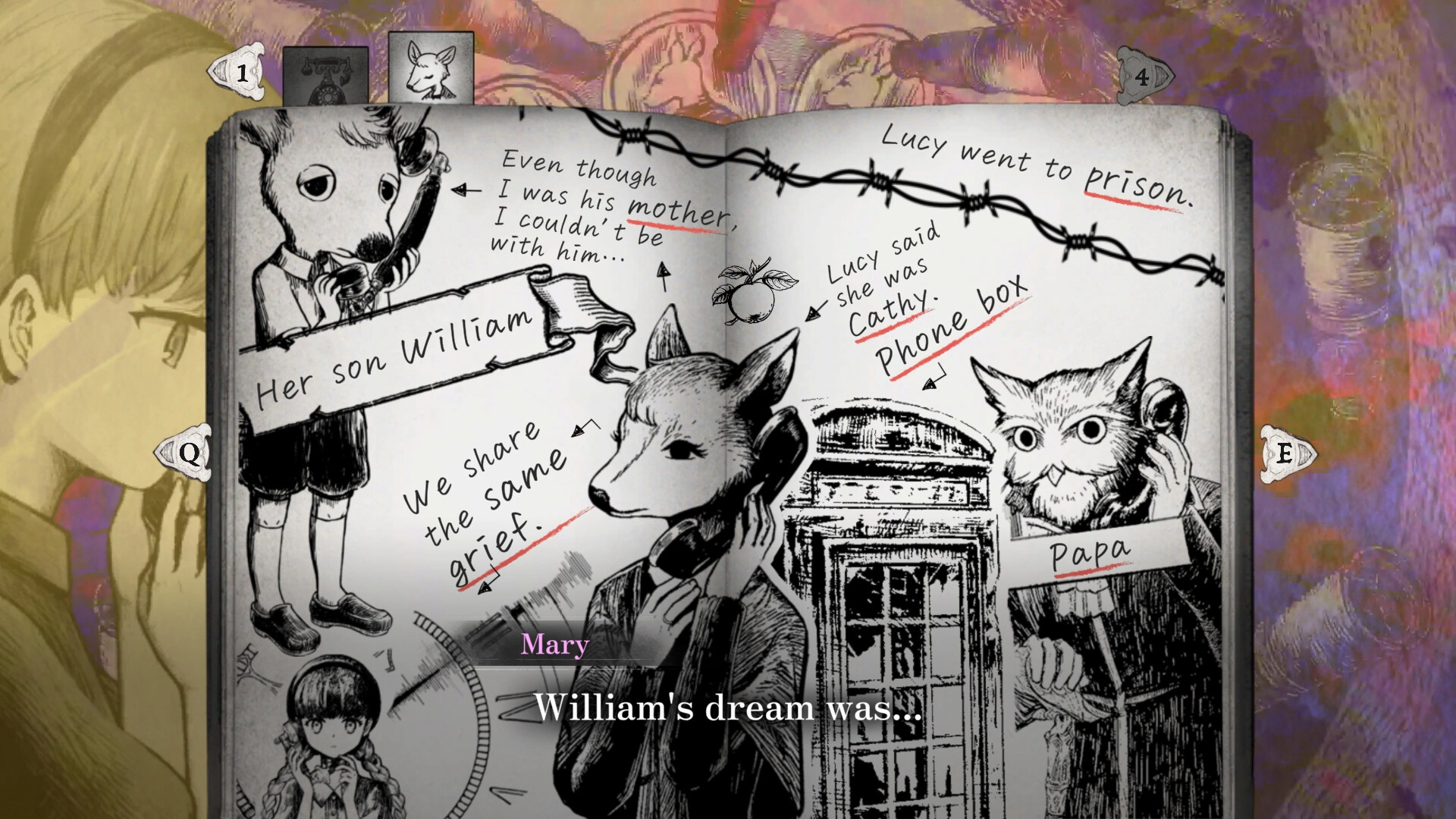
The visual experience is further enriched by the notebook system, where sketches and illustrations evolve in tandem with the player’s journey. This feature transcends a mere functional menu, becoming an integral part of the game’s artistic vision by transforming collected information into visually appealing records that are both practical and memorable. Such meticulous attention to detail fosters a sense of immersion throughout the gameplay, ensuring that even the most routine interactions contribute to the overall atmosphere. The result is a meticulously curated presentation, where every visual component serves a distinct purpose.
Complementing the artwork is a remarkable soundscape that subtly enhances each scene. The soundtrack, while understated, is profoundly impactful, featuring melancholic melodies and ambient compositions that enrich the game’s contemplative mood. Sound effects play a crucial role as well, especially during phone conversations, where delicate audio cues foster a sense of intimacy and emotional depth. Collectively, the music and sound design create a lasting atmosphere that permeates the journey, effectively reinforcing the game’s themes and ensuring that its most poignant moments resonate well beyond their occurrence.
More Details
| Information | |
|---|---|
| Genre | Adventure, Indie |
| Players | Single-player |
| Download Size | 5GB |
| Steam Deck | |
| Compatibility | Verified |
| Positives | All functionality is accessible when using the default controller configuration. This game shows Steam Deck controller icons. In-game interface text is legible on Steam Deck. This game's default graphics configuration performs well on Steam Deck. |
| Negatives | None |
Verdict
Schrödinger’s Call serves as a compelling testament to the unique advantages that visual novels can provide when storytelling, player engagement, and atmosphere are harmoniously balanced. Its emotionally charged narrative, engaging dialogue-driven gameplay, and stunning artistic presentation create an experience that is both unique and unforgettable. The illustrated notebook system enriches the investigative elements, while the subtle yet impactful sound design amplifies each emotional moment. While its minimalist style may not resonate with those who prefer conventional gameplay mechanics, players willing to dive into its immersive world will find a captivating and fulfilling adventure. In a time when visual novels often struggle for mainstream recognition, Schrödinger’s Call demonstrates that the genre still possesses the ability to enchant, provoke thought, and leave a profound impact.


Release Date: May 27th 2026
Developer: Acrobatic Chirimenjako
Publisher: SHUEISHA GAMES
Price: £14.99 / $17.99 USD
Reviewed On: Steam Deck
* Access Provided For Review *

Advertisment

Advertisment

Advertisment

Advertisment

Advertisment
Copyright / Virtual Grip (formally The VR Realm) / 2016 -