
Listen to The VRverse Podcast

Advertisement

Maid Of Sker VR Review—Blends Strong Story and Horror with Noticeable Immersion Problems
- March 17, 2026
- 9:50 pm
Maid of Sker has always intrigued me since its release, but during that time, I was fully immersed in virtual reality and never had the chance to play it. Therefore, when it was announced for VR, I was eager to dive into a title I had been curious about. However, did the experience truly impress me?
Trapped at Sker Hotel
The story unfolds in 1898 at the isolated Sker Hotel on the imaginary Sker Island. You take on the role of Thomas Evans, who gets a letter from Elisabeth Williams, the daughter of the hotel owner. In her message, she reveals that she is in peril and trapped. Along with her letter, Elisabeth includes a locket that once belonged to her mother, which plays a melody. She requests that Thomas compose a counter-song to this tune and bring it with him to the hotel, mentioning that it will become clear later. But can you trust her words?
Silence is Survival
Upon your arrival at Sker Hotel, it quickly becomes apparent that locating Elisabeth will be quite a challenge, as she instructs you to find four musical cylinders along with the sheets for your counter-song. As you begin your investigation of the hotel, you soon come across the first terrifying “Quiet One,” who is seen carrying another individual over his shoulder.
The Quiet Ones serve as the game’s enemies; they are blind but possess the uncanny ability to track you through the sounds you produce. Since you cannot fight back, you must rely on stealth and distraction techniques to manoeuvrer past these foes, allowing you to safely explore the hotel and its surroundings. This requires you to avoid making any noise at all and to hold your breath when in proximity to the Quiet Ones. However, if you venture too close to rust, dust, or flames while stealthily navigating around the Quiet Ones, you will cough, thereby revealing your location to them.
Players will find a temporary weapon known as the Phonic Modulator around the middle of the game, which can generate short-lived pulses to stun the Quiet Ones. However, its use is limited due to scarce ammunition, making it something you might often overlook.
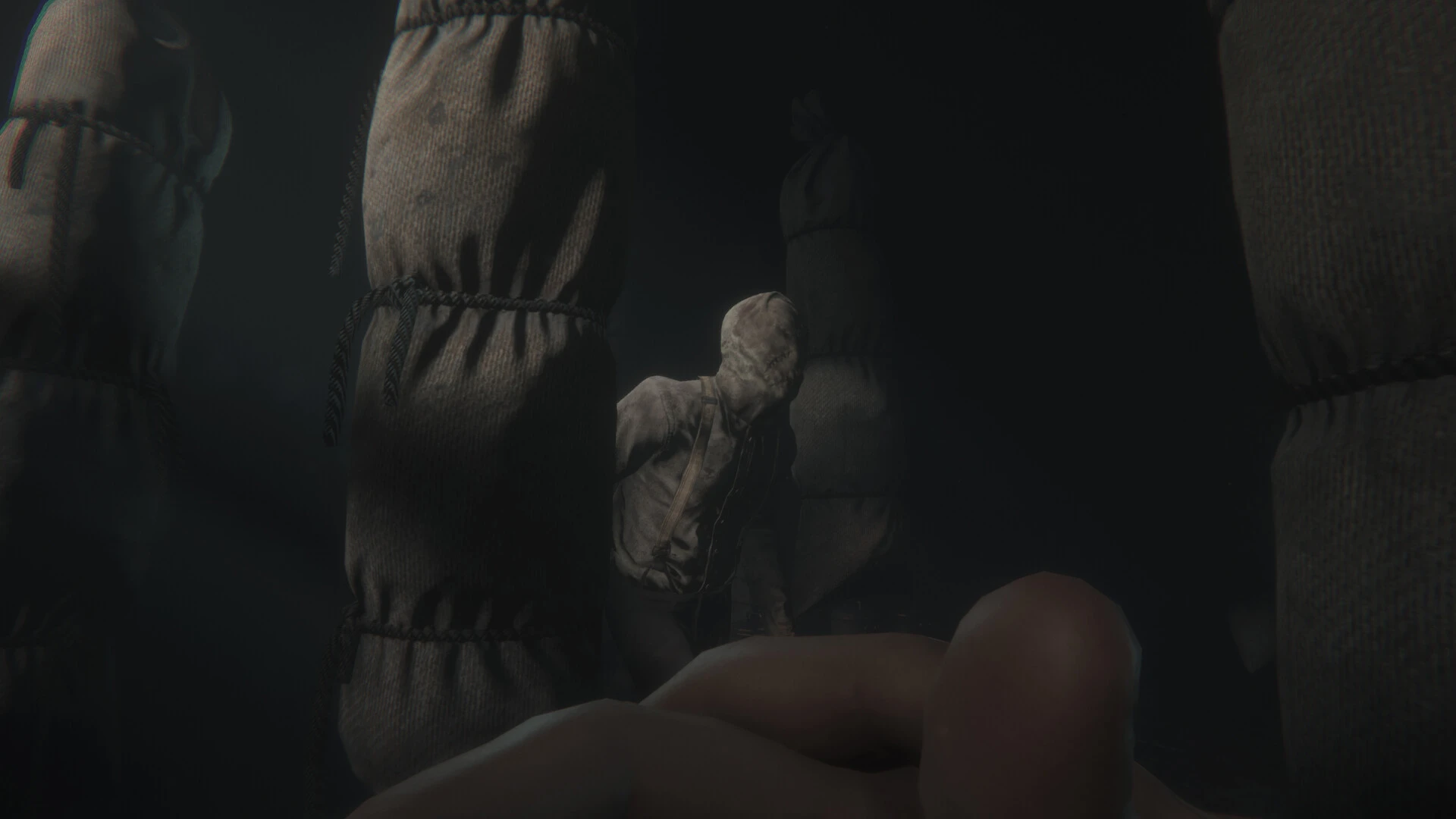
In addition to stealth gameplay, the game features object location and puzzle-solving elements that are necessary for progressing and unlocking doors to find the previously mentioned brass cylinders. These challenges are generally not too hard and won’t significantly hinder your progress, but they do provide a bit more depth to the game beyond just stealth.
One aspect I believe enhanced the game is the inclusion of various difficulty levels. The easiest mode eliminates the Quiet Ones from the hotel and its vicinity, catering to players who prefer to enjoy the game’s ambiance and the intended jump scares during their exploration. However, the most immersive way to experience the game and heighten that unsettling sensation is to play with the Quiet Ones present.
The VR implementation for the game leaves much to be desired – however, it’s important to note that this is a port of a non-VR game that came out almost six years ago. In this game, your hands are merely transparent models that do not directly engage with items; instead, a pop-up circle appears, filling up as you press the trigger to activate or pick up objects. I believe this implementation needed more time for refinement, as these types of interactions detract from the immersion that VR aims to provide.
Haunting Sound, Imperfect Vision
In terms of graphics in Maid of Sker VR, the game generally appears visually appealing in the HMD, yet it does have some noticeable flaws that are difficult to ignore. At times, there were problems with textures in certain areas of the levels, featuring blocky textures reminiscent of those found in Minecraft. Although these instances were infrequent, they became more prominent when they did occur.
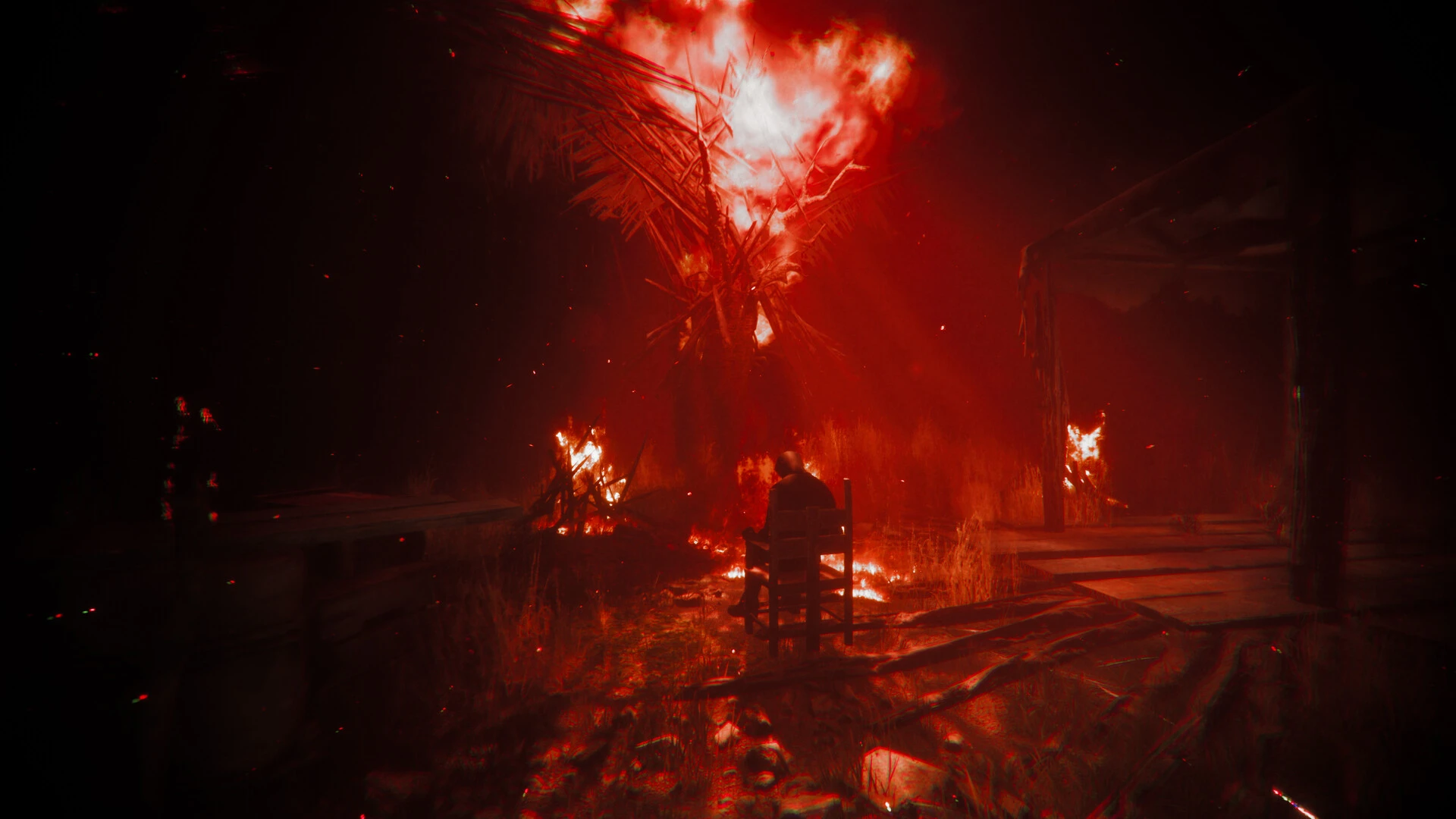
Nevertheless, the most significant issue for me was the persistent god-rays visible when outside or near windows in the hotel. They seemed to be filled with constant dust that shifted as you moved. At their worst, these effects made me feel slightly motion sick, which is concerning since I typically do not experience motion sickness in VR; this could pose a problem for those who are more susceptible.
On a positive note, the sound design is exceptional, enhancing the suspense as you navigate through Sker Hotel. The atmospheric sounds, music, and voice acting are all of high quality, keeping you fully engaged in the environment as you explore both the interior and the hotel’s surroundings, with the tension building to create that thrilling sensation in your stomach.
Also, we encounter another significant issue for VR immersion, which is often seen in ports of older flat-screen games. This issue arises when the game switches to 2D video for cutscenes – as is the case in Maid of Sker, where this transition occurs when you need to ascend a ladder. Such abrupt shifts from being fully immersed in the game world to sudden 2D cutscenes can severely disrupt the sense of immersion.
Comfort
| Posture | Supported |
|---|---|
| Standing mode | Yes |
| Seated Mode | Yes |
| Artificial Crouch | Yes |
| Real Crouch | Yes |
| Movement | Supported |
| Smooth Locomotion | Yes |
| - Adjustable Speed | No |
| Teleport | Yes |
| Blinders/Vignette | Yes |
| - Adjustable Strength | No |
| Head-based | Yes |
| Controller-based | Yes |
| Dominant Hand Switcher | Yes |
| Turning | Supported |
| Smooth Turning | Yes |
| - Adjustable Speed | Yes |
| Snap Turning | Yes |
| - Adjustable increments | Yes |
| Input | Supported |
| Tracked Controllers | Yes |
| Hand Tracking | No |
| Gamepad | No |
Verdict

Maid of Sker introduces another highly praised horror experience to VR, almost six years after its original flat-screen launch. The game’s horror and suspense translate effectively into virtual reality, delivering some truly frightening moments, although they are occasionally accompanied by cheap jump scares. It features a compelling narrative that keeps players engaged, conveyed through phone calls and documents discovered during exploration. Nevertheless, the VR experience is somewhat hindered by the floating, transparent hand models that fail to interact with in-game objects, and the abrupt transition from being in the world to 2D cut-scenes disrupts the overall immersion. This inconsistency extends to the game’s presentation; while the sound design is excellent, there are visual issues that detract from the overall experience. However, future patches could address these visual shortcomings, such as the occasionally blocky textures and the god-rays, which I hope the team at Wales Interactive will tackle. With these adjustments, this game could become a strong contender in the pool of horror titles available in virtual reality, as its premise, story, horror elements, and puzzles are all impressive.

Release Date: March 17th 2026
Developer: Wales Interactive
Publisher: Wales Interactive
Price: £19.99 / $24.99 USD
Reviewed On: Meta Quest 3 with Link Cable
* Access Provided For Review *

Advertisment

Advertisment

Advertisment

Advertisment

Advertisment
Copyright / Virtual Grip (formally The VR Realm) / 2016 -