
Listen to The VRverse Podcast

Advertisement

Syberia VR Review – A fresh nostalgic experience rebuilt for VR
- November 18, 2025
- 7:52 pm
When Syberia VR was revealed, I felt a surge of excitement at the prospect of exploring this classic puzzle game in virtual reality. Given the successful transitions of titles like Myst and Riven from Cyan Games into the VR, I was optimistic that Syberia would follow suit. Having now experienced the world in VR, did it translate effectively into virtual reality?
An Incredible Journey Across Europe And Russia
You play as the character of Kate Walker, a lawyer from New York, sent to France to finalise the sale of an automaton factory. What starts as a simple deal rapidly evolves into an incredible journey across Europe and Russia, as you search for the factory’s eccentric, long-lost heir, Hans Voralberg, and his mission to uncover the mythical island of Syberia.
Same Puzzles With A Few Changes
I believe it’s important to begin by mentioning that this is a from the ground-up virtual reality remake of the original game, offering a 3D representation of the Syberia world that you can physically inhabit and explore within the confines of accessible areas.
The development team has also aimed to remain faithful to the puzzles from the original game, although they have made minor adjustments to some of them to better fit the virtual reality experience. For instance, instead of using metal shears to cut through materials, you now have a small handheld blowtorch to achieve what you need. If you have played the original and recall the puzzles, much of this will feel somewhat familiar – though some puzzles have omitted certain steps from the original. This means you are presented with a classic puzzle game featuring well-conceived and designed challenges, but with a fresh approach to solving them. As this is a remake of the highly regarded puzzle game, this aspect of the game is very solid, as it draws directly from the original source material.
Unfortunately, when these puzzles are maintained in alignment with the originals, some problems can arise that may cause some frustration.
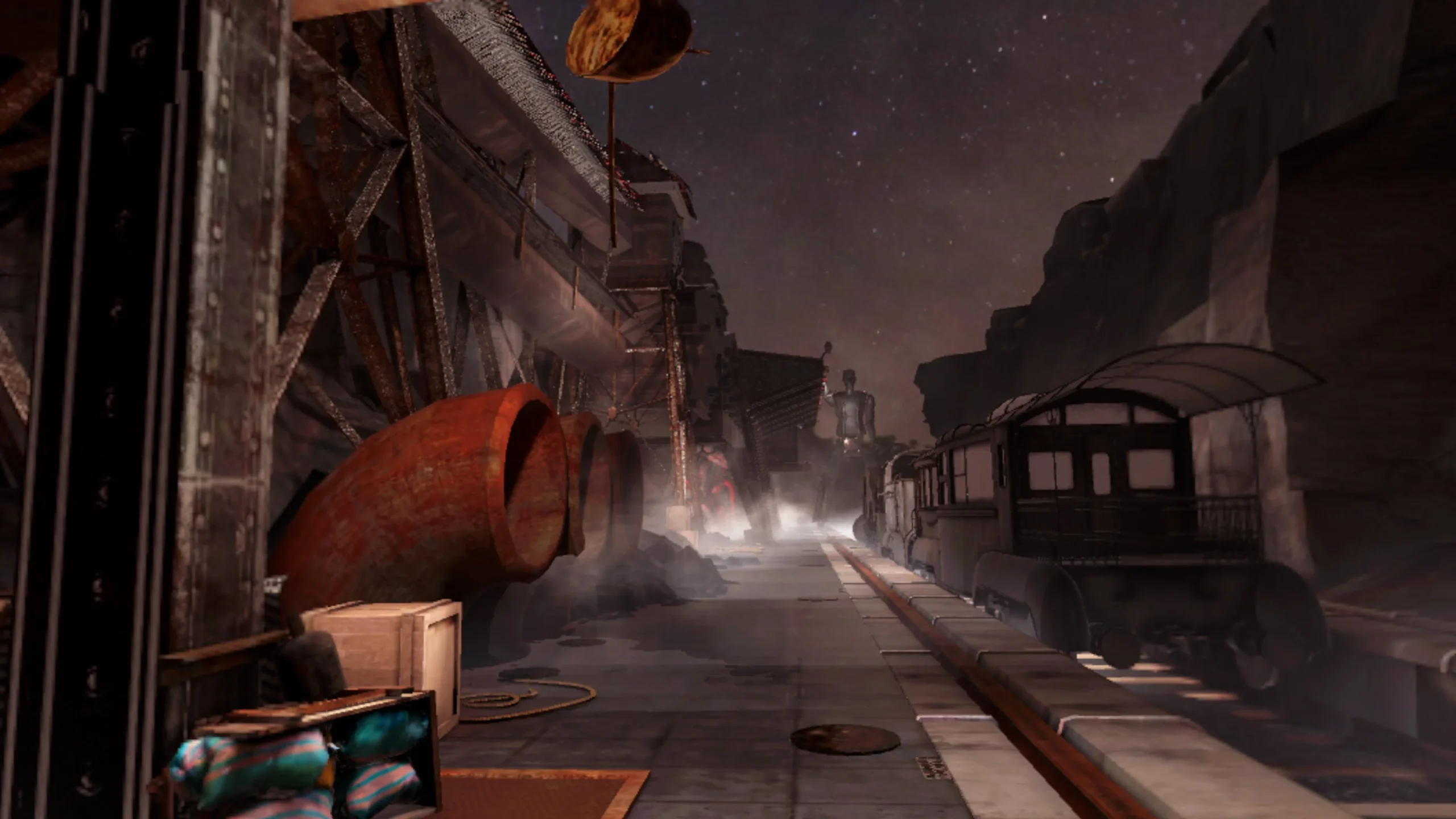
The reason behind the frustration with the puzzles in the game design stems from certain interactions that can feel awkward, cumbersome, and at times unresponsive. Additionally, the way items are placed involves a silhouette indicating where to position them, but instead of allowing players to place them directly, the item floats from their hand to the designated spot. This again detracts from the overall immersion in the game.
Another issue that detracts from the immersive experience is the subtitles, which are displayed in black boxes that frequently block the character’s face you are interacting with. While you have the option to disable the subtitles, if you prefer to keep them on, there is no way to make them less obtrusive. Furthermore, the text pop-ups obscure critical areas, like when you need to hit ‘next’ to proceed; this action gets hidden behind the text box, complicating your ability to interact.
The last issue I noticed regarding the gameplay aspect is the overwhelming number of loading screens. Every time you receive the prompt to press A to transition to a new area, a loading screen appears, and they occur far too frequently. Consequently, when the puzzles require extensive backtracking to various locations, you’ll find yourself facing an abundance of loading screens, which can become quite frustrating.
A Classic Rebuilt
One aspect that thrilled me at the announcement was the chance to immerse myself in the industrial world of Syberia, making me feel like I was part of a beloved game. Sadly, it didn’t quite deliver the wonder I anticipated. With it being exclusive to Quest 3 and 3S, I expected more than what the game provides.
Since Patch 1.0.058, the world now closely mirrors my expectations from the launch. The team has made significant improvements to the anti-aliasing, successfully removing the notorious jagged edges, although they might still be slightly noticeable from afar on occasion – with certain levels exhibiting more issues than others. Nevertheless, the progress in this aspect enhances the overall immersion in the world, and I feel this concern is no longer a valid reason for players to leave the game.
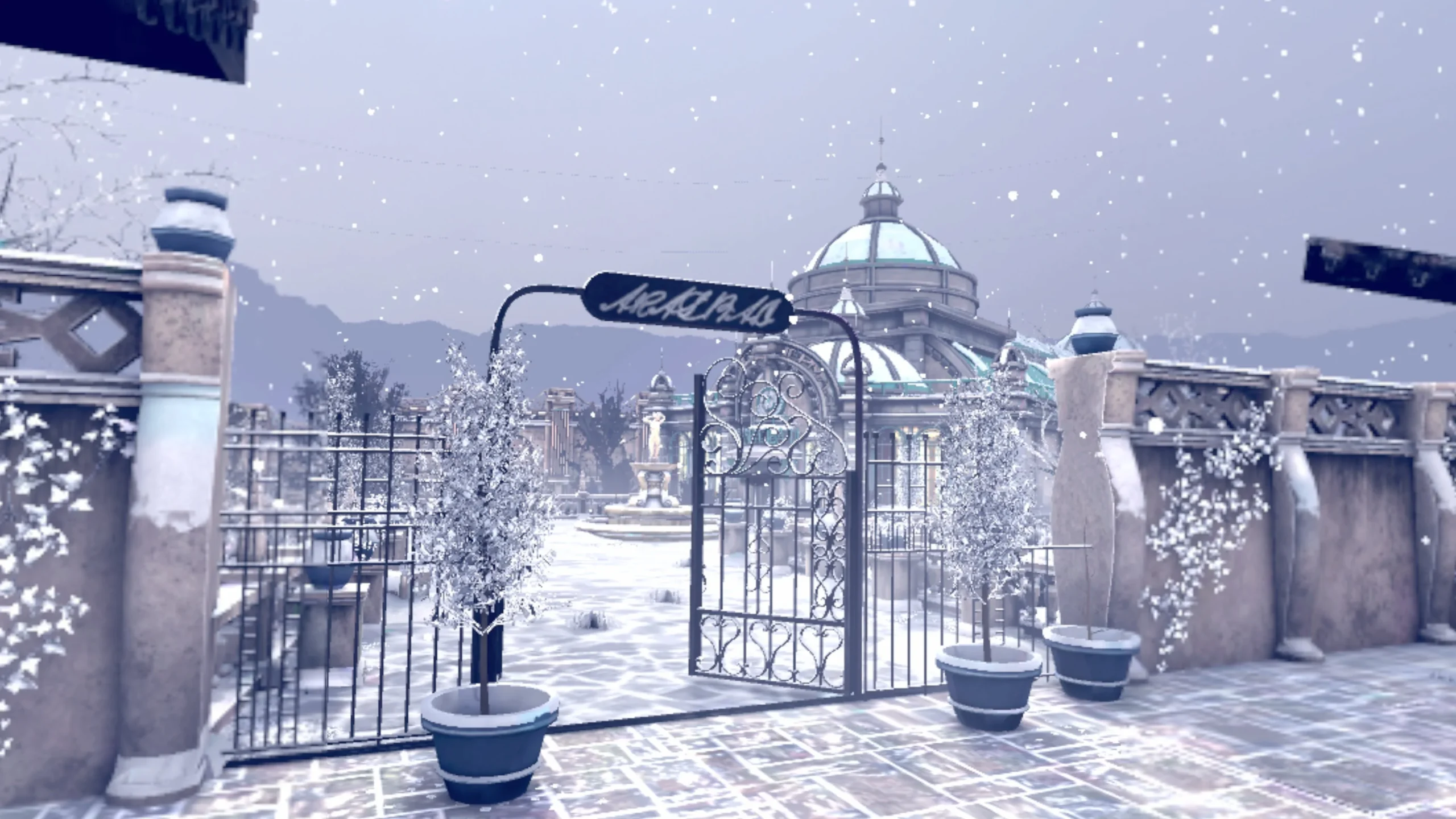
While the NPC character models are relatively decent, they do exhibit some jagged edges when viewed from afar, and their textures can sometimes be unappealing. Moreover, the game features texture details that pop in, which become especially noticeable during smooth movement, particularly since some of these occur quite close to your face (even though there have been some enhancements to graphics rendering in the initial patch) – potentially breaking the immersion that the world offers. Additionally, upon entering each area, there is a brief moment of slowdown that can feel quite jarring for those few seconds, and I hope this is an issue they can resolve in future patches.
One aspect I really appreciated was the way they presented the cut-scenes. I understand that implementing them into the game must have required significant effort, which made me understand the decision to include them as vidoes. What stood out to me was that the team chose not to display them in a void; instead, they were shown on a screen inside the train carraige. This approach felt much more immersive and aligned with the game, as opposed to the unsettling emptiness of nothingness in VR.
While the world may have its flaws, the sound design effectively enhances immersion. The environment comes alive with atmospheric sounds, with more being introduced upon completing certain puzzles – for instance, activating a water wheel triggers these additional audio elements. The voice acting is strong, truly bringing the characters to life; however, it’s unfortunate that the previously mentioned subtitle boxes are quite intrusive. The auditory experience is beautifully complemented by a gentle classical score in the background, which aligns perfectly with the game’s overall vibe.
Comfort
| Posture | Supported |
|---|---|
| Standing mode | Yes |
| Seated Mode | Yes |
| Artificial Crouch | No |
| Real Crouch | Yes |
| Movement | Supported |
| Smooth Locomotion | Yes |
| - Adjustable Speed | Yes |
| Teleport | Yes |
| Blinders/Vignette | Yes |
| - Adjustable Strength | Yes |
| Head-based | Yes |
| Controller-based | No |
| Dominant Hand Switcher | Yes |
| Turning | Supported |
| Smooth Turning | Yes |
| - Adjustable Speed | Yes |
| Snap Turning | Yes |
| - Adjustable increments | Yes |
| Input | Supported |
| Tracked Controllers | Yes |
| Hand Tracking | No |
| Gamepad | No |
Verdict
I was excited to dive into Syberia in virtual reality, eager to explore a richly crafted from the ground-up for VR. I had high hopes of immersing myself in the industrial landscape of Syberia, reliving the nostalgia of a puzzle game that holds a special place in my heart from my past. With the launch of Patch 1.0.058, many of my initial concerns about the game have been addressed, allowing me to dive deeper into its world. The addition of various locomotion options means it’s no longer restricted to just teleportation and snap turning for the best experience, and the significant enhancements in anti-aliasing have nearly eliminated the harsh jagged edges. However, despite these improvements, there are still some visual aspects that can disrupt immersion, such as detail pop-in and subtitles that occasionally obscure the faces of characters you interact with. Besides these issues, and the sporadically clumsy controls, the puzzle elements stay faithful to the original game, with some modifications to enrich the VR experience. The overall puzzle design is captivating and fun to tackle. If you have fond memories of the game, you won’t be disappointed with its current offerings, as the major problems have been resolved. I just hope we receive a few more updates to tackle issues like pop-in, frame drops, and perhaps adjust the intensity of the subtitles for those who rely on them.


Release Date: November 13th 2025
Developer: irtuallyz Gaming, Microids Studio Paris
Publisher: Microids
Price: £24.99
Reviewed On: Meta Quest 3
* Access Provided For Review *
Advertisment
Advertisment
Advertisment

Advertisment

Advertisment
Copyright / Virtual Grip (formally The VR Realm) / 2016 -